
The former president criticized Biden for saying he didn’t support Israel targeting Iranian nuclear facilities
Related:
The former president criticized Biden for saying he didn’t support Israel targeting Iranian nuclear facilities
Related:
Today is the first day of the National Day holiday, and everyone is celebrating happily. However, the popularity of the Dongfeng intercontinental ballistic missile remains unabated, and today #洲际喷球# has once again topped the Weibo hot search list.
Read More »
Brian Berletic, September 24
Amid the ongoing conflict in Ukraine and growing tensions in the Asia-Pacific, Washington is moving toward an equally dangerous, regional war in the Middle East between its Israeli proxies and a growing list of neighboring states and organizations.
Washington Sets Trap for Iran, Will Iran Take the Bait? (archived)
New US-Ukraine partnership proposal from influential senators is a recipe for bipartisan success
Related:
Washington wants Ukraine’s resources – US Senator
“According to open-source data, the total value of Ukraine’s former mineral resource base is estimated at almost $14.8 trillion, but $7.3 trillion of this is now in the Luhansk and Donetsk People’s Republics. That means almost half of the former Ukraine’s national wealth is in Donbass!” Medvedev explained in a lengthy Telegram post.
“To get access to the coveted minerals, the Western parasites shamelessly demand that their wards wage war to the last Ukrainian. They are already directly voicing such intent without hesitation,” Russia’s former leader added.
The future of critical raw materials: How Ukraine plays a strategic role in global supply chains
Ukraine is a key potential supplier of rare earth metals, including titanium, lithium, beryllium, manganese, gallium, uranium, zirconium, graphite, apatite, fluorite, and nickel. Despite the war, Ukraine holds the largest titanium reserves in Europe (7% of the world’s reserves). It is one of the few countries that mine titanium ores, crucial for the aerospace, medical, automotive and marine industries.
Before February 2022, Ukraine was a key titanium supplier for the military sector. It also has one of Europe’s largest confirmed lithium reserves (estimated at 500,000 tons), vital for batteries, ceramics, and glass. Ukraine is the world’s 5th largest gallium producer, essential for semiconductors and LEDs, and has been a major producer of neon gas, supplying 90% of the highly purified, semiconductor-grade neon for the US chip industry.
IF advocates of the United States’ access to bases of the Armed Forces of the Philippines (AFP) and US deployment of intermediate-range missiles prove the above headline unduly alarmist, this writer would be most thankful.
Related:
Out-Competing China and Constraining Russia
Forget Hardened Bases, Pacific Conflict Requires Agile Combat Employment, Commander Says
The Plan to Defend Guam from Missile Threats Is Years from Completion: More Investment Is Needed Now
Ground-Based Intermediate-Range Missiles in the Indo-Pacific
The future of critical raw materials: How Ukraine plays a strategic role in global supply chains
Ukraine is a key potential supplier of rare earth metals, including titanium, lithium, beryllium, manganese, gallium, uranium, zirconium, graphite, apatite, fluorite, and nickel. Despite the war, Ukraine holds the largest titanium reserves in Europe (7% of the world’s reserves). It is one of the few countries that mine titanium ores, crucial for the aerospace, medical, automotive and marine industries.
Before February 2022, Ukraine was a key titanium supplier for the military sector. It also has one of Europe’s largest confirmed lithium reserves (estimated at 500,000 tons), vital for batteries, ceramics, and glass. Ukraine is the world’s 5th largest gallium producer, essential for semiconductors and LEDs, and has been a major producer of neon gas, supplying 90% of the highly purified, semiconductor-grade neon for the US chip industry.
Related:
Tensions are mounting on the Korean Peninsula as South Korea and the United States prepare for key annual joint military drills amid increasing nuclear threats from North Korea. The exercises, scheduled for Aug. 19-29, are designed to improve defenses against missile strikes, GPS jamming and cyber threats.
US-South Korea drills ramp up amid North Korean nuclear threats

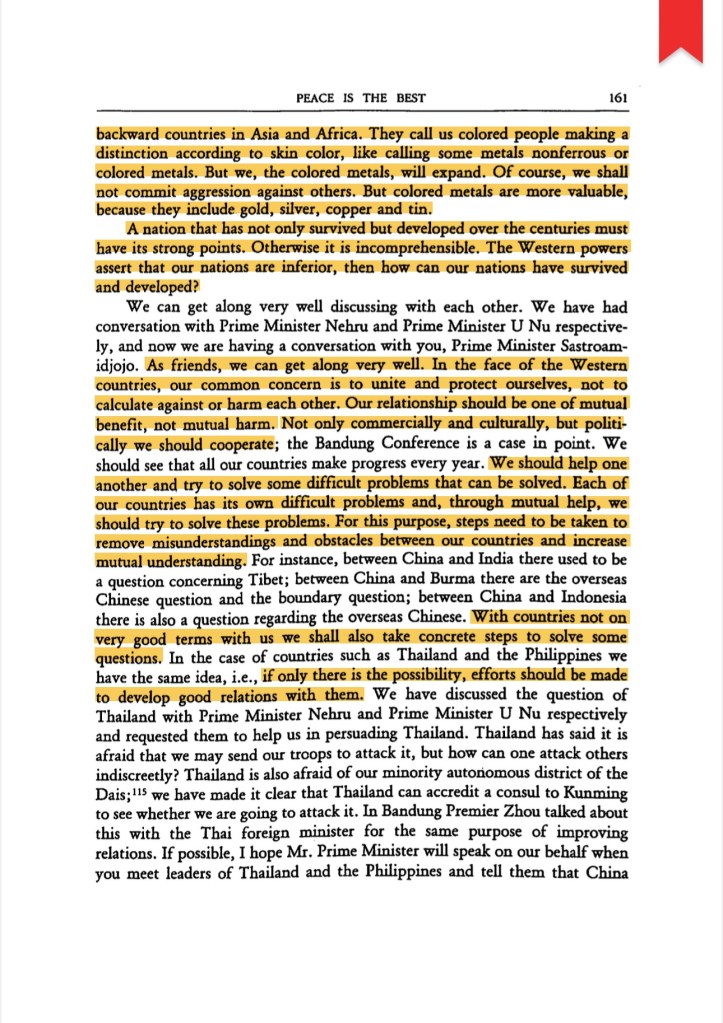
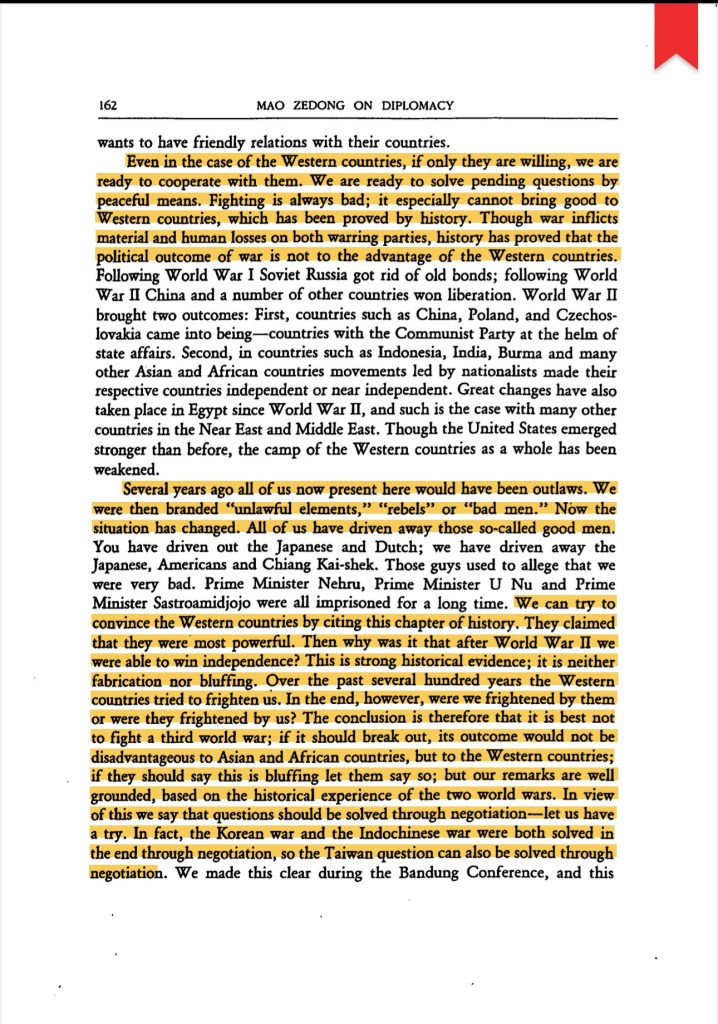

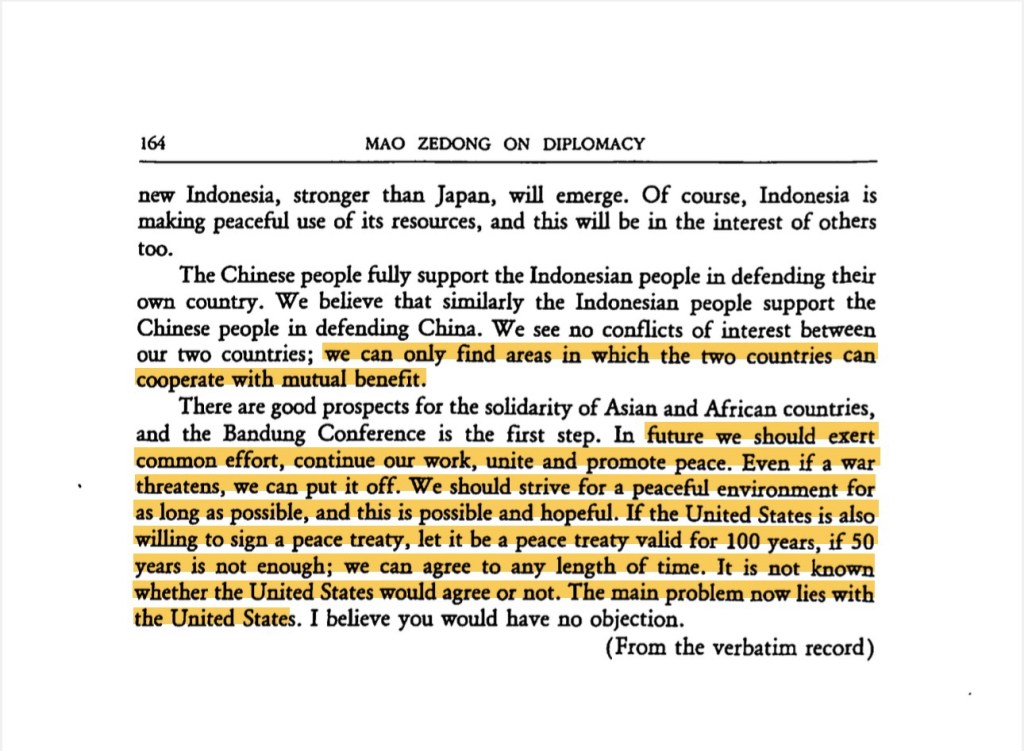
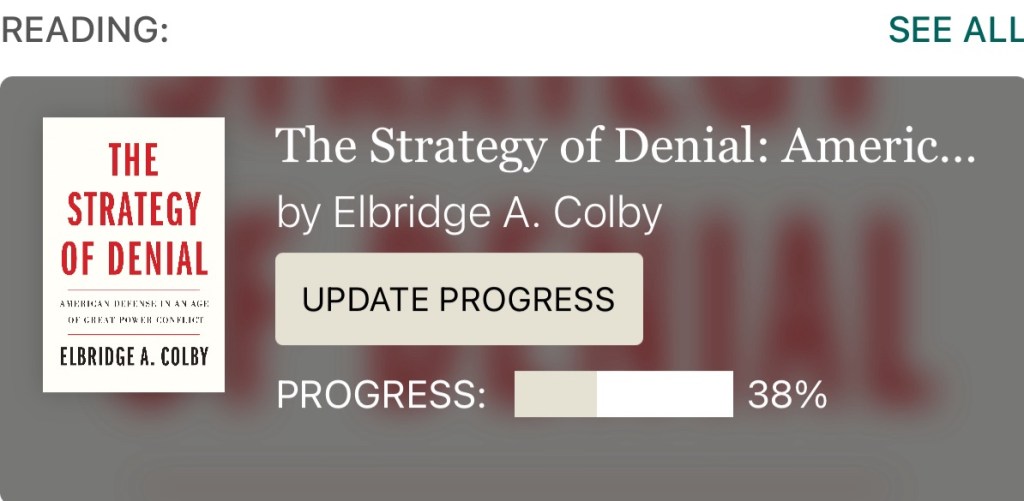
I’m alternating between reading ‘On Diplomacy’ and listening to ‘The Strategy of Denial’ on Audible.

If war breaks out in Asia, the U.S. won’t send ground troops. Take note, Philippines!
MacArthur’s Last Stand Against a Winless War
Never get involved in a land war in Asia, MacArthur had told Kennedy, because if you do, you will be repeating the same mistake the Japanese made in World War II—deploying millions of soldiers in a futile attempt to win a conflict that cannot be won.
…
Kennedy appreciated MacArthur’s soothing judgment on Cuba (and would soon change the military’s top leadership—perhaps in keeping with MacArthur’s views), but then shifted the subject to Laos and Vietnam, where communist insurgencies were gaining strength. The Congress, he added, was pressuring him to deploy U.S. troops in response. MacArthur disagreed vehemently: “Anyone wanting to commit ground troops to Asia should have his head examined,” he said. That same day, Kennedy memorialized what MacArthur told him: “MacArthur believes it would be a mistake to fight in Laos,” he wrote in a memorandum of the meeting, adding, “He thinks our line should be Japan, Formosa, and the Philippines.” MacArthur’s warning about fighting in Asia impressed Kennedy, who repeated it in the months ahead and especially whenever military leaders urged him to take action. “Well now,” the young president would say in his lilting New England twang, “you gentlemen, you go back and convince General MacArthur, then I’ll be convinced.” So it is that MacArthur’s warning (which has come down to us as “never get involved in a land war in Asia”), entered American lore as a kind of Nicene Creed of military wisdom—unquestioned, repeated, fundamental.
The United States has announced it will upgrade U.S. Forces Japan (USFJ) to a joint force headquarters (JFHQ) with expanded operational responsibilities. The new command will report to the US Indo-Pacific Command (USINDOPACOM). The revamped structure will assume the control of about 55,000 personnel stationed in Japan from the U.S. Indo-Pacific Command some 6,200 kilometers away in Honolulu, Hawaii. The move is intended to streamline communications between the US and Japan, especially during a crisis involving China.
Japan-U.S. joint statement on war preparations forecasts doom
 Ms. Cat’s Chronicles
You must be logged in to post a comment.