
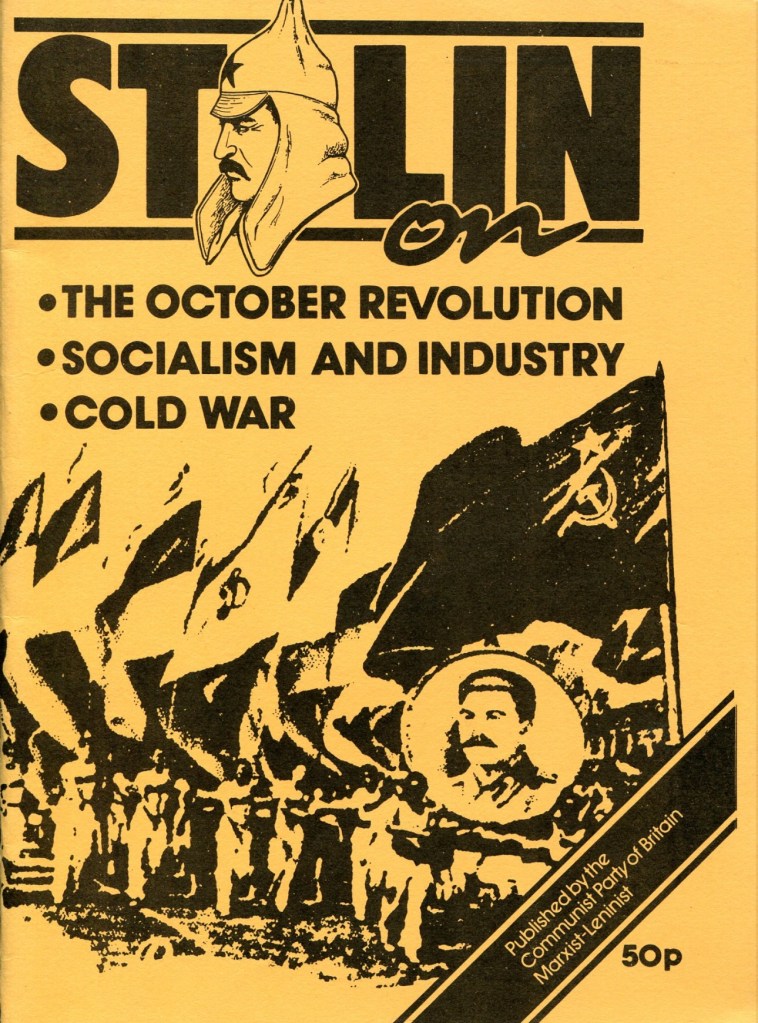
Stalin on: The October Revolution, Socialism and Industry, Cold War
Read More »The Second Congress of the Communist International
In the United States of America food prices have risen, on the average, by 120 per cent, whereas wages have increased only by 100 per cent. In Britain, food prices have gone up by 170 per cent, and wages 130 per cent; in France, food prices—300 per cent,. and wages 200 per cent; in Japan—food prices 130 per cent, and wages 60 per cent (I have analysed Comrade Braun’s figures in his pamphlet and those of the Supreme Economic Council as published in The Times of March 10, 1920).
In such circumstances, the workers’ mounting resentment, the growth of a revolutionary temper and ideas, and the increase in spontaneous mass strikes are obviously inevitable, since the position of the workers is becoming intolerable. The workers’ own experience is convincing them that the capitalists have become prodigiously enriched by the war and are placing the burden of war costs and debts upon the workers’ shoulders. We recently learnt by cable that America wants to deport another 500 Communists to Russia so as to get rid of “dangerous agitators”.
Even if America deports to our country, not 500 but 500,000 Russian, American, Japanese and French “agitators” that will make no difference, because there will still be the disparity between prices and wages, which they can do nothing about. The reason why they can do nothing about it is because private property is most strictly safeguarded, is “sacred” there. That should not be forgotten, because it is only in Russia that the exploiters’ private property has been abolished. The capitalists can do nothing about the gap between prices and wages, and the workers cannot live on their previous wages. The old methods are useless against this calamity. Nothing can be achieved by isolated strikes, the parliamentary struggle, or the vote, because “private property is sacred”, and the capitalists have accumulated such debts that the whole world is in bondage to a handful of men. Meanwhile the workers’ living conditions are becoming more and more unbearable. There is no other way out but to abolish the exploiters’ “private property”.
Porn, Feminism & the Meese Report
Feminist theory is not just flawed thinking; it is the product of a middle-class view of the world. In the prosperity of the 1960s, radical feminism was marked by its extreme utopian nature. Demands like “smash sexism” and “abolish the family” abounded—with absolutely no program that could win them. Since feminists rejected Marxism and with it the one class that actually has the power to revolutionize society, their utopian maximalist rhetoric dissolved inevitably into the most pragmatic minimalism. In fact, because the reformist strategies of the ’60s—above all the overwhelming support of feminists for the Democratic Party—failed to bear ample fruit, a fertile ground for cynicism was laid. The root of the current feminist support for the thoroughly capitulatory Dworkin is the cynicism born of defeat.
Read More »
Many great public issues as well as many private troubles are described in terms of the “psychiatric” — often, it seems, in a pathetic attempt to avoid the large issues and problems of modern society.
— C. Wright Mills, The Sociological Imagination

I’d like to thank the ICSS organizers for inviting me to talk about our – my and Vladimir L. Bobrov’s — latest book, Trotsky’s Comintern Conspiracy – the Case of Osip Pyatnitsky.

The case of Luigi Mangione, the 26-year old who allegedly assassinated UnitedHealthcare CEO Brian Thompson in the streets of Manhattan, has become a major public issue in the United States. While many details remain to be explained, the response from different layers of society raises fundamental class questions.
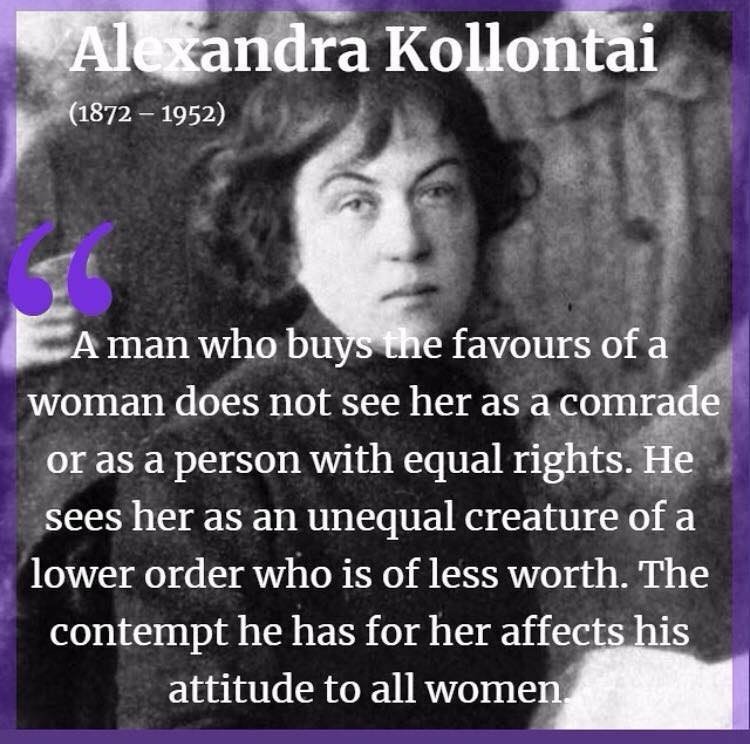
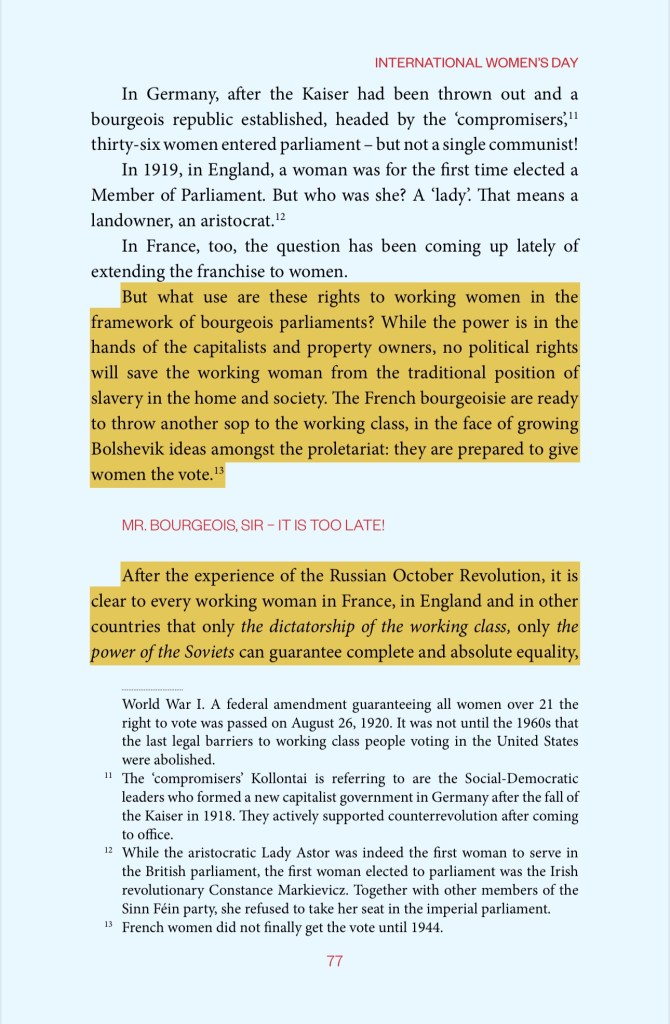
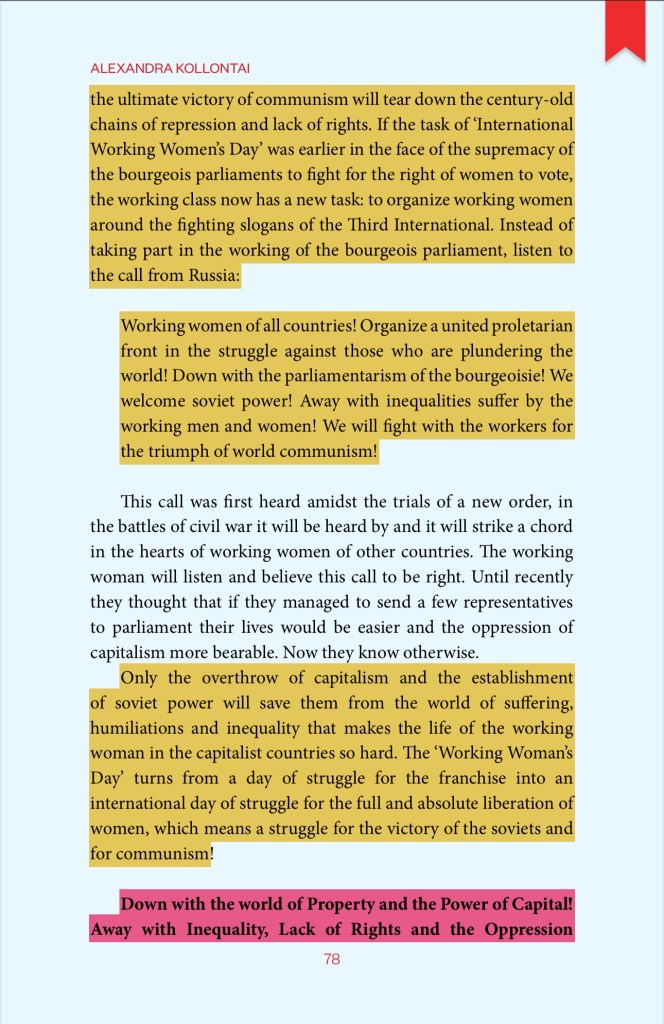
Alexandra Kollontai: Prostitution and ways of fighting it
What is the fundamental quality of the working class? What is its strongest moral weapon in the struggle? Solidarity and comradeship is the basis of communism. Unless this sense is strongly developed amongst working people, the building of a truly communist society is inconceivable. Politically conscious communists should therefore logically be encouraging the development of solidarity in every way and fighting against all that hinders its development – Prostitution destroys the equality, solidarity and comradeship of the two halves of the working class. A man who buys the favours of a woman does not see her as a comrade or as a person with equal rights. He sees the woman as dependent upon himself and as an unequal creature of a lower order who is of less worth to the workers’ state. The contempt he has for the prostitute, whose favours he has bought, affects his attitude to all women. The further development of prostitution, instead of allowing for the growth of comradely feeling and solidarity, strengthens the inequality of the relationships between the sexes.

I love reading Pamphlets’ Twitter timeline for the laughs, but I love proving him wrong even more. Don’t slander Daddy Stalin! 🤭

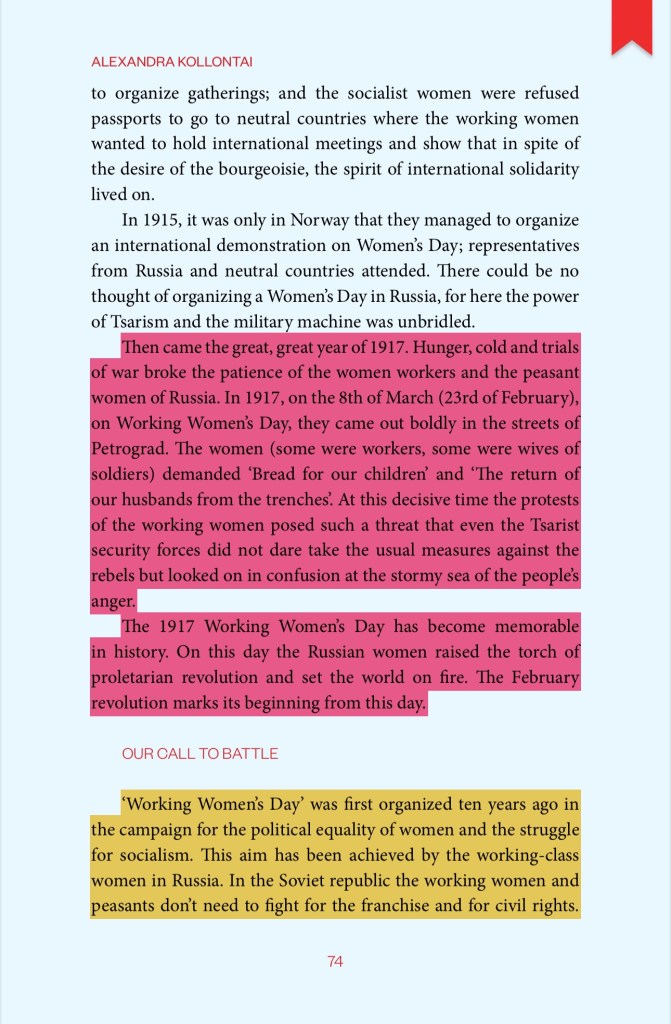

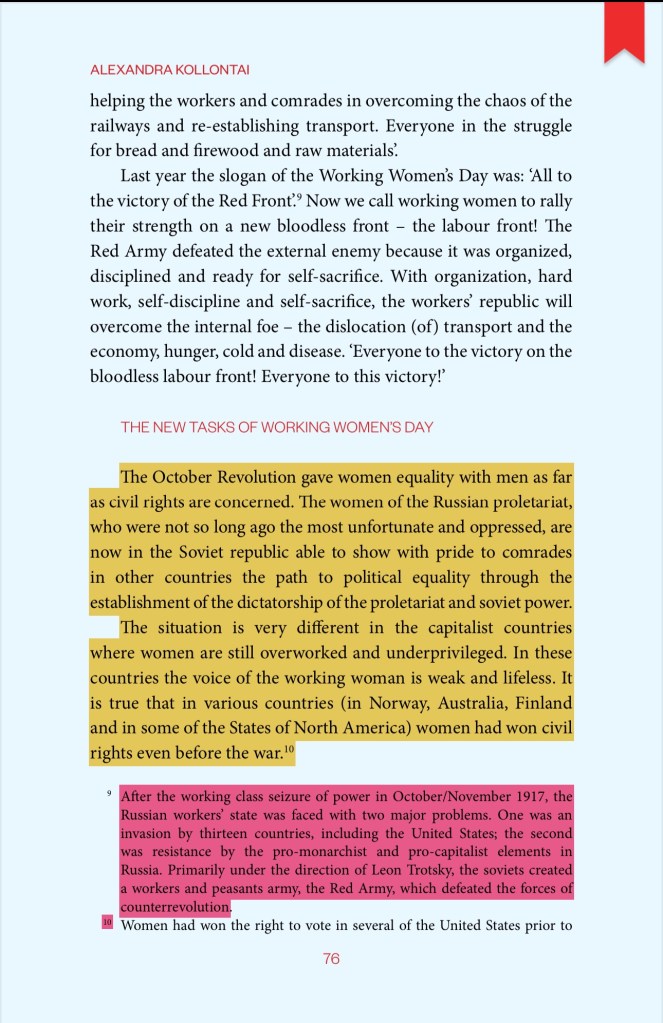

Today’s feminism has been co-opted by the oligarchs and the CIA (Gloria Steinem, et al. were CIA assets).
Previously:
 Ms. Cat’s Chronicles
You must be logged in to post a comment.