
Tag: People Power Revolution
PH: 3-day rally set to push for impeach trial start
3-day rally set to push for impeach trial start
Militant groups, civil society organizations, and members of religious congregations will mount a three-day major rally and vigil from June 9 (Monday) to June 11, (Wednesday) to call on the Senate to proceed with the impeachment trial of Vice President Sara Duterte.
Read More »
EDSA1: The Snap Revolution


Off to the side was a more youthful Wolfowitz. He told me that this picture, which had pride of place in his office, was of exactly the moment when the Reaganites had narrowly voted to dump the Ferdinand Marcos dictatorship in the Philippines in 1986 and to recognize the election victory of his opponent Cory Aquino.* “It was the first argument I won,” said Wolfowitz proudly. “I said that if we supported a dictator to keep hold of a base, we would end up losing the base and also deserving to do so. Whereas,” he went on, “by joining the side of ‘people power’ in Manila that year, we helped democracy movements spread through Taiwan and South Korea and even I think into Tiananmen Square in 1989.“
* See, for the best account of this upheaval in real time, James Fenton’s book The Snap Revolution.
Related:
*The Snap Revolution (Part One: The Snap Election) | James Fenton
*The Snap Revolution (Part Two: The Narrow Road to the Solid North)
*The Snap Revolution (Part Three: The Snap Revolution)
Previously: PH’s EDSA1 AKA People Power Revolution
Google Document: PH’s EDSA1 AKA People Power Revolution & Chile’s 1988 Plebiscite
PH: The BongBong Rocket 🤭
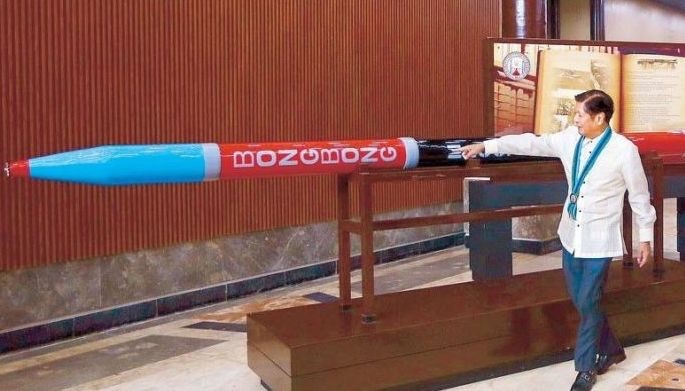
The Mystery of Marcos’ Rocket Program
Read More »’A Failed Project?’
The only VALID reason I could think of for all these “secrecy” or lack of transparency is that the program itself was NOT successful, and there are a number of ways that it could have failed. For one, the FAILURE or SUCCESS RATE of the launches were never published, and it’s possible that there were just too many launch failures, like the rockets exploding or veering off course at their launch pad or after launch, or even rockets not taking off at all. And even if the launches were successful, there is the issue of how accurate the rocket was in terms of hitting its target. If it ends up several hundreds or thousands of meters from its intended target, then it’s not very useful. And just like the Launch Rate, the Accuracy of the rockets were also never published.
Is the “Deep State” using PTI to overthrow the current 🇵🇰 government?
Before anyone says that it isn’t possible, the U.S. government financially supported EDSA 1 and the 1988 Chilean Plebiscite through its front organizations.
Related:
Read More »PH’s EDSA1 AKA People Power Revolution
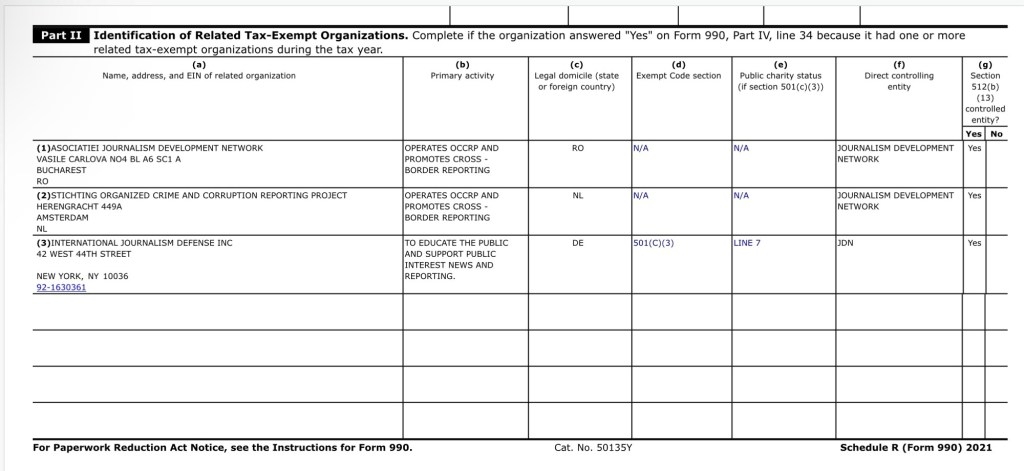
A Giant of Journalism Gets Half its Budget From the U.S. Government
A Giant of Journalism Gets Half its Budget From the U.S. Government
How Sullivan first caught the attention of the U.S. foreign policy officialdom is itself a window into the purpose of the organization. It begins with a coup in the Philippines. State Department official Michael Henning had previously been stationed there. In 2001, the non-profit outlet the Philippine Center for Investigative Journalism (PCIJ) exposed corruption by then-President Joseph Estrada, a nationalist with a standoffish relationship to the U.S. The exposé led to an impeachment inquiry, which fell short. But it also produced major street protests, leading to his ouster in a coup [EDSA 2]. The journalist’s pen was not just mightier than the sword, but less embarrassing to wield on a global stage in an era where overtly U.S.-backed military coups had gone out of fashion (if not entirely out of the toolkit). Henning was a major booster of PCIJ—which has been the beneficiary of grants from the National Endowment for Democracy—relaying its effectiveness to his colleagues.
The article refers to the Arab Spring and the Yugoslav Wars, but not how the U.S. was involved.
Related:
Front Organizations Behind Hit Piece on Igor Lopatonok:

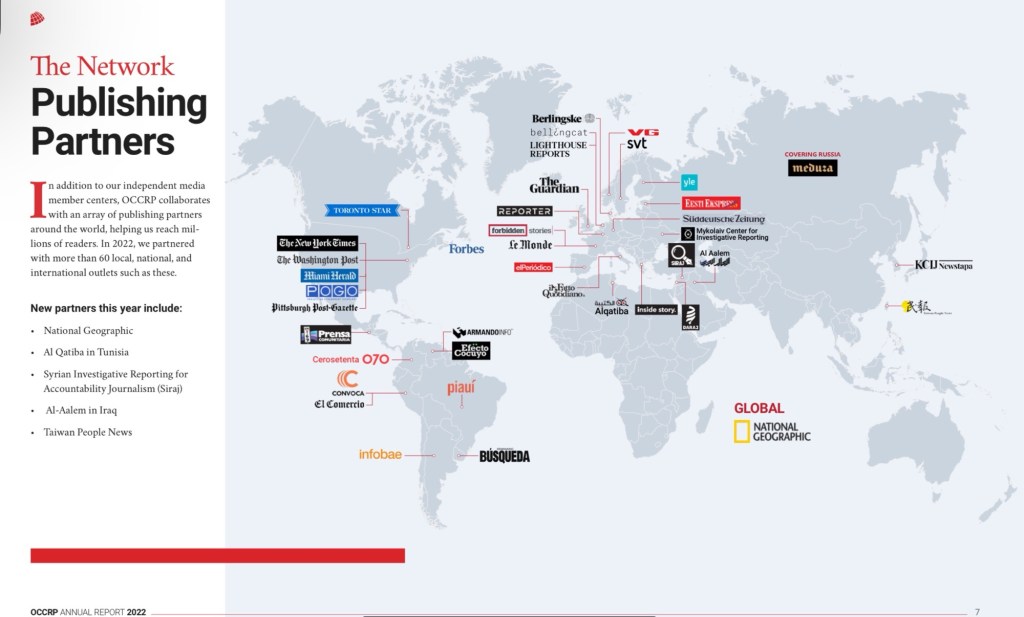

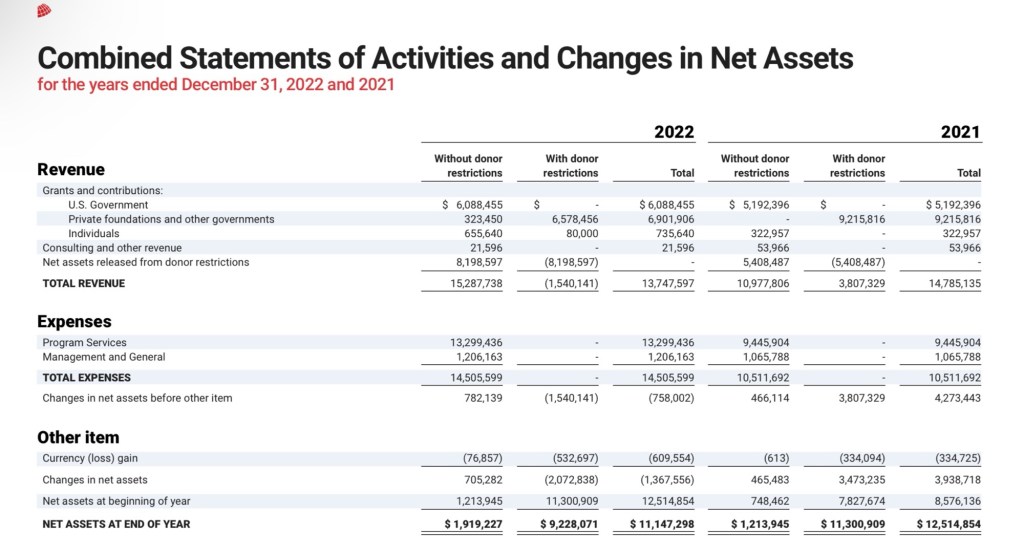

Grants from Luminate Group AKA Omidyar Network
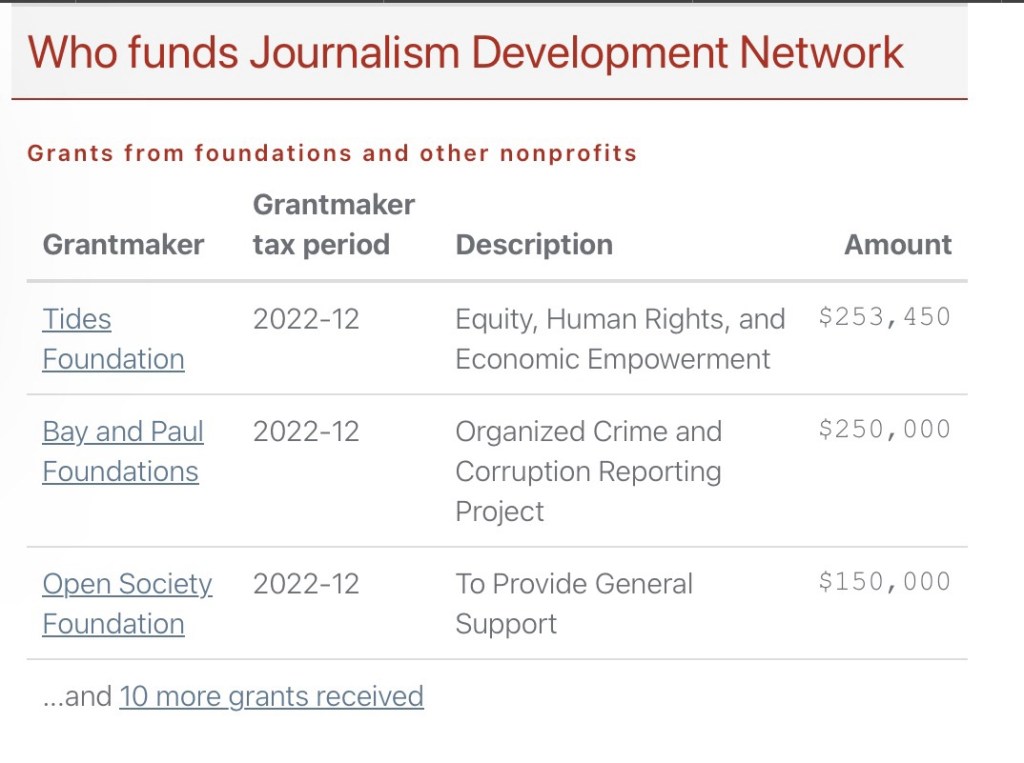
A ‘myriad’ of front organizations had “Media Unlocked” banned from TikTok (PCIJ)
PH’s PressONE is funded by several US front organizations
Update to Notes on Ukrainian Government Exposed Surveilling News Outlet (GIJN)
Latin American Center for Journalistic Research (CLIP)
Breakup of Yugoslavia (Yugoslav Wars)
U.S. Wars and Hostile Actions (WW2 – 2014) (Arab Spring)
Politics at a critical juncture in Philippine history
For so many years, we have complained and howled against political dynasties.
Ever since we established ourselves as a republic and began electing leaders in government, it has become a given, even deep-rooted and thus an innate limitation. Ever since, only a few, and therefore the same people from the same families are always elected into office.
PH gov’t encourages youth participation in SCS campaign
Surprisingly, I didn’t see Powell there. /s
PH gov’t encourages youth participation in WPS sovereignty campaign (Translation by Google Translate)
The Philippine government anchors transparency* efforts in its vision to make the West Philippine Sea (WPS) an “intergenerational concern.”
Commodore Jay Tristan Tarriela of the National Task Force for the West Philippine Sea (NTF-WPS) said that the main objective of the government’s efforts is to ensure that the fight for the WPS will be continued by future generations.
Tarriela joined the third episode of the PN Conversations organized by Palawan News on September 13.
“The national government’s responsibility now for the younger generation is for us to hold the line so that the next generation of Filipinos can still be able to fight for our rights in the West Philippine Sea,” he said.
The transparency effort implemented under the administration of President Ferdinand Marcos, Jr., is part of the government’s obligation to provide the right information to Filipinos, he added.
Tarriela believes that the right information will also awaken Filipinos’ sense of patriotism, particularly among the youth.
The government’s transparency could also raise awareness among the international community about the situation in the WPS.
The limited information given during the previous administration under former president Rodrigo Duterte made it easy for China to spread disinformation, Tarriela said. In contrast, the current administration supported the concept of having “many voices with one message.”
“We recognize that our fight in the West Philippine Sea cannot be met by us alone,” he said.
National Youth Commission (NYC) Commissioner-at-Large Karl Josef Legazpi, a Palaweño himself, shares the view on the need to emphasize that the future of younger generations is at stake in the fight for sovereignty.
“But the waters that belong to us are gradually being taken from us—we want to convey to you what is happening. Our future is at stake,” he said.
NTF-WPS is actively working with various partner agencies, including the state information arm, Philippine Information Agency** (PIA). Director General Jose Torres, Jr.***, also joined Tarriela in the forum, believing in the role of the youth in the fight over the WPS.
Torres emphasized that the youth’s use of technology plays a significant role in fighting misinformation and disinformation about WPS.
“The young people play a great role and challenge when it comes to the West Philippine Sea. As young people, we need to stand up for our country and truth,” he said.
The PN Conversations is a Palawan News initiative that provides a platform for in-depth discussions on pressing issues faced by the community, such as WPS.
Notes on page 2:
[1999] Philippines: The Great Left Divide
A SPECTER is haunting the revolutionary movement in the Philippines — the specter of seemingly interminable splits.
In the seven years since Armando Liwanag issued his “Reaffirm our Basic Principles and Rectify Errors” document, the Left — or more appropriately, the Left of the national democratic (ND) tradition — has gone through an unprecedented period of metastasis. The once monolithic movement that at its peak in the mid-1980s commanded 35,000 Party members, 60 guerrilla fronts, two battalions and 37 company formations, and foisted ideological and organizational hegemony in the progressive politics during the Marcos dictatorship is now history. Out of it have emerged fragments of disparate groups — eight at least — that continue to wage “revolution” in similarly disparate forms.
The Great Left Divide
Related:
 Ms. Cat’s Chronicles
You must be logged in to post a comment.