
Philippines Could Receive $2.5 Billion in Security Aid from U.S. Defense Bill
Read More »Tag: Philippine Marine Corps
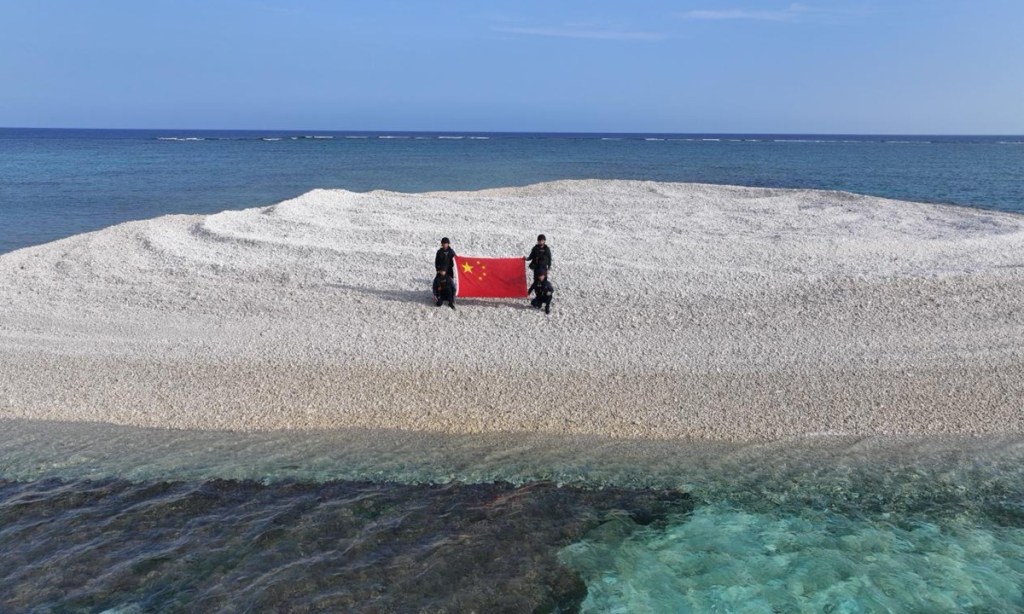
Philippine Forces Land on Contested South China Sea Feature

EDSA1: The Snap Revolution


Off to the side was a more youthful Wolfowitz. He told me that this picture, which had pride of place in his office, was of exactly the moment when the Reaganites had narrowly voted to dump the Ferdinand Marcos dictatorship in the Philippines in 1986 and to recognize the election victory of his opponent Cory Aquino.* “It was the first argument I won,” said Wolfowitz proudly. “I said that if we supported a dictator to keep hold of a base, we would end up losing the base and also deserving to do so. Whereas,” he went on, “by joining the side of ‘people power’ in Manila that year, we helped democracy movements spread through Taiwan and South Korea and even I think into Tiananmen Square in 1989.“
* See, for the best account of this upheaval in real time, James Fenton’s book The Snap Revolution.
Related:
*The Snap Revolution (Part One: The Snap Election) | James Fenton
*The Snap Revolution (Part Two: The Narrow Road to the Solid North)
*The Snap Revolution (Part Three: The Snap Revolution)
Previously: PH’s EDSA1 AKA People Power Revolution
Google Document: PH’s EDSA1 AKA People Power Revolution & Chile’s 1988 Plebiscite
PH: The BongBong Rocket 🤭
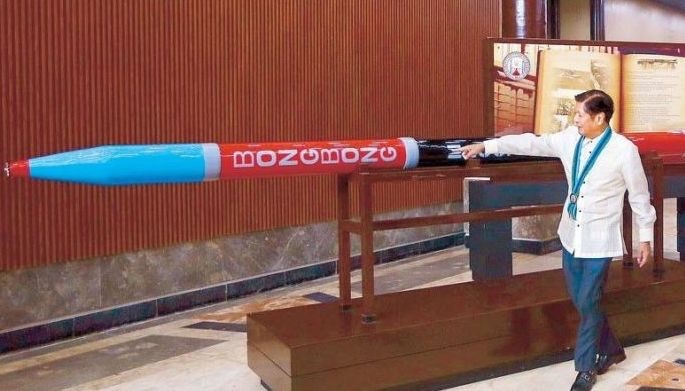
The Mystery of Marcos’ Rocket Program
Read More »’A Failed Project?’
The only VALID reason I could think of for all these “secrecy” or lack of transparency is that the program itself was NOT successful, and there are a number of ways that it could have failed. For one, the FAILURE or SUCCESS RATE of the launches were never published, and it’s possible that there were just too many launch failures, like the rockets exploding or veering off course at their launch pad or after launch, or even rockets not taking off at all. And even if the launches were successful, there is the issue of how accurate the rocket was in terms of hitting its target. If it ends up several hundreds or thousands of meters from its intended target, then it’s not very useful. And just like the Launch Rate, the Accuracy of the rockets were also never published.

(Primer) A Decade of EDCA: US military bases and its expanding war games in the Philippines

The outright re-establishment of US military bases in the country and its relentless and escalating war games on land, sea, and air are flagrant manifestations of US imperialist domination of the Philippines. This further tightens the grip of US imperialism on the Philippine neocolonial state, especially on the puppet Armed Forces of the Philippines (AFP).
(Primer) A Decade of EDCA: US military bases and its expanding war games in the Philippines
Philippines’ Aggressive Territorial Claims In South China Sea: A New Threat to Regional Stability
Philippine President Ferdinand Marcos Jr. has appointed a new Navy chief (Rear Admiral Jose Ma. Ambrosio Ezpeleta) amid tensions in the South China Sea, which include a number of maritime drills which are perceived as provocations by Beijing. One such military exercise earlier this month, for instance, included drills to simulate seizing an island in the disputed South China Sea. Last month Manila held military exercises in the same Sea together with Canada, Japan, and the United States, as part of Exercise Sama Sama 2024. The Philippines are also officially expanding their maritime claims. These developments are all connected.
Philippines’ Aggressive Territorial Claims In South China Sea: A New Threat to Regional Stability (archived)
Related:
What’s Really Going On In the South China Sea Between the Philippines and China
Germany, Philippines agree to broaden defence cooperation deal + Vietnam Sends Coast Guard Ship To Philippines For Joint Training
Pistorius is the first German defence minister to visit the Philippines and hopes to finalise the agreement as early as October
Germany, Philippines agree to broaden defence cooperation deal
Related:
Vietnam Sends Coast Guard Ship To Philippines For Joint Training
Philippine and Japan navies held their first bilateral drills in the contested waters, the Southeast Asian nation’s military said in a statement Friday.
YouTube: NATO’s NEW VICTIM: Missiles Deployed, $500M Aid, New US Proxy & Military Buildup|Dr. A.Malingdog-Uy
US Missile Deployment And $500M Military Aid To PH: Defensive Or Offensive Posturing?
US Missile Deployment And $500M Military Aid To PH: Defensive Or Offensive Posturing?
LAST July 30, US Secretary of State Antony Blinken and Defense Secretary Lloyd Austin III dropped by Manila for the Philippines-US 2+2 ministerial dialogue, the fourth such talks since it began in 2012. This is unprecedented because it’s the first time that talks have been held in Manila. Indeed, the PH-US 2+2 dialogue has set the stage for continued and expanded military cooperation, reflecting a strengthened military and defense alliance between the two sides. Before visiting Manila, the two US officials also held talks in Tokyo with their counterpart top Japanese defense and diplomatic officials on July 28 to bolster military and defense cooperation.
US Missile Deployment And $500M Military Aid To PH: Defensive Or Offensive Posturing?
Related:
US missile system may stay in PH after military drill – Army
THE Philippine Army yesterday said a medium-range missile system [Typhon] of United States military may remain in the country beyond September this year, depending on the training needs of Filipino troops.
China-Philippines ties may improve, as long as US stops interfering
South China Sea: Philippines’ anti-ship missile base puts Scarborough Shoal in cross hairs (more information)
What the article left out is; to shoot far, the Philippine military needs to see far. However, the Philippines don’t have any over-the-horizon (OTH) radar, military satellites, AWACS planes or other long-range ISR capabilities, to make use of the full range of the BrahMos missile. Without it the missile is limited to the range of its available ISR assets, which are measured in just dozens of kilometers.
However, if a BrahMos missile is ever launched against a long-range Chinese target, it will be easy to guess who would have supplied the essential Intelligence, Surveillance, and Reconnaissance (ISR) information and target identification to the Philippine military.
South China Sea: Philippines’ anti-ship missile base puts Scarborough Shoal in cross hairs
Even if the Philippines lacks the advanced communications, intelligence, and targeting systems needed to maximise the BrahMos’ capabilities, it could still leverage US support in these areas, Koh said, citing the sinking of Russia’s Moskva warship by Ukraine in 2022, which he said was achieved thanks to “targeting support provided by Kyiv’s allies, chiefly the Americans”.
The flagship of Russia’s Black Sea Fleet, the Moskva became the largest warship lost in combat since the second world war when it was hit by two Ukrainian Neptune anti-ship missiles in April 2022. US officials later told the media that the Pentagon had provided intelligence that led to the ship’s sinking.
For the Philippines, the BrahMos missiles are “significant game changers” [🙄], according to security strategist Chester Cabalza, president of the International Development and Security Cooperation think tank in Manila.
…
However, Don McLain Gill, an international-studies lecturer at De La Salle University in the Philippines, questioned whether the BrahMos purchase alone would deliver robust deterrence against China.
“It will be crucial for the BrahMos to be supplemented by efficient intelligence, surveillance, target-acquisition and reconnaissance, which is critical to track targets and ensure they can be used by command,” he said, warning Manila must invest further to maximise the missiles’ deterrent value.
Previously:
Philippines Builds First BrahMos Anti-Ship Missile Base Facing South China Sea
Philippines Builds First BrahMos Anti-Ship Missile Base Facing South China Sea
According to recently released satellite imagery, the Philippines’ first BrahMos anti-ship missile base is taking shape at a naval installation facing the South China Sea.
Philippines Builds First BrahMos Anti-Ship Missile Base Facing South China Sea
 Ms. Cat’s Chronicles
You must be logged in to post a comment.