

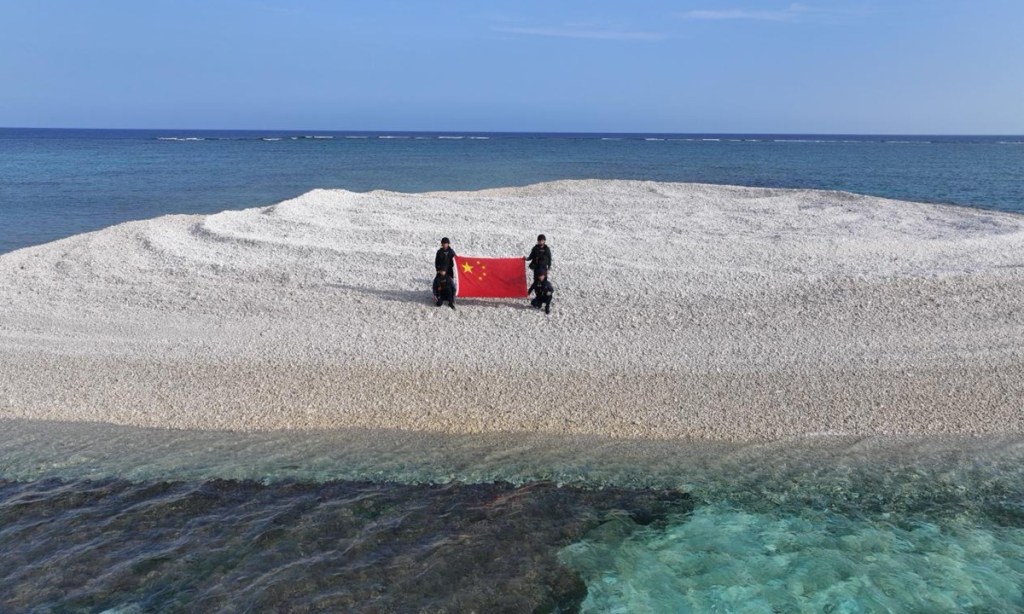
Philippine Forces Land on Contested South China Sea Feature
Related:
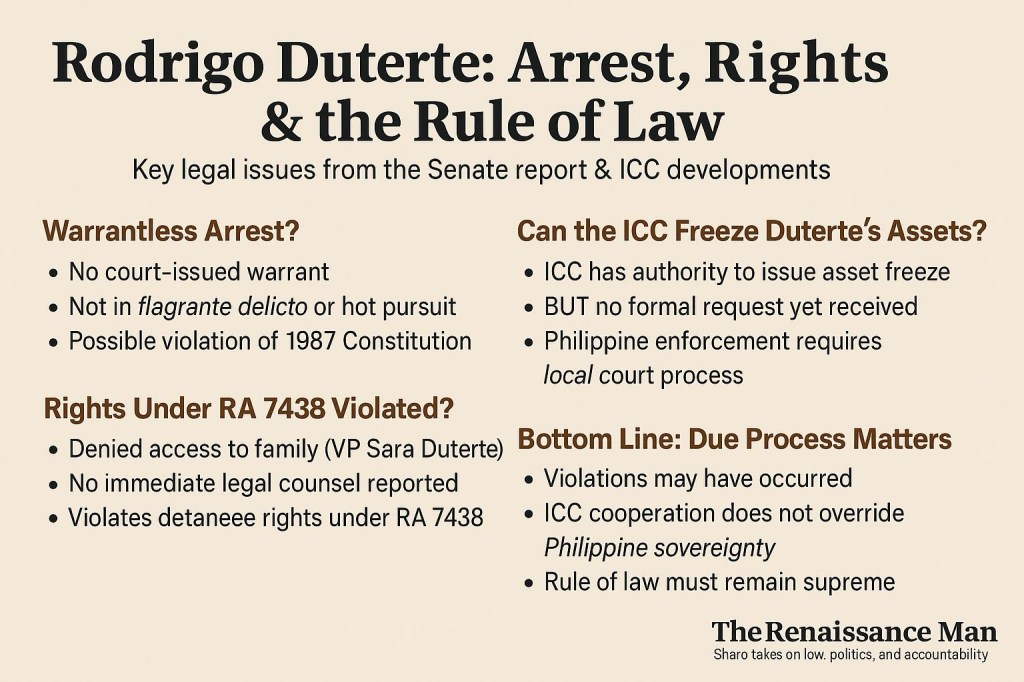
The recent release of the Senate Committee on Foreign Relations’ preliminary report on the arrest of former President Rodrigo Duterte has sent ripples through the Philippine legal and political landscape. Chaired by Senator Imee Marcos, the report outlines what it calls “glaring violations” of constitutional rights, procedural lapses, and questionable coordination between the Philippine government and the International Criminal Court (ICC).
Due Process on Trial: The Duterte Arrest, the Rule of Law and Sovereignty
Related:
Can Philippine President Marcos Survive the Wrath of the Dutertes? by Mong Palatino
As for President Marcos, he may have a solid plan to neutralize the Dutertes but it is the anguish of ordinary citizens reeling from high prices and low wages that he should be worried about. Even Vice President Sara Duterte is aware that the concern of the average voter is the economic crisis, which is why her arrival statement at The Hague when she visited her father focused on the need to address poverty, hunger, and joblessness in the Philippines. In other words, the most serious threat to the Marcos presidency is its own failure to fulfill the campaign promise of bringing down the price of rice and other goods, uplift the conditions of working families, and provide adequate and affordable services to the people.
Document: Arrest of Rodrigo Duterte
How the US bankrolled Duterte’s alleged crimes against humanity
Less than a month after Duterte took office, then- Secretary of State John Kerry announced a $32 million weapons and training package specifically to support the Philippine National Police. He made no mention of Duterte’s numerous threats to weaponize law enforcement on the campaign trail, or the fact that 239 suspected drug users had already been killed by police without due process at that point.
Read More »

The recent arrest of former Philippine President Rodrigo Duterte has sparked discussions about the legal processes involved, particularly concerning the roles of the International Criminal Court (ICC) and Interpol. Understanding these mechanisms is crucial in assessing the implications for Duterte’s case.
Duterte’s Arrest: Interpol Red Notice and ICC Procedural Implications


Off to the side was a more youthful Wolfowitz. He told me that this picture, which had pride of place in his office, was of exactly the moment when the Reaganites had narrowly voted to dump the Ferdinand Marcos dictatorship in the Philippines in 1986 and to recognize the election victory of his opponent Cory Aquino.* “It was the first argument I won,” said Wolfowitz proudly. “I said that if we supported a dictator to keep hold of a base, we would end up losing the base and also deserving to do so. Whereas,” he went on, “by joining the side of ‘people power’ in Manila that year, we helped democracy movements spread through Taiwan and South Korea and even I think into Tiananmen Square in 1989.“
* See, for the best account of this upheaval in real time, James Fenton’s book The Snap Revolution.
Related:
*The Snap Revolution (Part One: The Snap Election) | James Fenton
*The Snap Revolution (Part Two: The Narrow Road to the Solid North)
*The Snap Revolution (Part Three: The Snap Revolution)
Previously: PH’s EDSA1 AKA People Power Revolution
Google Document: PH’s EDSA1 AKA People Power Revolution & Chile’s 1988 Plebiscite
Throughout the three-day course, we’ve looked at the strategic, operational and tactical levels. We’ve looked at the operational framework in which both nations work. Some of the considerations that we have to work together with. We’ve looked at media programs and media talent and preparing that talent and facilitating media embed programs. And we also unpacked and looked at photography workshop as well, where we’ve been able to have lots of fun looking at the kits and the tools, and taking some photography and vision in order to amplify key messages into the region.
ADF | Australia-Philippines Military Public Affairs workshop
Related:
Great communication begins with connection
‘The workshop got our nations on one page to deliver the right information and messages that we want to convey across the globe.’
Embedded journalism:
The original purpose of embedding was to control journalists, according to Helen Benedict, a professor at the Columbia Journalism School. Citing award-winning Australian journalist Phillip Knightley’s book “The First Casualty: The War Correspondent as Hero and Myth-Maker from the Crimea to Iraq” which describes how the U.S. government invented embedded journalism in response to critical coverage of the Vietnam War. As civilian casualties in Afghanistan reached 5,000, the Pentagon sought a media strategy that would bring attention back to the military’s role in the war, especially the role played by ordinary American service members. This would require bringing war correspondents on side.
What are Information Operations?
To obtain a competitive edge, information operations and warfare entail obtaining intelligence on opponents and disseminating propaganda.
Definition: Information operations are tactics used to sway people’s opinions and affect how decisions are made.
More information:
Embedded Journalism, Media Manipulation & Apathy
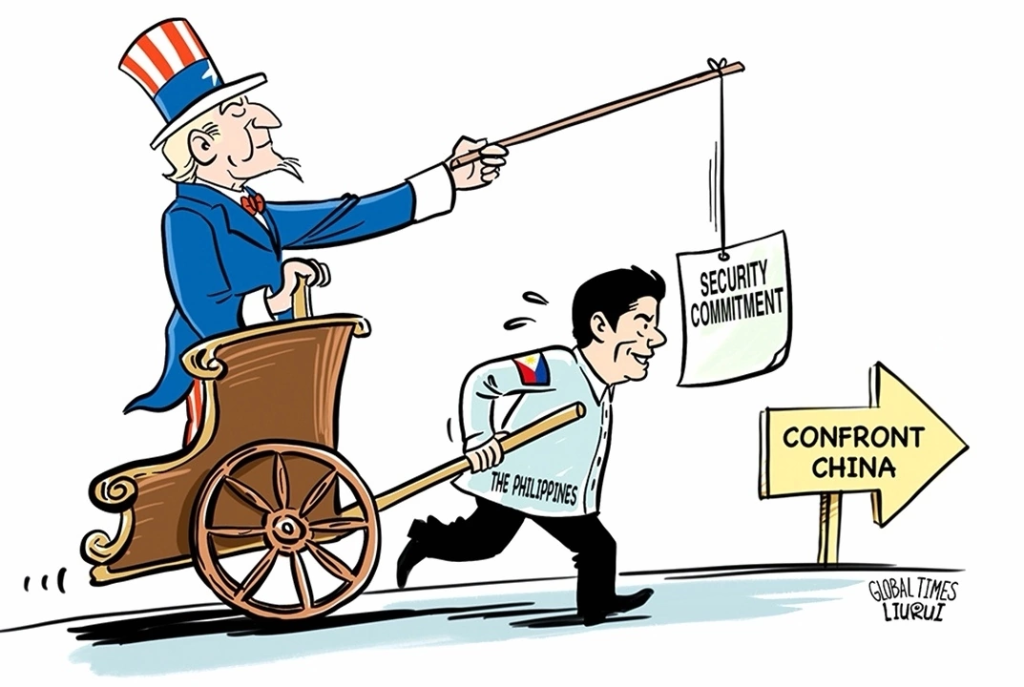
Renewed talks on a bill that would reinstate a mandatory Reserve Officers Training Corps (ROTC) programme in colleges and universities in the Philippines has sparked debate on whether it would be effective in strengthening the country’s military amid growing tensions in the South China Sea.
South China Sea: Philippines debates boosting war readiness through mandatory military training for students
The entire leadership and membership of the Communist Party of the Philippines (CPP) condemns in the strongest terms the Armed Forces of the Philippines (AFP) for the brutal torture and cowardly killing of Party leaders Benito Tiamzon (Ka Laan) and Wilma Austria-Tiamzon (Ka Bagong-tao), together with eight other revolutionaries after they were captured in Samar province on August 21, 2022.
Tiamzons, Catbalogan 10 were held captive, tortured and cowardly killed by the AFP in US-directed operations
Related:
CPP confirms deaths of Tiamzon couple, says they were killed by AFP
 Ms. Cat’s Chronicles
You must be logged in to post a comment.