
Let us go over to the second point, the question of terrorism.
Read More »
Tag: proletarian revolutions
The false narrative that Trump has ended regime change ops, & the covert nature of the empire’s next actions

Anyone who’s simply saying Donald Trump has dismantled USAID, without including the other parts of this story, is putting forth a narrative of false hope. The potential for ending U.S. imperialism’s global destabilization efforts cannot be found within any top-down policy change; it can only be found within the effort to overthrow our capitalist state. The Trump White House hasn’t been pressured into dismantling the regime change network, and if Trump were to do this, the imperialist deep state would assassinate him. The thing he’s actually done is transfer resources from the State Department and its non-governmental organizations, to the covert operations programs of the CIA. Which means the destabilization efforts are now going to be much better hidden, and those who oppose them will need to be more diligent in detecting and exposing them.
Read More »
DISABLED COMMUNISTS AND ANARCHISTS
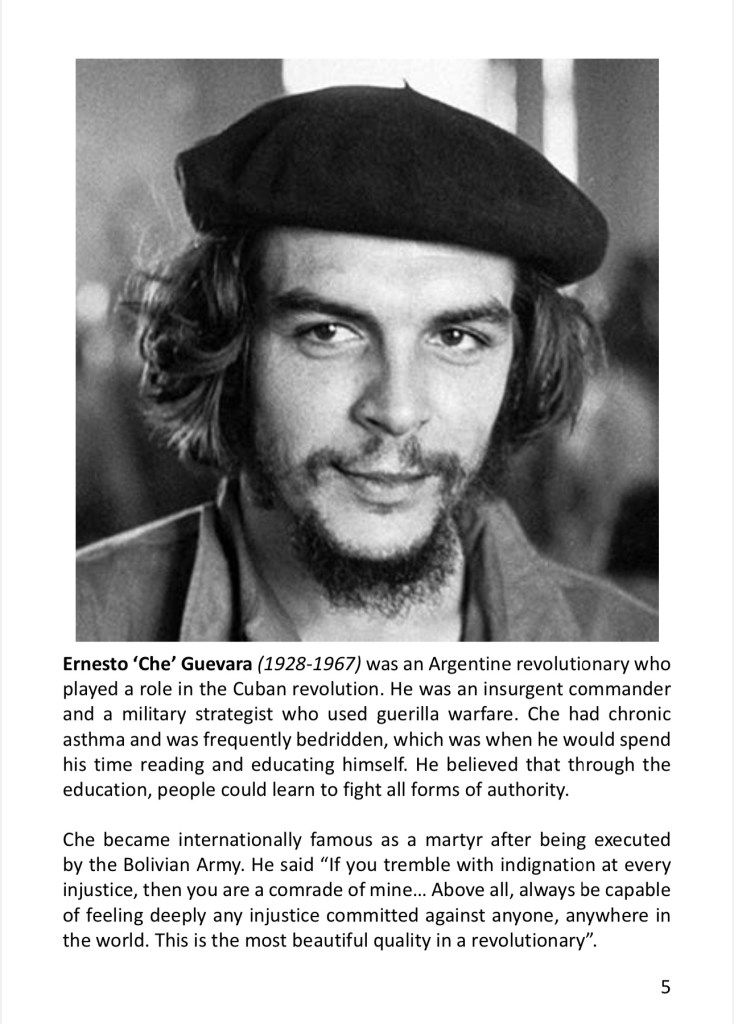
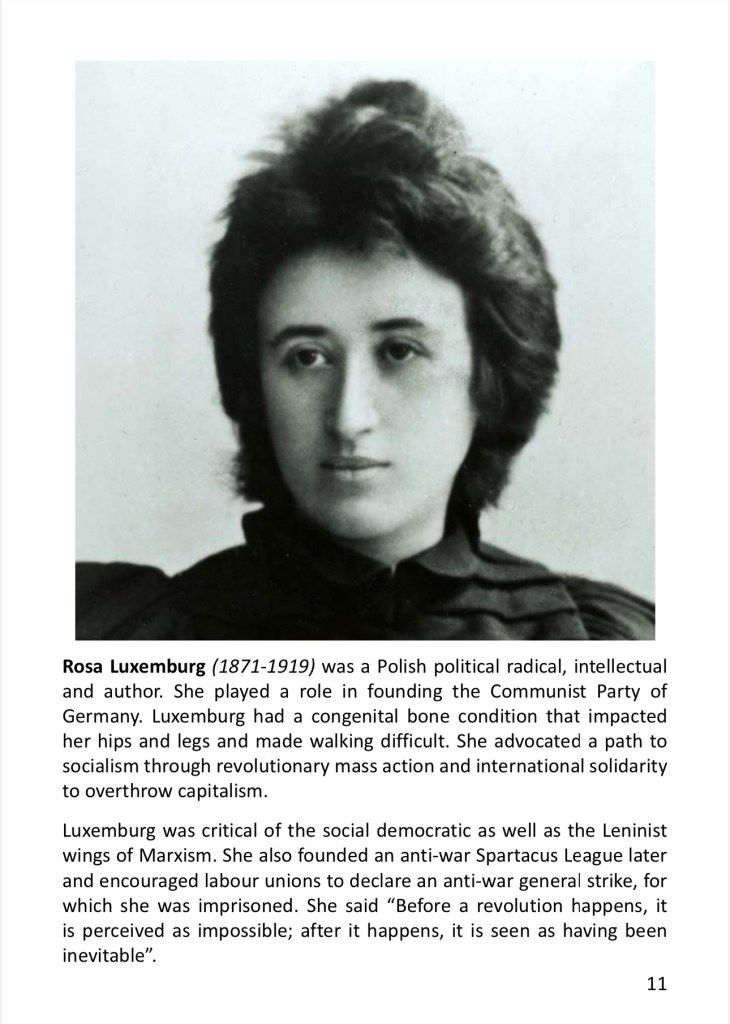
Opium of the people
Lil revolutionary optimism from Stalin
J. V. Stalin: Anarchism Or Socialism?
That which in life is born and grows day by day is invincible, its progress cannot be checked. That is to say, if, for example, in life the proletariat as a class is born and grows day by day, no matter how weak and small in numbers it may be today, in the long run it must triumph. Why? Because it is growing, gaining strength and marching forward. On the other hand, that which in life is growing old and advancing to its grave must inevitably suffer defeat, even if today it represents a titanic force. That is to say, if, for example, the bourgeoisie is gradually losing ground and is slipping farther and farther back every day, then, no matter how strong and numerous it may be today, it must, in the long run, suffer defeat. Why? Because as a class it is decaying, growing feeble, growing old, and becoming a burden to life.
Revolutionary optimism!
What did Lenin have to say about socialism and war?
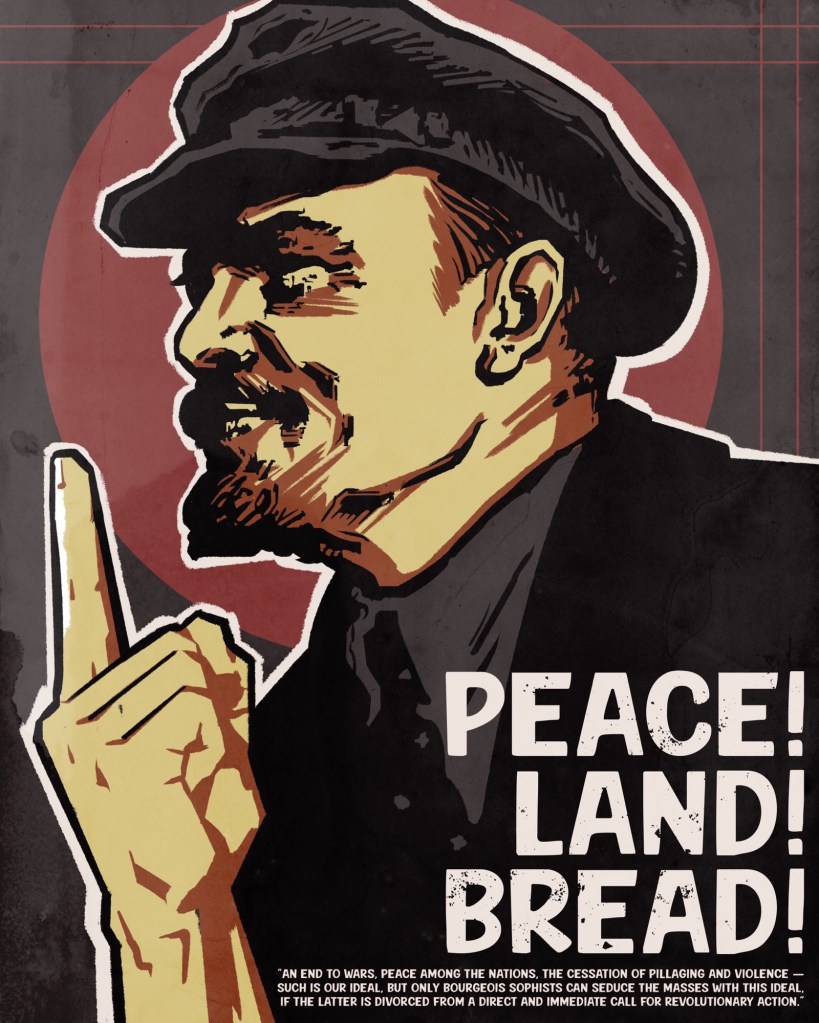
What did Lenin have to say about socialism and war?
“Socialists have always condemned war between nations as barbarous and brutal. But our attitude towards war is fundamentally different from that of the bourgeois pacifists (supporters and advocates of peace) and of the anarchists. We differ from the former in that we understand the inevitable connection between wars and the class struggle within the country; we understand that war cannot be abolished unless classes are abolished and socialism is created; and we also differ in that we fully regard civil wars, ie, wars waged by the oppressed class against the oppressing class, slaves against slave-owners, serfs against land-owners, and wage-workers against the bourgeoisie, as legitimate, progressive and necessary.”
Related:
Socialism and War (PDF)
Imperialism: The Highest Stage of Capitalism (PDF)
April Theses (PDF)
Why Marxists Oppose Individual Terrorism
Why Marxists Oppose Individual Terrorism
There is no need to belabour the point that Social Democracy has nothing in common with those bought-and-paid-for moralists who, in response to any terrorist act, make solemn declarations about the ‘absolute value’ of human life. These are the same people who, on other occasions, in the name of other absolute values—for example, the nation’s honour or the monarch’s prestige—are ready to shove millions of people into the hell of war. Today their national hero is the minister who gives the sacred right of private property; and tomorrow, when the desperate hand of the unemployed workers is clenched into a fist or picks upon a weapon, they will start in with all sorts of nonsense about the inadmissibility of violence in any form.
Lenin: Socialism and Religion
Read More »The economic oppression of the workers inevitably calls forth and engenders every kind of political oppression and social humiliation, the coarsening and darkening of the spiritual and moral life of the masses. The workers may secure a greater or lesser degree of political liberty to fight for their economic emancipation, but no amount of liberty will rid them of poverty, unemployment, and oppression until the power of capital is overthrown. Religion is one of the forms of spiritual oppression which everywhere weighs down heavily upon the masses of the people, over burdened by their perpetual work for others, by want and isolation. Impotence of the exploited classes in their struggle against the exploiters just as inevitably gives rise to the belief in a better life after death as impotence of the savage in his battle with nature gives rise to belief in gods, devils, miracles, and the like. Those who toil and live in want all their lives are taught by religion to be submissive and patient while here on earth, and to take comfort in the hope of a heavenly reward. But those who live by the labour of others are taught by religion to practise charity while on earth, thus offering them a very cheap way of justifying their entire existence as exploiters and selling them at a moderate price tickets to well-being in heaven. Religion is opium for the people. Religion is a sort of spiritual booze, in which the slaves of capital drown their human image, their demand for a life more or less worthy of man.
[1999] Philippines: The Great Left Divide
A SPECTER is haunting the revolutionary movement in the Philippines — the specter of seemingly interminable splits.
In the seven years since Armando Liwanag issued his “Reaffirm our Basic Principles and Rectify Errors” document, the Left — or more appropriately, the Left of the national democratic (ND) tradition — has gone through an unprecedented period of metastasis. The once monolithic movement that at its peak in the mid-1980s commanded 35,000 Party members, 60 guerrilla fronts, two battalions and 37 company formations, and foisted ideological and organizational hegemony in the progressive politics during the Marcos dictatorship is now history. Out of it have emerged fragments of disparate groups — eight at least — that continue to wage “revolution” in similarly disparate forms.
The Great Left Divide
Related:
Five of Lenin’s Insights That Are More Pertinent Than Ever

Today we mourn a hundred years since the physical death of one of our dearest comrades, Vladimir Ilyich Ulyanov, known to us as Lenin. It would be foolish, however, to think that his physical death meant the death of his ideas. Today, after a hundred years, Lenin’s ideas are as indispensable as ever. “They are mistaken when they think that his death is the end of his ideas”. This was told to us by Fidel Castro upon the death of Che Guevara, but it applies with equal accuracy to Lenin’s death.
Five of Lenin’s Insights That Are More Pertinent Than Ever
 Ms. Cat’s Chronicles
You must be logged in to post a comment.