The CIA Built Hundreds of Covert Websites: Here’s What They Were Hiding

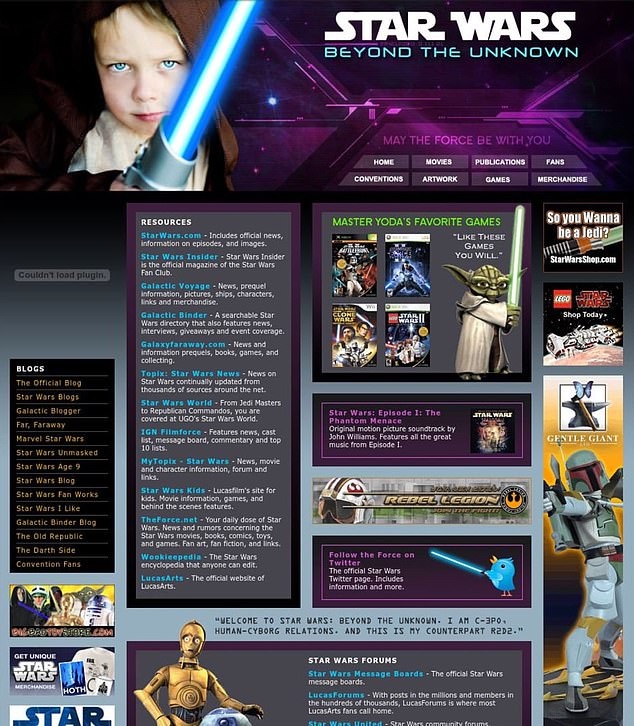
Screenshot of the now-defunct CIA-run Star Wars fan page.

The CIA didn’t just infiltrate governments; it infiltrated the internet itself. For over a decade, Langley operated a sprawling network of covert websites that served as global spy terminals disguised as harmless blogs, news hubs, and fan pages.

The CIA Built Hundreds of Covert Websites: Here’s What They Were Hiding

Political West’s “Divide And Rule” Strategy of Destabilizing China’s Belt and Road Initiative (BRI).

China’s Belt and Road Initiative (BRI) is the most ambitious infrastructure and economic integration project ever devised, linking over 140 countries across Asia, Africa and Europe. Much unlike the political West, Beijing is trying to project power through economic means, a starkly different approach to that of the most aggressive power pole in human history.

Political West’s “Divide And Rule” Strategy of Destabilizing China’s Belt and Road Initiative (BRI) (archived)

Syrian Kurdish official rejects Turkish calls to lay down arms, says SDF seeks integration instead +

A top Syrian Kurdish official has rejected Turkish calls for the Syrian Democratic Forces (SDF) to give up their weapons as part of Ankara’s broader peace efforts with Kurdish militants, saying the situation in Syria requires integration, not the laying down of arms.

Ilham Ahmed, co-chair of the Foreign Relations Committee of the Autonomous Administration of North and East Syria (Rojava), told BBC’s Turkish service that the SDF’s continued armed presence is necessary due to ongoing security threats, particularly from Islamic State in Iraq and the Levant (ISIL) remnants and the lack of a permanent Syrian constitution.

Syrian Kurdish official rejects Turkish calls to lay down arms, says SDF seeks integration instead

The U.S. continues to back the Syrian Democratic Forces (SDF)—a coalition dominated by the YPG, which Turkey sees as indistinguishable from the PKK. Despite the PKK’s recent disarmament announcement, Washington has resuscitated funding and military coordination with the SDF—a coalition whose very name was crafted to obscure its PKK lineage. This comes even as the U.S. consolidates its military presence to a single base in Hasakah, signaling a shift from occupation to strategic entrenchment.

In 2019, as Trump was weighing a withdrawal of U.S. troops from Syria during his first term, Tulsi Gabbard brought Ilham Ahmed—the then-head of the Syrian Democratic Council, political wing of the U.S.-backed Syrian Democratic Forces in Rojava—as her guest to Trump’s second State of the Union. The message was clear: autonomy should have air support. Ahmed currently serves as Co-Chair of the Foreign Affairs Department of Rojava, also known as the Democratic Autonomous Administration of North and East Syria.

Related:

Trump should be convinced of US pullout from Syria- but… (Disarmament, dissolution of YPG)

The SDF equals the YPG/PKK/Kurds: A timeline of the PKK’s war on Türkiye

Capes, Cameras, and the Cult of Visibility

Capes, Cameras, and the Cult of Visibility: The SeaLight Crusade as White Savior Theater

By Tina Antonis

The South China Sea is more than a maritime dispute—it’s a theater of narrative warfare. While headlines focus on Chinese aggression and Philippine resistance, a quieter campaign unfolds in the background: one of satellite feeds, curated imagery, and Pentagon-backed storytelling. At the center of this effort is SeaLight, a project that claims to illuminate truth but often casts shadows of its own.

As explored in my article at Antiwar.com, SeaLight doesn’t just document—it performs. It reframes geopolitical tension through moral spectacle, positioning its creators as heroic arbiters of transparency. But when the messenger wears a cape and the funding flows from defense budgets, we must ask: is this clarity, or choreography?

Stage Left: The White Savior Enters

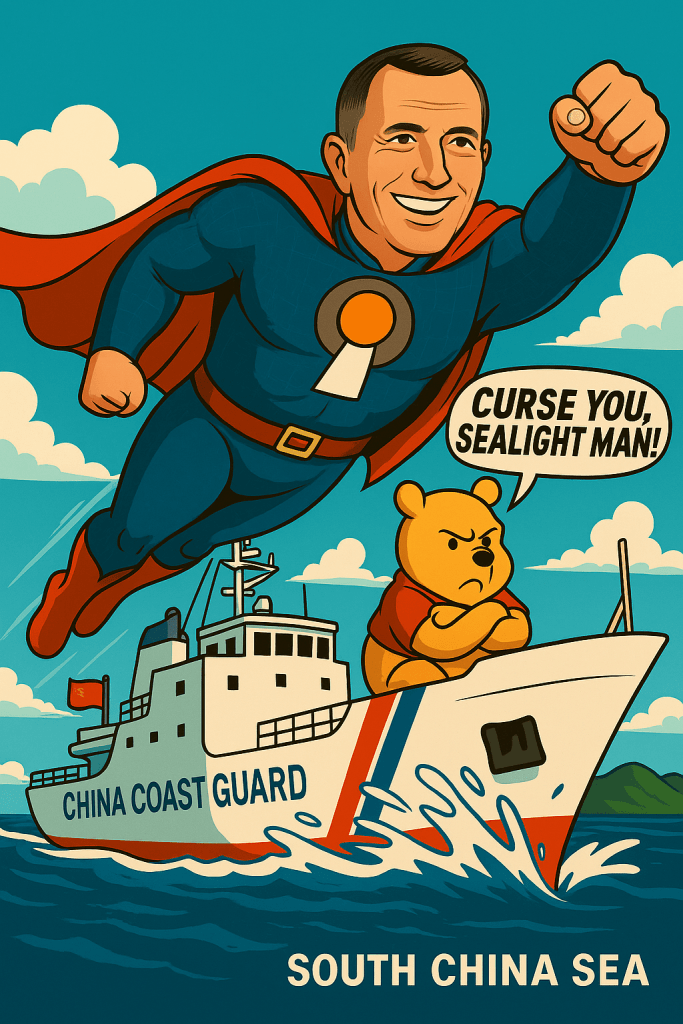
In the comic-strip cosmology of Ray Powell’s SeaLight project, transparency wears a cape. Clad in heroic postures and backed by satellite imagery, Powell casts himself as the guardian of maritime morality—unarmed, except with satellite feeds, theatrical flair, and strategic messaging. 

Yet beneath the cartoon and Pentagon-funded optics lies a familiar archetype: the white savior, rebranded for the South China Sea.

China Is Imperialist? Says Who?

Calling China a “maritime occupier,” Powell positions himself as a bulwark against aggression. But that moral pose collapses under scrutiny. He speaks for a country with over 800 foreign military installations and a documented history of over 250 military interventions since 1991—wars in Iraq, Afghanistan, Libya, Syria, Somalia, and dozens more, all under the banner of peace, freedom, or preemption.

By comparison, China’s post–Cold War footprint includes no sustained foreign occupations and only scattered border conflicts and peacekeeping missions. The imbalance is staggering. And Powell’s framing doesn’t just ignore it—it performs around it.

As David Vine argues in The United States of War, this vast base empire is not a passive network—it’s an architecture of perpetual war. These outposts make military engagement not an exception but a structural habit, cloaked in strategic necessity and sold as global stewardship.

Powell’s cartoon rhetoric—calling China an occupier—obscures the scale of U.S. militarism. The term “occupation” is deployed not to analyze, but to project. When adversaries hold territory, it’s a crisis; when the U.S. spans the globe with armed installations, it’s policy.

Framing Conflict: The Optics of Consent

This isn’t irony. It’s performance. Powell’s language manufactures a moral frame for confrontation—costumed in transparency, but driven by escalation. The cape is literal. The conditioning is deliberate. And the stage is set for war.

SeaLight’s mission is not just visual documentation—it’s narrative warfare. As the Japan Times openly notes, its “chief weapon is photography, applied purposefully, generously and consistently over time.” These images—enhanced, curated, and distributed across media—are not neutral. They’re constructed to shape public perception, sway international opinion, and ultimately manufacture consent for confrontation.

Assertive transparency becomes a kind of ideological scaffolding—a stage on which geopolitical tension is dramatized, simplified, and morally polarized. The goal isn’t simply to reveal conflict; it’s to condition audiences for escalation.

And when the messenger dons a superhero’s cape, the spectacle transforms into something deeper: a story of rescue, of virtue, of intervention. This is not analysis—it’s soft propaganda dressed in heroic metaphor.

Consent for war doesn’t begin with missiles. It begins with mythmaking.

From Bromance to Bombshells: Trump & Graham’s Russia Ultimatum

Sources: YouTube / Dasha Burns: Trump WH Working With Lindsey Graham On Language Giving President “The Ultimate Say” On Putin

He’s still repeating the lie about Ukraine’s nuclear weapons. They never had operational control of them!

Related:

Graham, Blumenthal hail Trump’s new Russia sanctions plan

The Truth About Ukraine’s Decision to Give Up Its Nukes in the ’90s

NordStream

FAIR USE STATEMENT:

This video may contain copyrighted material the use of which has not been specifically authorized by the copyright owner. This material is being made available within this transformative or derivative work for the purpose of education, commentary and criticism, is being distributed without profit, and is believed to be “fair use” in accordance with Title 17 U.S.C. Section 107.