The so-called “sexual revolution” that began in the 1960s and 1970s, hailed by bourgeois liberals and postmodern academics as a triumph of individual liberation and progressive reform, also became bound up with deeply reactionary phenomenon. From advancing the cause of human emancipation, it became a critical component of the broader social counterrevolution orchestrated by the ruling classes to undermine the potential of the working class. This pseudo-liberation, rooted to a notable extent in the decay of capitalist society, has contributed directly to profound negative impacts on public health, including the explosive proliferation of sexually transmitted infections (STIs), mental health crises, and the commodification of human relationships under the guise of “freedom.”
In the 1990s, the Soviet Union fell apart, and Russia began moving towards a market economy. However, this transition brought with it a severe economic collapse, widespread poverty, and a sharp rise in organized crime.
F.B.I. agents stationed overseas had sex with prostitutes in Cambodia, the Philippines and Thailand, even as some bureau employees attended training meant to combat human trafficking, a practice that often exploits vulnerable women, according to an investigation by the Justice Department’s watchdog.
Woman’s fate is bound up with that of the exploited male. This is a fact. However, this solidarity, arising from the exploitation that both men and women suffer and that binds them together historically, must not cause us to lose sight of the specific reality of the woman’s situation. The conditions of her life are determined by more than economic factors, and they show that she is a victim of a specific oppression. The specific character of this oppression cannot be explained away by setting up an equal sign or by falling into easy and childish simplifications.
The intersection of sex, capitalism, and militarism highlights how these systems often intertwine, with capitalism’s focus on commodification leading to the exploitation of sex work, while militarism frequently creates environments where women and vulnerable populations are particularly susceptible to sexual violence and trafficking, often due to the presence of military forces in a region, further perpetuating power imbalances and economic disparities. [1, 2, 3, 4, 5, 6, 7, 8, 9, 10]
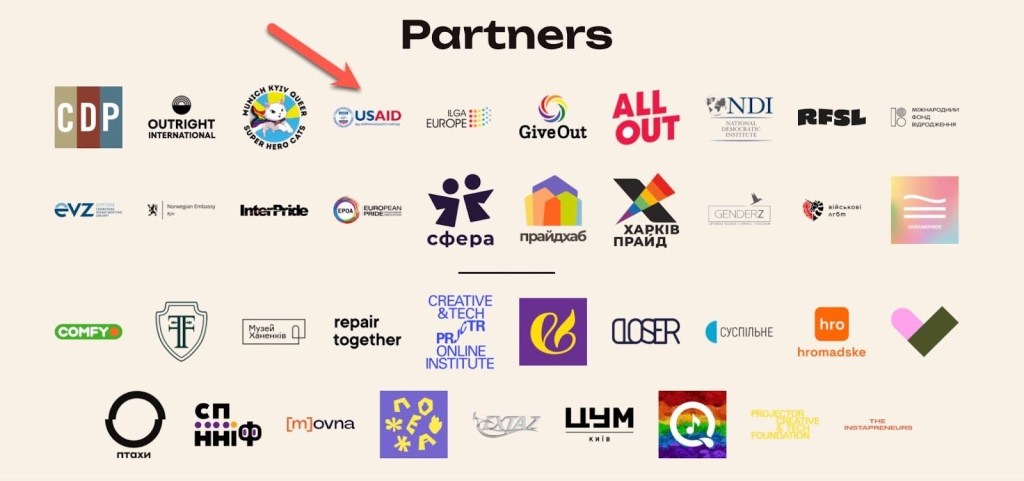
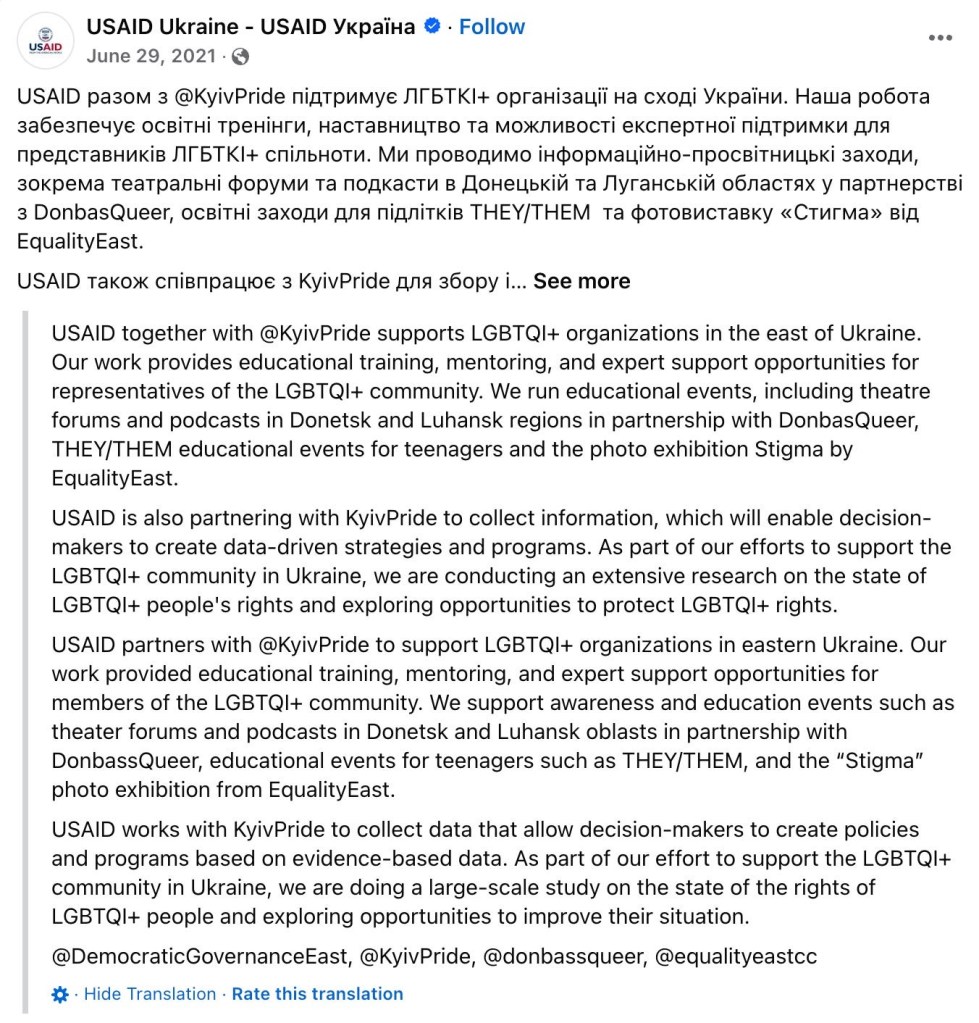
Such programs continued unperturbed during the First Trump Administration, when a touching project meant to increase transgender visibility in Ukrainian Fashion Week was funded through USAID’s program to “Enhance Non-Governmental Actors and Grassroots Engagement” (ENGAGE) in Ukraine:
…
Don’t worry, homophobes and transphobes; as long as capitalism exists, there will always be a “non-governmental organization” that will be willing to exploit the LGBTQ+ community and “sex workers” for corporate interests.
The question of women’s liberation is central to any revolutionary project, and thus so is the question of “sex work.” Esperanza Fonseca’s contribution, although coming from a Maoist political orientation with which we often have differences, [1] makes the stakes of this debate crystal clear, as she combines personal experience, public policy research, and historical materialism to argue that Marxists cannot uphold what she calls “sex-trade-expansionary feminism.”
Content Warning: Descriptions of rape.
…
The right of the subordinated classes of men to buy access to women’s bodies has been used historically to break class solidarity in order to maintain the dominant social relations of the time. This was true in feudal Europe and remains true today: when proletarian and petit bourgeois men get to buy women too, they develop a false consciousness and build solidarity with bourgeois men of their own gender rather than aligning with women of their own class. And because the overthrow of capitalism is only possible by the overthrowing of the bourgeoisie, prostitution serves two great purposes: (1) allows bourgeois men access to a reserve army of women for their pleasure, and (2) prevent class consciousness and thus helps stop the proletariat from organizing as a class.



 Ms. Cat’s Chronicles
You must be logged in to post a comment.