
by David Miller
Late last year, my name was added to a blacklist published online by the Ukraine Center for Countering Disinformation. I joined over ninety others deemed to be “speakers who promote narratives consonant with Russian propaganda.“
“Independent” Ukrainian “Kill List” Actually Run By Kiev, Backed by Washington
Tag: psychological operations
US developed AI tool to battle Russian disinformation Blinken
The Ukraine Content Aggregator is used to catch fake news and share data on it with foreign partners, the secretary of state says
US developed AI tool to battle Russian disinformation Blinken
H/T: Emil Cosman
Related:
Secretary Antony J. Blinken at Freedom House 2023 Annual Awards Ceremony
The third thing I wanted to highlight. While we’re working to promote access to the internet for all, we’re also working to address threats to human rights that come with an open internet, including online harassment, abuse, disinformation.
Now, online abuse doesn’t, of course, target only human rights defenders. Instead, the internet and digital technologies are often used to amplify attacks on vulnerable groups – women, the LGBTQI community, marginalized ethnic or religious groups – and undermine our broader fight for human rights. So this year, we launched what is now at least a 12-country Global Partnership for Action on Gender-Based Online Harassment and Abuse. We’re encouraging private sector to become engaged with us as well.
We’re also working to address the massive challenge of online misinformation and disinformation – again, something familiar to everyone in this room. To cite one example, of course, Russia continues to push a steady, relentless stream of disinformation about its war of aggression against Ukraine, to lie about and cover up horrific abuses it’s committed, to try to justify committing others.
In response, the State Department has developed an AI-enabled online Ukraine Content Aggregator to collect verifiable Russian disinformation and then to share that with partners around the world. We’re promoting independent media and digital literacy. We’re working with partners in academia to reliably detect fake text generated by Russian chatbots.
US launches another ministry of truth
Let ballot speak: Western media meddling Turkish vote as end looms
I’m seeing the same psyops play out regarding Turkey’s election that I’ve seen while covering previous elections.
Let ballot speak: Western media meddling Turkish vote as end looms
I can’t access Anadolu Agency, either, without a VPN (location set to Hong Kong).
Army Info War Division Wants Social Media Surveillance to Protect “NATO Brand”
The U.S. Army Cyber Command told defense contractors it planned to surveil global social media use to defend the “NATO brand,” according to a 2022 webinar recording reviewed by The Intercept.
Army Info War Division Wants Social Media Surveillance to Protect “NATO Brand” (archived)
TIKTOK: Chinese “Trojan Horse” Is Run By State Department Officials
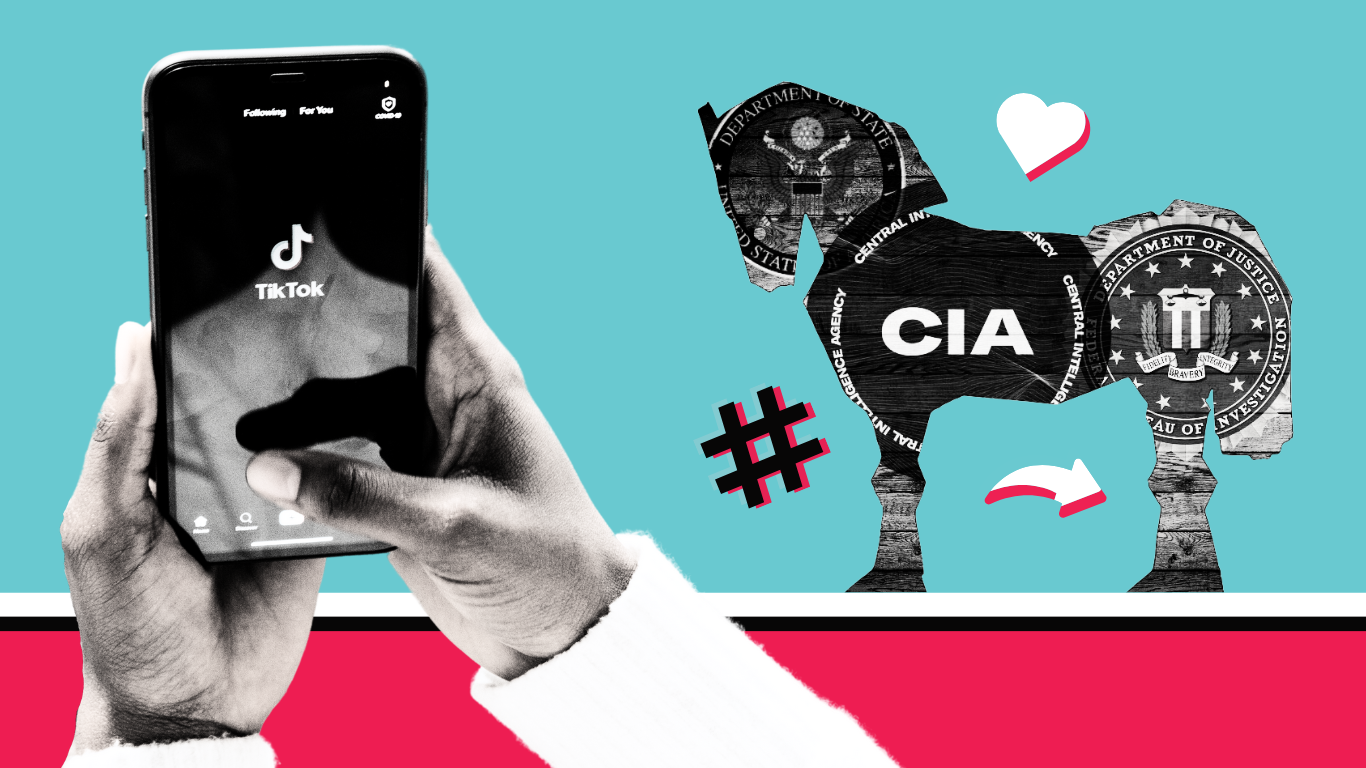
By Alan Macleod / MintPressNews
For quite some time, TikTok has been recruiting former State Department officials to run its operations.
TIKTOK: Chinese “Trojan Horse” Is Run By State Department Officials
On The E-Girl Army Psyop Phenomenon
Video: On The E-Girl Army Psyop Phenomenon via Justin Taylor
Related:
Weaponizing e-girls: How the US military uses YouTube and TikTok to improve its image
How E-girl influencers are trying to get Gen Z into the military
But Haylujan isn’t the only E-girl using Sanrio sex appeal to lure the internet’s SIMPs into the armed forces. There’s Bailey Crespo and Kayla Salinas, not to mention countless #miltok gunfluencers cropping up online. While she didn’t document her military career, influencer Bella Poarch also served in the US Navy for four years before going viral on TikTok in 2020, and is arguably the blueprint for this kind of kawaii commodified fetishism in the military. An adjacent figure, Natalia Fadeev, also known as Gun Waifu, is an Israeli influencer and IDF soldier who uses waifu aesthetics and catgirl cosplay to pedal pro-Israel propaganda to her 756k followers. She poses to camera, ahegao-style, with freshly manicured nails wrapped neatly around a glock, the uWu-ification of military functioning as a cutesy distraction from the shadowy colonial context: “when they try and destroy your nation,” she writes in one caption.
Nicaragua: Reconciliation Does Not Mean Forgetting

Hybrid warfare tactics, including information warfare and the co-opting of human rights groups, make it hard to tell the good guys from the bad in the US-backed coup attempt in Nicaragua in 2018. But it is important to note the telltale signs of class oppression and terrorist tactics to understand the truth about the 222 people recently released to the US who were convicted of treason in Nicaragua for savage acts of violence against their people. They had benefited from an amnesty in 2019, but violated its terms by participating in a new coup plot in 2020 and 2021. In releasing the 222 over to the US, the Nicaraguan authorities effectively pardoned them a second time in order to bring further reconciliation to society. But for the sake of historical memory and non-repetition, it is important to remember their crimes.
Nicaragua: Reconciliation Does Not Mean Forgetting
To Be Updated: USAID is sponsoring YouTube channels
How Democracy Can Win: The Right Way to Counter Autocracy
The most important step the United States can take to counter foreign influence campaigns and disinformation is to help our partners promote media and digital literacy, communicate credibly with their publics, and engage in “pre-bunking”—that is, seeking to inoculate their societies against disinformation before it can spread. In Indonesia, for example, USAID has worked with local partners to develop sophisticated online courses and games that help new social media users identify disinformation and reduce the likelihood that they will share misleading posts and articles.
The United States has also helped Ukraine in its fight against the Kremlin’s propaganda and disinformation. For decades, USAID has worked to enhance the media environment in the country, encouraging reforms that allow greater access to public information and supporting the emergence of strong local media organizations, including the public broadcaster Suspilne. After Russia’s initial invasion of Ukraine in 2014, our work expanded to help the country’s local journalists produce Russian-language programming that could reach into Kremlin-occupied territories, such as Dialogues With Donbas, a YouTube channel that featured honest conversations with Ukrainians about life behind Russian lines. We also helped support the production of the online comedy show Newspalm, which regularly racks up tens of thousands of views as it skewers Putin’s lies. And even before Moscow’s full-scale invasion began in February 2022, we worked with the government of Ukraine to stand up the Center for Strategic Communications, which uses memes [memetic warfare], well-produced digital videos, and social media and Telegram posts to poke holes in Kremlin propaganda.
I still need to look into Newspalm. I’ll update if I find anything. As I don’t know Ukrainian, or Russian, I’m using Google translate for the following information. Note, this is all speculation!
Speculation:
Read More »BUSTED: Canadian troll farm manufactures consent for Haiti invasion
As Canada deployed military aircraft over Haiti, a private military contractor operated a troll farm to give the appearance of popular support for foreign military intervention.
BUSTED: Canadian troll farm manufactures consent for Haiti invasion
Still skeptical about Jimmy Chérizier.
 Ms. Cat’s Chronicles
You must be logged in to post a comment.