
Philippines to match China’s gray zone tactics in South China Sea (archived)
Read More »Tag: Psychological Warfare
Syria: A Battle Lost Amid a Wider War
Syrian Army informs officers of regime change – Reuters + More
Syrian Army informs officers of regime change – Reuters
Related:
Brian Berletic on the situation in Syria:
What is happening in Syria is a major loss for the Syrian people and their allies, including Russia and Iran and ultimately both China and the rest of the multipolar world. It is a reminder that the US and its proxies remain the greatest threat to human peace and prosperity on planet Earth today – a potent danger that should not be underestimated. Not only has the US maintained a large army of terrorists all along Syria’s borders, it has maintained significant control over global information space poisoning entire regions of the planet against their own best interests. While US industry and military power fades, it has maintained its ability to politically interfere and capture entire populations – not through any particular strength, but from a fundamental lack of action from the rest of the world in recognizing information space as the key to national security in the 21st century. Even today, most of the world has surrendered its information space to Silicon Valley and the US State Department. No matter how many tanks you have, if the US can convince your population not to man them or to point their guns in the opposite direction, you still lose.
Read More »
An Introduction to Fifth Generation Warfare
How I Learned to Stop Worrying and Love 5GW
We type these words travelling through the Swiss Alps on high-speed rail. As the world becomes smaller, we at The Radio Research Group have witnessed firsthand how nearly everything we knew about modern conflict is changing, under the shadow of Fifth Generation Warfare. The incredible, exponential, accelerating pace of technology has overturned centuries of standard operating procedure. Diplomats and military leaders alike have been thrust into uncharted domains, disrupted by an invisible enemy that makes us question our reality.
Related:
5GW: 2012 NDAA – Propaganda – MISO – InfoOps – PsyOps
Cambridge Analytica and the Right-Wing Populist Movements
What’s Really Going On In the South China Sea Between the Philippines and China
What’s Really Going On In the South China Sea Between the Philippines and China
by Tina Antonis
Maritime clashes between the Philippines and China had been mostly over the Philippines’ military outpost, BRP (BRP—Barko ng Republika ng Pilipinas, which translates to “Ship of the Republic of the Philippines”—the ship prefix for the Philippines) Sierra Madre, in the Spratly Islands, which is disputed by Brunei, China, Malaysia, the Philippines, Taiwan (a province of China, as recognized by the United Nations’ Resolution No. 2758), and Vietnam. The BRP Sierra Madre was intentionally run aground on a reef near the Second Thomas Shoal in the disputed Spratly Islands, in 1997, so that the Philippines could stake their territorial claim.
Read More »Scott Bennett’s death
Twitter/X: American Patriot Scott Bennett Has Passed Away | RIP Brother!
This is all that I’ve found on Bennett’s death.
Related:
H/T: Unorthodox Truth
For Taiwan, Trump’s ‘protection’ money may mean new and early big ticket arms deals
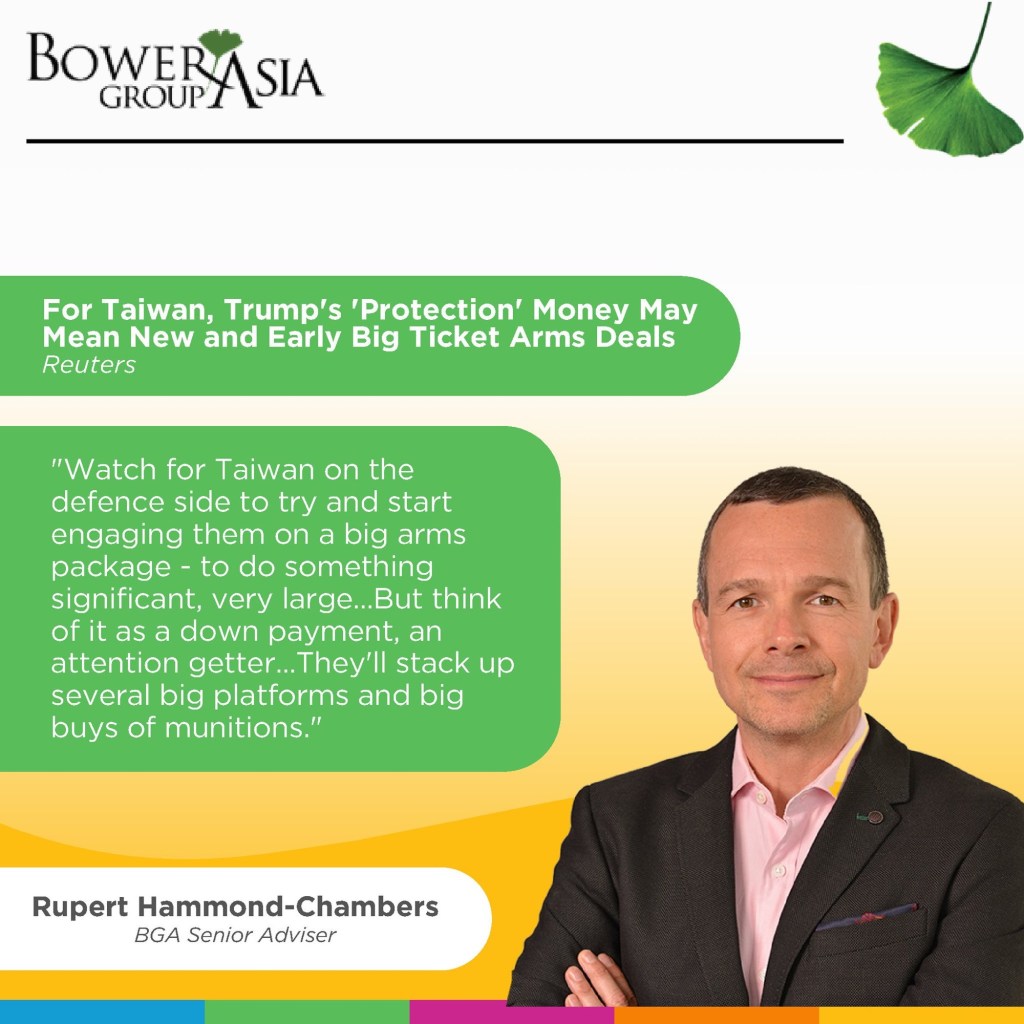
For Taiwan, Trump’s ‘protection’ money may mean new and early big ticket arms deals
“Watch for Taiwan on the defence side to try and start engaging them on a big arms package – to do something significant, very large,” Rupert Hammond-Chambers, president of the U.S.-Taiwan Business Council which helps broker defence exchanges between Washington and Taipei, told Reuters, adding it could come in the first quarter of next year.
“But think of it as a down payment, an attention getter,” he said. “They’ll stack up several big platforms and big buys of munitions.”
The U.S. is already Taiwan’s most important arms supplier, although Taiwan has complained of an order backlog worth some $20 billion. A new order, almost $2 billion of missile systems, was announced last month.
Related:
Profile at BowerGroupAsia: Rupert Hammond-Chambers
[11-23-2022] Pilipinas Conference 2022

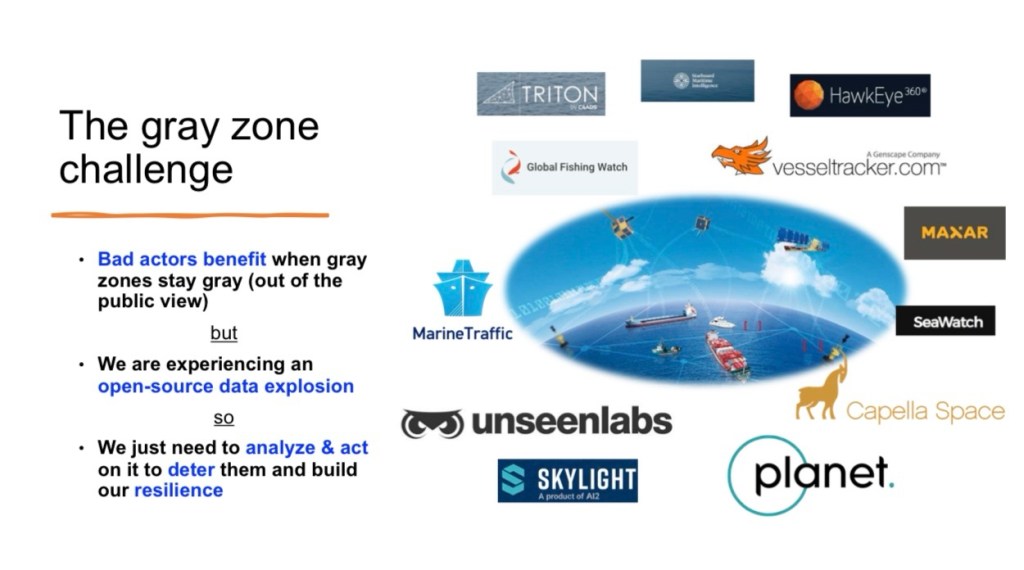

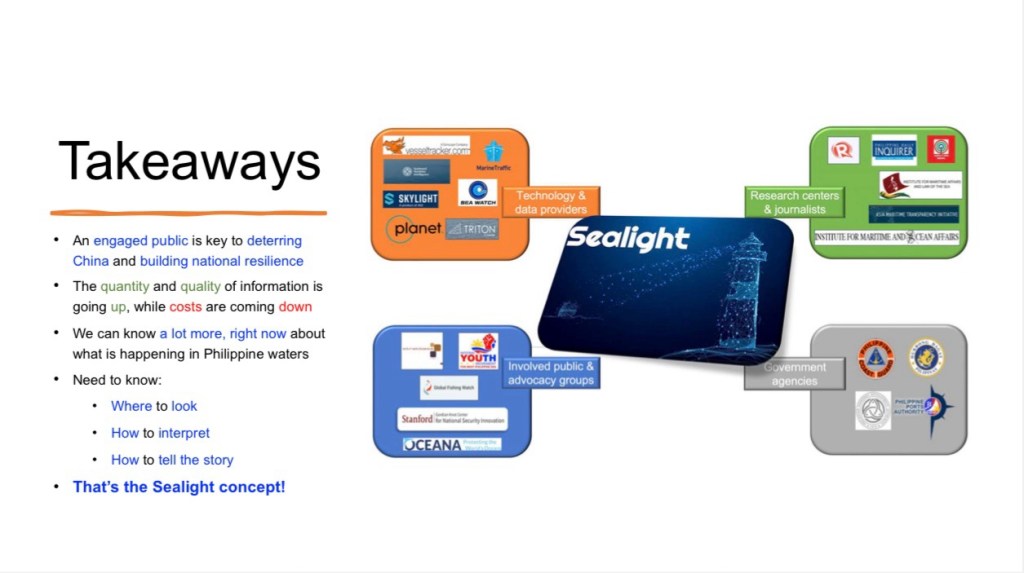

Col. Raymond Powell, U.S. Air Force (Ret.)
Gordian Knot Center for National Security Innovation (Project Myoushu), Stanford University, California, USAMajor Angela Smith
US Army Officer, Gordian Knot Center for National Security Innovation (Project Myoushu), Stanford University, California, USA
Related:
Leaks expose secret British military cell plotting to ‘keep Ukraine fighting’
Leaked files show top UK military figures conspired to carry out the Kerch bridge bombing, covertly train “Gladio”-style stay-behind forces in Ukraine, and groom the British public for a drop in living standards caused by the proxy war against Russia.
…
Project Alchemy’s proposed schemes spanned every conceivable field of warfare, from cyber attacks to “discreet operations” to outright terrorism. The secret cell even put forward a plan to “aggressively pursue” and “dismantle” independent media outlets – including The Grayzone – through an aggressive campaign of legal harassment and online censorship, so they “would be forced to close.” The incendiary blueprints were fed to the highest levels of the British state and national security structure, where they were apparently well-received.
Leaks expose secret British military cell plotting to ‘keep Ukraine fighting’
It’s officially published!

Read it at Antiwar.com or here with graphics. FYI, the “Ant” in Antonis is pronounced as 🐜.
 Ms. Cat’s Chronicles
You must be logged in to post a comment.