

I’m sure that US corporations would love to exploit their minerals, too.
North Korea is sitting on trillions of dollars of untapped wealth
Few think of North Korea as being a prosperous nation. But it is rich in one regard: mineral resources.
…
But however much North Korea could extract from other nations that way, the result would pale in comparison to the value of its largely untapped underground resources.
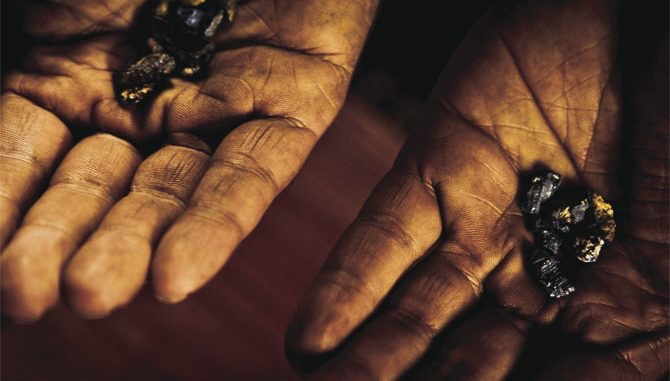
Below the nation’s mostly mountainous surface are vast mineral reserves, including iron, gold, magnesite, zinc, copper, limestone, molybdenum, graphite, and more—all told about 200 kinds of minerals. Also present are large amounts of rare earth metals, which factories in nearby countries need to make smartphones and other high-tech products.
Estimates as to the value of the nation’s mineral resources have varied greatly over the years, made difficult by secrecy and lack of access. North Korea itself has made what are likely exaggerated claims about them. According to one estimate from a South Korean state-owned mining company, they’re worth over $6 trillion. Another from a South Korean research institute puts the amount closer to $10 trillion.
North Korea has prioritized its mining sector since the 1970s (pdf, p. 31). But while mining production increased until about 1990—iron ore production peaked in 1985—after that it started to decline. A count in 2012 put the number of mines in the country at about 700 (pdf, p. 2). Many, though, have been poorly run and are in a state of neglect. The nation lacks the equipment, expertise, and even basic infrastructure to properly tap into the jackpot that waits in the ground.
…
It doesn’t help that private mining is illegal in communist North Korea, as are private enterprises in general (at least technically). Or that the ruling regime, now led by third-generation
dictatorKim Jong-un, has been known to, seemingly on a whim, kick out foreign mining companies it’s allowed in, or suddenly change the terms of agreements.Despite all this, the nation is so blessed with underground resources that mining makes up roughly 14% of the economy.
A “cash cow”
China is the sector’s main customer. Last September, South Korea’s state-run Korea Development Institute said that the mineral trade between North Korea and China remains a “cash cow” for Pyongyang despite UN sanctions, and that it accounted for 54% (paywall) of the North’s total trade volume to China in the first half of 2016. In 2015 China imported $73 million in iron ore from North Korea, and $680,000 worth of zinc in the first quarter of this year.
…
But South Korea has its own plans for the mineral resources. It sees them as a way to help pay for reunification (should it finally come to pass), which is expected to take decades and cost hundreds of billionsor even trillions of dollars. (Germany knows a few things about that.) Overhauling the North’s decrepit infrastructure, including the aging railway line, will be part of the enormous bill.
In May, South Korea’s Ministry of Land, Infrastructure and Transport invited companies to submit bids on possible infrastructure projects in North Korea, especially ones regarding the mining sector. It argued that (paywall) the underground resources could “cover the expense of repairing the North’s poor infrastructure.”
 Is it possible that the precious mineral
  Ms. Cat’s Chronicles
You must be logged in to post a comment.