

Previously:
Trump Admin Is Trying To Deport Mahmoud Khalil for Speech That’s ‘Contrary’ to US Foreign Policy
The Trump administration is trying to deport 30-year-old Mahmoud Khalil, a green card holder who was arrested by ICE agents over the weekend, for activity that is “contrary” to US foreign policy based on his involvement in protests critical of Israel’s war on Gaza at Columbia University.
Read More »
Ukraine: Stop the assassination of the Kononovich brothers!
ALERT! Demand the U.S. State Department and government of Ukraine take full responsibility to protect the lives of Mikhail and Alexander Kononovich!
Previously:
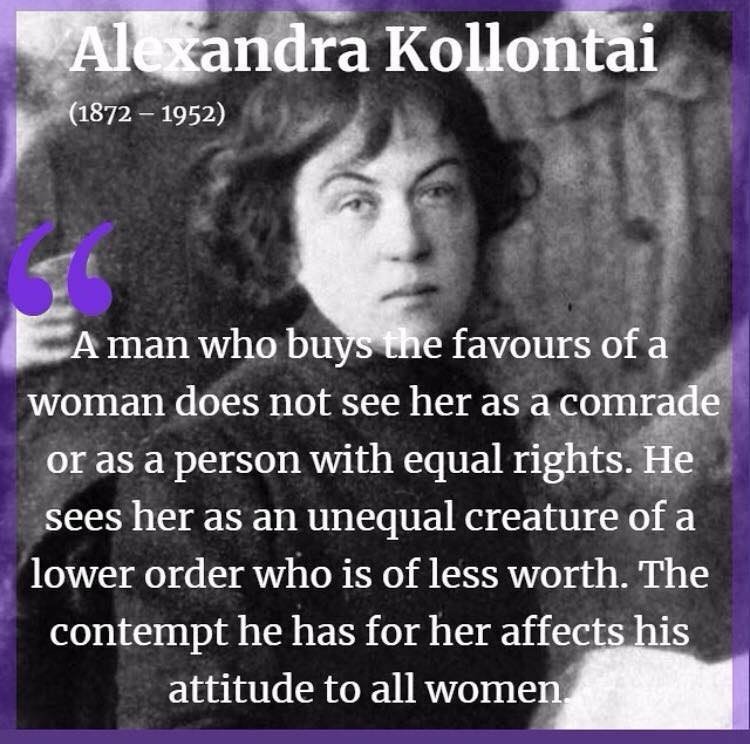
Alexandra Kollontai: Prostitution and ways of fighting it
What is the fundamental quality of the working class? What is its strongest moral weapon in the struggle? Solidarity and comradeship is the basis of communism. Unless this sense is strongly developed amongst working people, the building of a truly communist society is inconceivable. Politically conscious communists should therefore logically be encouraging the development of solidarity in every way and fighting against all that hinders its development – Prostitution destroys the equality, solidarity and comradeship of the two halves of the working class. A man who buys the favours of a woman does not see her as a comrade or as a person with equal rights. He sees the woman as dependent upon himself and as an unequal creature of a lower order who is of less worth to the workers’ state. The contempt he has for the prostitute, whose favours he has bought, affects his attitude to all women. The further development of prostitution, instead of allowing for the growth of comradely feeling and solidarity, strengthens the inequality of the relationships between the sexes.
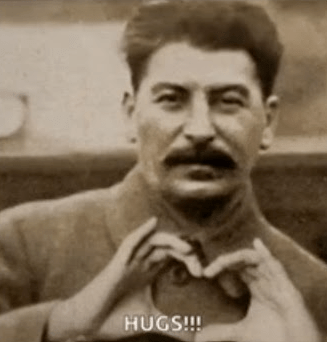
I love reading Pamphlets’ Twitter timeline for the laughs, but I love proving him wrong even more. Don’t slander Daddy Stalin! 🤭

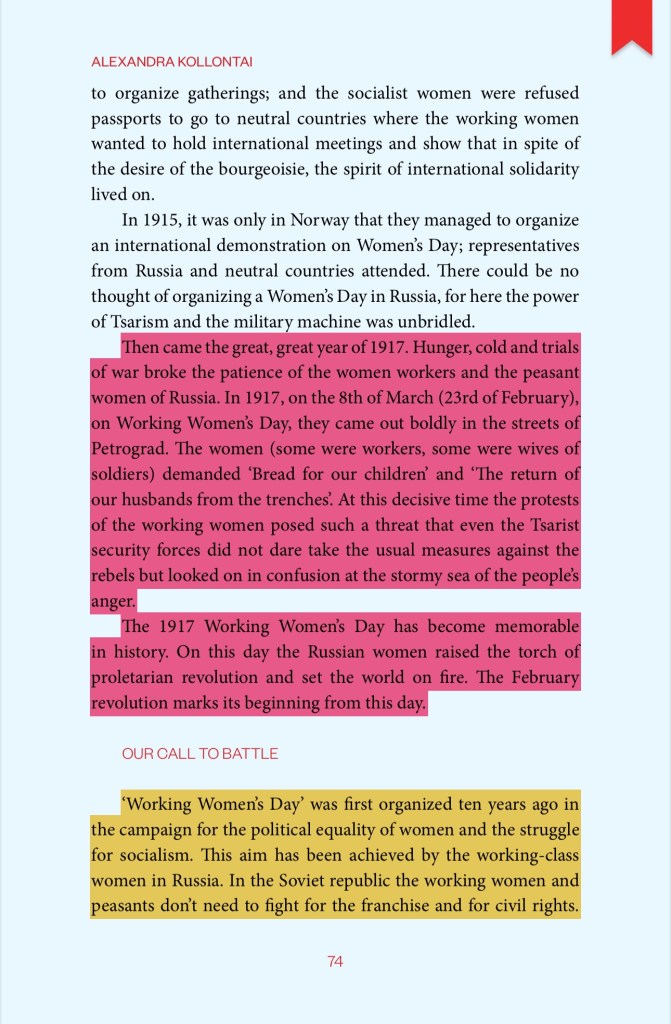

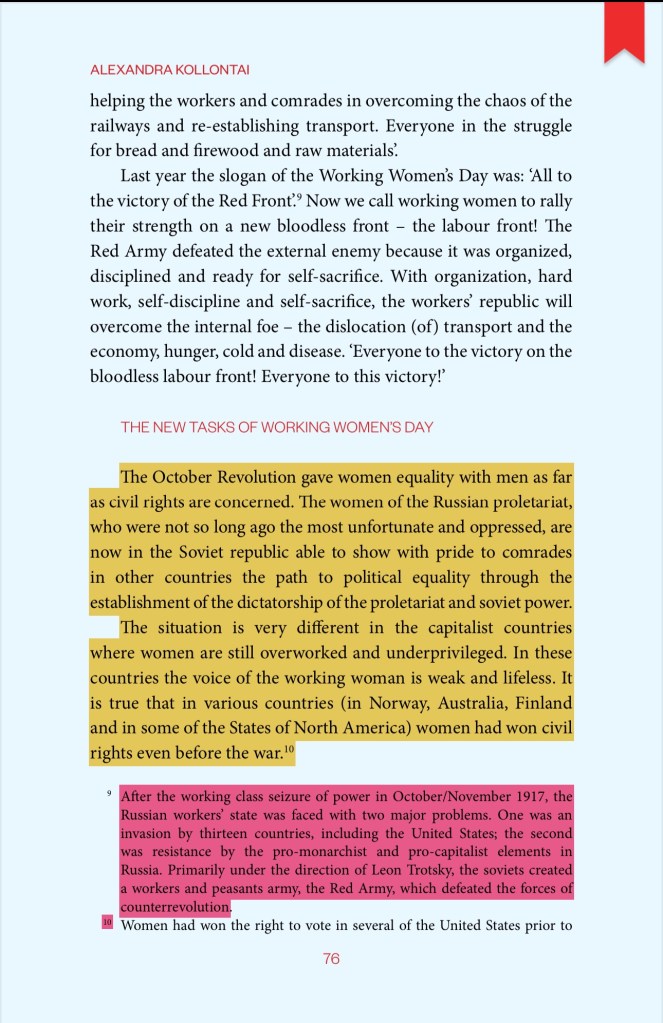

Today’s feminism has been co-opted by the oligarchs and the CIA (Gloria Steinem, et al. were CIA assets).
Previously:
Don’t Blame Karl Marx for ‘Cultural Marxism’
You might think that a history of cultural Marxism would start with Marx, but the poorly coiffed Prussian has almost nothing to do with this tale of insidious infiltration. Instead, the theory took off in the late 1990s due to speeches, essays, and books by William Lind, then with the Free Congress Foundation, and Patrick Buchanan, the firebrand conservative columnist, TV talking head, and sometime presidential candidate. (The idea, though not the name, was hatched earlier, in a 1992 monograph called “The New Dark Age: The Frankfurt School and Political Correctness.” It was written by a disciple of the noted conspiracy theorist Lyndon LaRouche.)
Related:
The CIA & the Frankfurt School’s Anti-Communism
Read More »MOSCOW, May 15 (Xinhua) — On the eve of his two-day state visit to China, which starts on Thursday, Russian President Vladimir Putin took a written interview with Xinhua.
The people of Russia and other former Soviet republics celebrated the sacred holiday of Victory Day on Thursday, complete with parades in major Russian cities and other solemn commemorations. Taking place against the backdrop of NATO’s ongoing proxy war against Russia in Ukraine, this year’s festivities bore a special significance, analysts say.
Russian Victory Day Fused Celebration of Nazis’ Defeat With Call for New Multipolar World Order
Friends, on the eve of the celebration of “Victory Day”, the song “We Remember” was created about the events of that so distant Great Patriotic War. But how does the meaning of the song resonate with the events of today?
Words: Ekaterina Lagodnyuk
Music: Maxim Bukhantsov and Margarita Lisovina
Arrangement: Maxim BukhantsovMargarita Lisovina – Remember
Read More »
 Ms. Cat’s Chronicles
You must be logged in to post a comment.