
What historical event fascinates you the most?
Related:
CIA and the Cultural Cold War (Anti-Communism)
Lies about the Holodomor, Joseph Stalin, & the U.S.S.R.
Zionist Secret Service & White Russian Army (Polar Bear Expedition)

Mirrors of Moscow: Nikolai Lenin
LENIN became an active revolutionist through the spiritual motives that have moved all great reformers — not because he himself was hungry and an outcast, but because he could not stand by unmoved in a world where other men were hungry and outcast. Such characters are predestined internationalists; the very quality that lifts them above materialism places them above borders and points of geography; they strive for the universal good. Lenin believes that the only thing worth living for is the next generation. Communism is his formula for saving the next generation from the injustices and inequalities of the present.
Read More »
Answers To An American Journalist’s Questions
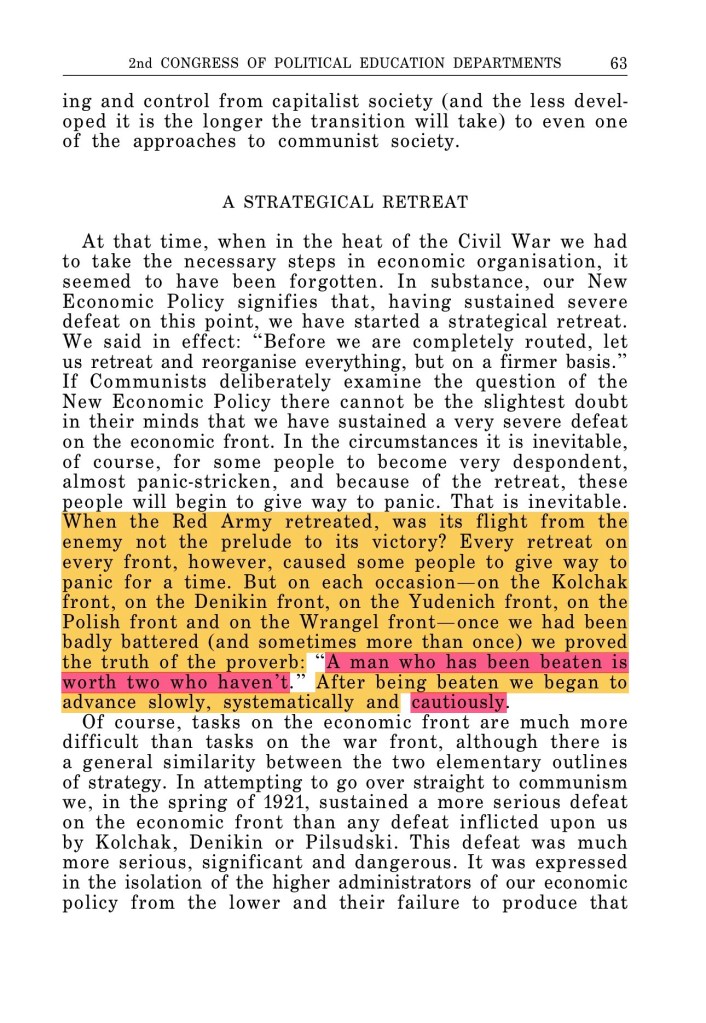
1. The governmental programme of the Soviet Government was not a reformist, but a revolutionary one. Reforms are concessions obtained from a ruling class that retains its rule. Revolution is the overthrow of the ruling class. Reformist programmes, therefore, usually consist of many items of partial significance. Our revolutionary programme consisted properly of one general item—removal of the yoke of the landowners arid capitalists, the overthrow of their power and the emancipation of the working people from those exploiters. This programme we have never changed. Some partial measures aimed at the realisation of the programme have often been subjected to change; their enumeration would require a whole volume. I will only mention that there is one other general point in our governmental programme which has, perhaps, given rise to the greatest number of changes of partial measures. That point is—the suppression of the exploiters’ resistance. After the Revolution of October 25 (November 7), 1917 we did not close down even the bourgeois newspapers and there was no mention of terror at all. We released not only many of Kerensky’s ministers, but even Krasnov who had made war onus. It was only after the exploiters, i.e., the capitalists, had begun developing their resistance that we began to crush that resistance systematically, applying even terror. This was the proletariat’s response to such actions of the bourgeoisie as the conspiracy with the capitalists of Germany, Britain, Japan, America and France to restore the rule of the exploiters in Russia, the bribery of the Czechoslovaks with Anglo-French money, the bribery of Mannerheirn, Denikin and others with German and French money, etc. One of the latest conspiracies leading to “a change”—to put it precisely, leading to increased terror against the bourgeoisie in Petrograd—was that of the bourgeoisie, acting jointly with the Mensheviks and Socialist-Revolutionaries; their conspiracy concerned the surrender of Petrograd, the seizure of Krasnaya Gorka by officer-conspirators, the bribing by British and French capitalists of employees of the Swiss Embassy and of many Russian employees, etc.
Read More »
Many great public issues as well as many private troubles are described in terms of the “psychiatric” — often, it seems, in a pathetic attempt to avoid the large issues and problems of modern society.
— C. Wright Mills, The Sociological Imagination
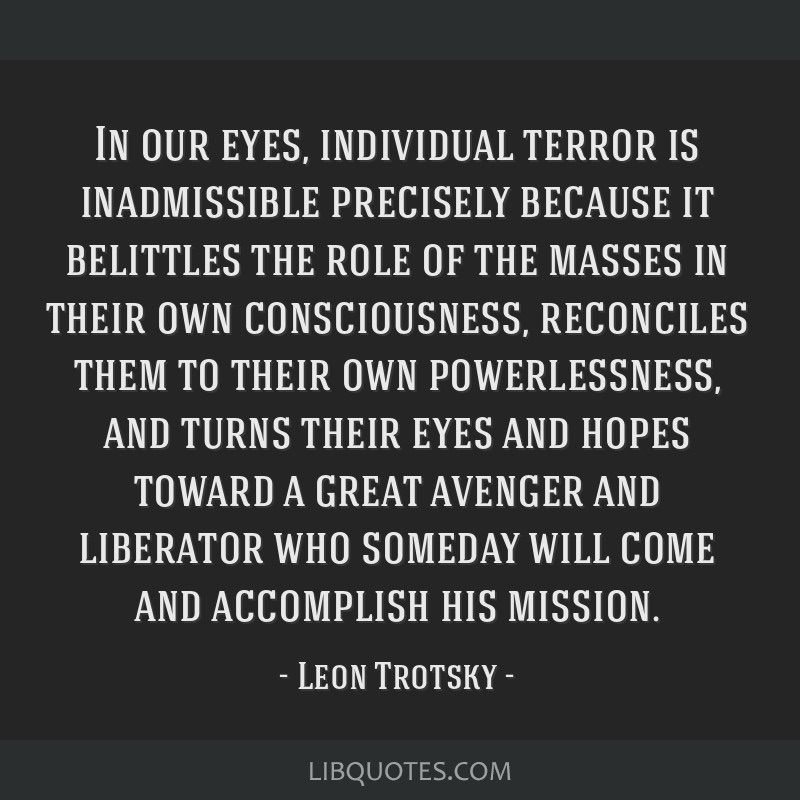
The case of Luigi Mangione, the 26-year old who allegedly assassinated UnitedHealthcare CEO Brian Thompson in the streets of Manhattan, has become a major public issue in the United States. While many details remain to be explained, the response from different layers of society raises fundamental class questions.


 Ms. Cat’s Chronicles
You must be logged in to post a comment.