We talk to legendary Pulitzer Prize winning reporter Seymour Hersh about his latest bombshell scoop: the United States, on President Biden’s orders, blew up the Nord Stream pipelines that were foundational to Germany’s export economy until last year.
Seymour Hersh is a legendary investigative reporter who has revealed dozens of crimes the U.S. government committed at home and abroad.
In his latest piece Hersh describes the destruction of the Nord Stream pipelines in the Baltic Sea by U.S. government forces. The destruction released an enormous amount of methane, a global warming gas. It destroyed Germany’s gas lifeline with Russia and thereby heavily damaged Germany’s industry. It was ecological and economic terrorism by the U.S. government targeted at an ‘ally’.
The bombing of the Nord Stream underwater gas pipelines in the Baltic Sea was a covert operation ordered by the White House and carried out by the CIA, a report by a veteran investigative journalist claims.
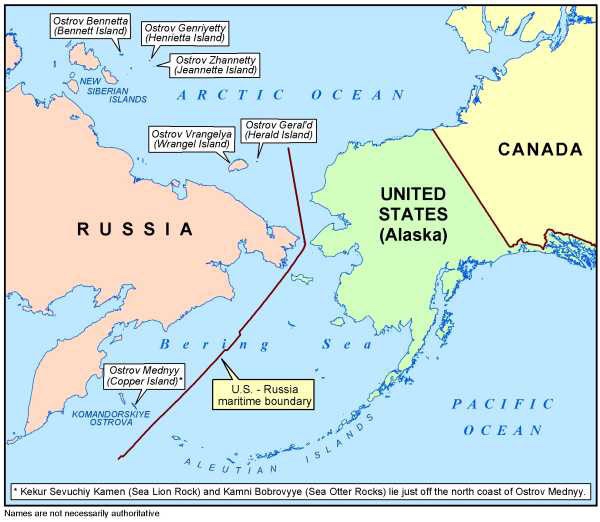
Thomas E. Dans, a columnist for The Wall Street Journal (WSJ) and former Commissioner of the US Arctic Research Commission, believes that the United States should reclaim Wrangel Island from Russia.
No negotiations regarding the U.S.-Russia maritime boundary have occurred since 1990, when the U.S.-USSR Maritime Boundary Agreement was signed. The negotiations that led to that agreement did not address the status of Wrangel Island, Herald Island, Bennett Island, Jeannette Island, or Henrietta Island, all of which lie off Russia’s Arctic coast, or Mednyy (Copper) Island or rocks off the coast of Mednyy Island in the Bering Sea. None of the islands or rocks above were included in the U.S. purchase of Alaska from Russia in 1867, and they have never been claimed by the United States, although Americans were involved in the discovery and exploration of some of them.
“. . . whoever holds the Arctic, holds the world. I think it is the most important strategic place in the world.” These solemn words were uttered in 1935 before a House of Representatives Committee by a retired American general and aviator, Billy Mitchell, who presciently foresaw the Arctic as a vital region for early detection against missile and aviation threats to prevent an attack against the United States. But at the end of the Cold War, the Arctic ceased to be a strategically important place for either the United States or the Russian Federation. But by the 2007-2008 timeframe, Russia began to re-prioritize the Arctic both economically and militarily—in keeping with Vladimir Putin’s vision of restoring Russia’s status as a great power and harnessing the Arctic’s economic potential. Now more than a decade later, Russia has returned to the Arctic militarily with important strategic implications for the United States.
The request by American officials is not aimed at pushing Ukraine to the negotiating table, these people said. Rather, they called it a calculated attempt to ensure the government in Kyiv maintains the support of other nations facing constituencies wary of fueling a war for many years to come.
The discussions illustrate how complex the Biden administration’s position on Ukraine has become, as U.S. officials publicly vow to support Kyiv with massive sums of aid “for as long as it takes” while hoping for a resolution to the conflict that over the past eight months has taken a punishing toll on the world economy and triggered fears of nuclear war.
The United States has carried out multiple surveillance flights this week around Kaliningrad, a Russian exclave located on the Baltic Sea coast. The American spy planes are likely assessing Moscow’s nuclear weapons activity as the two sides step up threats and warnings over the ongoing war in Ukraine.
“We haven’t seen any evidence at this time that Russia will use nuclear weapons,” said Lt. Cmdr. Joshua Kelsey. “We take these threats very seriously, but we have not seen any reason to adjust our own nuclear posture at this time.”
…
Intelligence agencies, the official said, are confident that Russia would notrisk an all-out nuclear war by launching a massive attack on Ukraine or NATO countries.
The Coast Guard Cutter Kimball crew on a routine patrol in the Bering Sea encountered a People’s Republic of China Guided Missile Cruiser, Renhai CG 101, sailing approximately 75 nautical miles north of Kiska Island, Alaska, September 19, 2022.
Since the early days of Russia’s special military operation in Ukraine, the diplomacy of the Сollective West has been striving to isolate Moscow, punishing it for resolving the conflict in Donbass. However, one cannot talk about isolation without accounting for the position of developing countries: Alongside the golden billion, there are another 7 billion people living in the world. It is then only natural that the eyes of Western strategists and diplomats have turned to states and regional organizations reluctant to join the anti-Russian rhetoric, seeing no point in imposing economic and political restrictions against Moscow.
Aug 13, 2022 Update on Russian military operations in Ukraine for August 14, 2022:
– Russian forces continue to make incremental progress along the Siversk-Bakhmut defense line even according to pro-Ukrainian sources;
– There is no sign of any Ukrainian offensive around Kherson, even according to the Western media;
– Another US-supplied HIMARS has been destroyed according to the Russian MoD, that is now 8 out of 16 sent to Ukraine destroyed;
– The Pentagon is now struggling to explain why it is unable to supply Ukraine with sufficient weapons needed to execute the ever-pending “Kherson Offensive” yet to materialize;
– Claims made by the Pentagon regarding the effectiveness of various weapon systems sent have been contradicted by recently discovered documents from the US military itself;
– The US Army claims the effectiveness of common US anti-tank weapons like the Javelin and the AT-4 is around 19% among trained US soldiers. This would be much lower among Ukrainian troops;
– The Western media has decided to assign credit to Ukraine for a recent explosion in Crimea despite Kiev denying any involvement;
– Ukraine is shelling Zaporozhzhia Nuclear Power Plant in an attempt to force Russian troops to leave through international pressure;
Anton Gerashenko, an adviser to the Ukrainian minister of internal affairs, claimed on Thursday that 60 pilots and technicians had been killed and 100 people wounded in a series of explosions at a Russian Saki air base on the Black Sea Crimean Peninsula on Tuesday. Since Russia’s annexation of Crimea in 2014, the air base has housed the Russian 43rd Independent Naval Assault Air Squadron.
Colin Kahl, the under secretary of defense for policy, said at a press briefing that the US had sent “a number” of the missiles without specifying how many the US has provided or when they were sent. Kahl did not explicitly say what type of anti-radiation missile was sent.
A defense official told CNN the type of missile sent was the AGM-88 High-Speed Anti-Radiation Missile (HARM).


 Ms. Cat’s Chronicles
You must be logged in to post a comment.