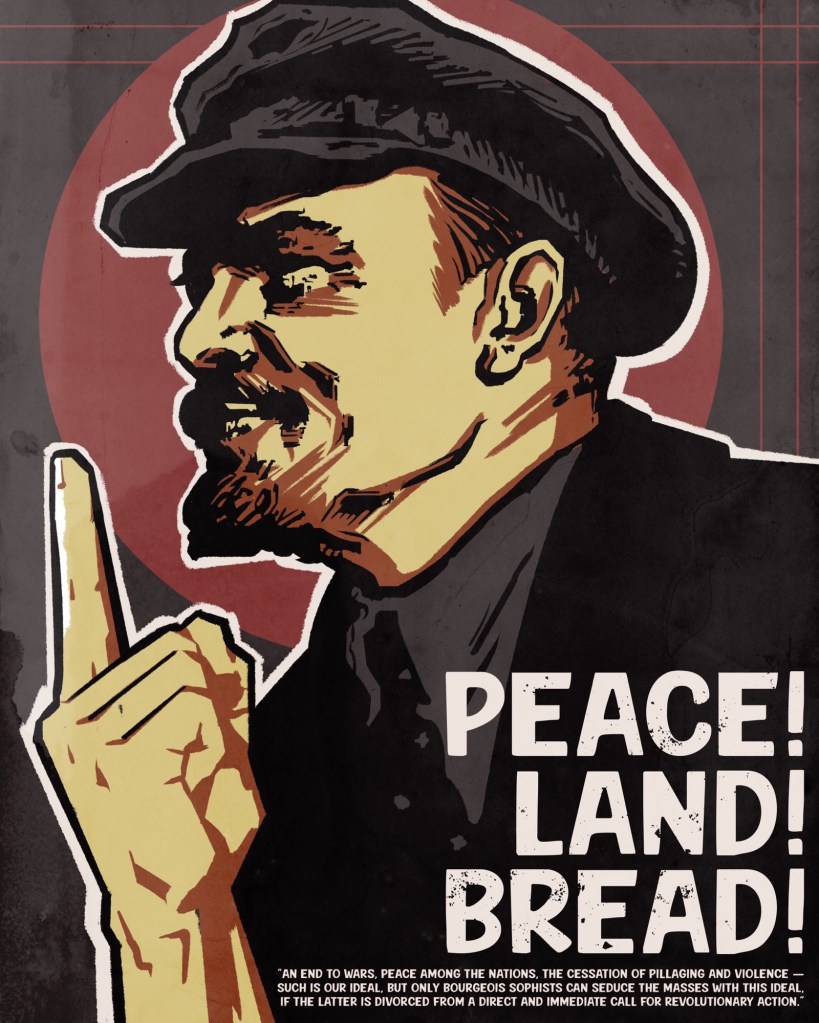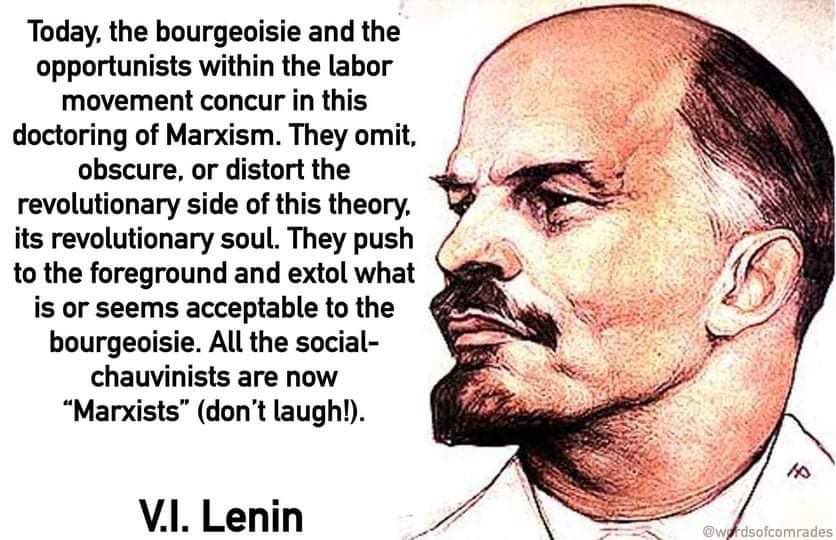
The socialist attitude to the tragedy of Luigi Mangione

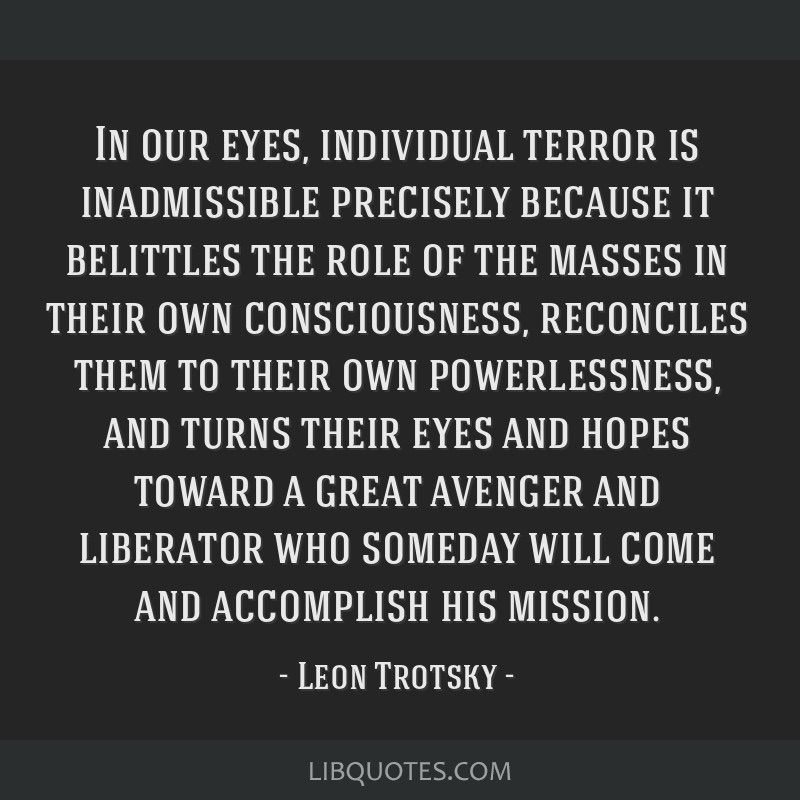
Why Marxists Oppose Individual Terrorism

The case of Luigi Mangione, the 26-year old who allegedly assassinated UnitedHealthcare CEO Brian Thompson in the streets of Manhattan, has become a major public issue in the United States. While many details remain to be explained, the response from different layers of society raises fundamental class questions.

The socialist attitude to the tragedy of Luigi Mangione

Maxim Gorky: Song of the Falcon + Bhikaiji Cama, Indian independence movement

Song of the Falcon, Maxim Gorky

II

Laying in his crevice, Snake contemplated the death of Falcon, her love of flying. He lay a long time in the narrow crevice, staring into this puzzling air that teases the eyes of the misguided with silly dreams. 

– What did she see there, in total emptiness, without bottom or edge or cover? The likes of her, in death as living, why do they dare confuse one’s soul with their passion for skyward flying? What do they see there? What do they hear? And might not I grasp all its meanings if I could fly there for just one moment? 

Snake said – and did it! His body tightened, he fast uncoiled, cutting through the air, like a flash of lightning. 

Those born to crawl – will never fly!.. Forgetting that, Snake hit the stones; not hurt, however, he thought, elated: 

– So, that’s the beauty of skyward flying! It is – in falling!.. Birds are so foolish! Not knowing earth, depressed when grounded, they feel the calling to rise to heaven and seek life’s pleasures in empty vastness. It is but empty. It is filled with light but void of food and of protection for us the living. Why, then, was Falcon so bold and proud? Just to conceal the sheer madness of her desires and lack of fitness among the living. Birds are so foolish!.. But I am wiser! I shan’t be bullied by their tattles. I know now! I saw their heaven, the sky of flying. I launched into it, its depths I measured; endured falling, but did not shudder, and gained much confidence from this endeavor. Let those wretches who cannot love this solid ground live in delusion. I know the truth. I won’t be fooled. Of earth created – by earth I’m living. 

And feeling proud, he coiled tightly, and was quite happy.

H/T: The USSR Tomorrow

Related:

Radical Books: Maxim Gorky, ‘Song of the Falcon’ (1894)

Read More »

MAO ZEDONG: COMMUNISM AND DICTATORSHIP

COMMUNISM AND DICTATORSHIP

There is yet a third argument, most assuredly a very important argument, even more important in reality. If we use peaceful means to attain the goal of communism, when will we finally achieve it? Let us assume that a century will be required, a century marked by the unceasing groans of the proletariat. What position shall we adopt in the face of this situation? The proletariat is many times more numerous than the bourgeoisie; if we assume that the proletariat constitutes two-thirds of humanity, then one billion of the earth’s one billion five hundred million inhabitants are proletarians (I fear that the figure is even higher), who during this century will be cruelly exploited by the remaining third of capitalists. How can we bear this? Furthermore, since the proletariat has already become conscious of the fact that it too should possess wealth, and of the fact that its sufferings are unnecessary, the proletarians are discontented, and a demand for communism has arisen and has already become a fact. This fact confronts us, we cannot make it disappear; when we become conscious of it we wish to act. This is why, in my opinion, the Russian revolution, as well as the radical communists in every country, will daily grow more powerful and numerous and more tightly organized. This is the natural result. This is the third argument….. 

There is a further point pertaining to my doubts about anarchism. My argument pertains not merely to the impossibility of a society without power or organization. I should like to mention only the difficulties in the way of the establishment of such form of society and of its final attainment…. For all the reasons just stated, my present viewpoint on absolute liberalism, anarchism, and even democracy is that these things are fine in theory, but not feasible in practice….

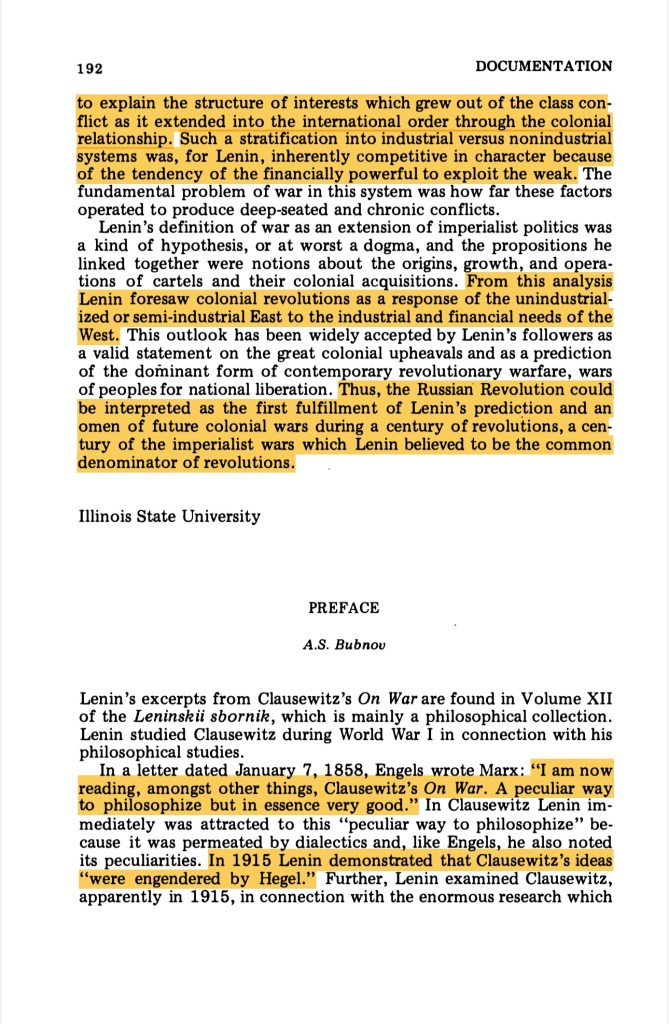
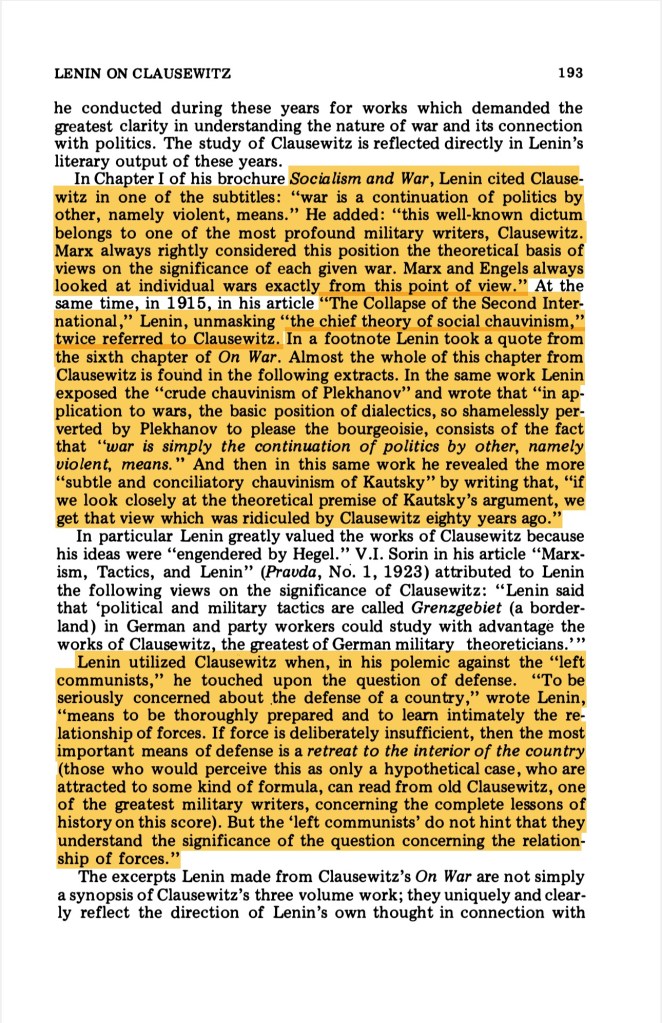
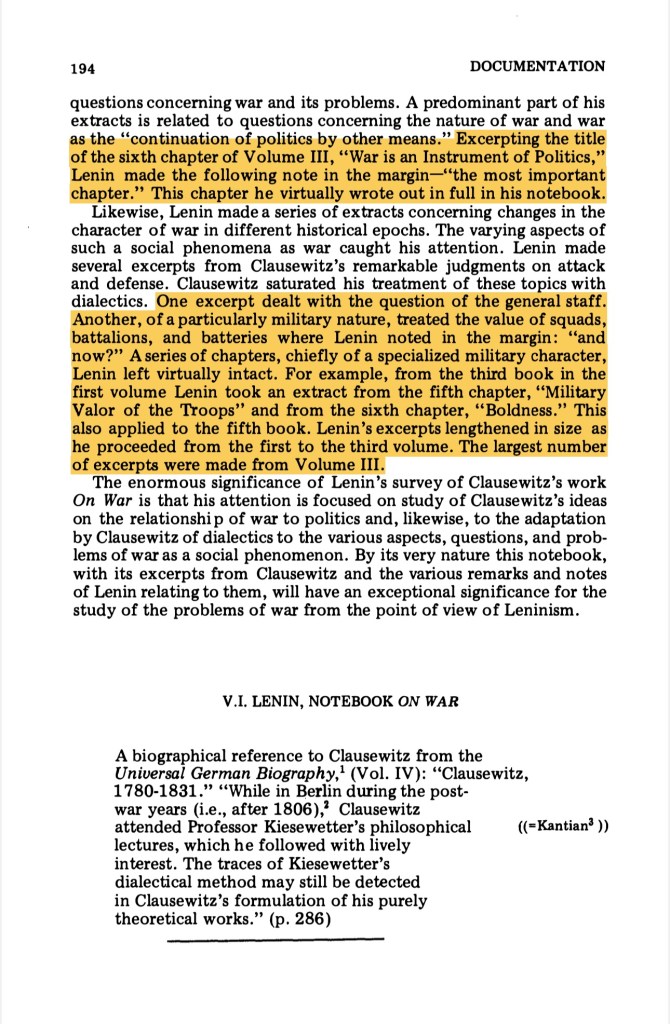
What did Lenin have to say about socialism and war?

Source

What did Lenin have to say about socialism and war?

“Socialists have always condemned war between nations as barbarous and brutal. But our attitude towards war is fundamentally different from that of the bourgeois pacifists (supporters and advocates of peace) and of the anarchists. We differ from the former in that we understand the inevitable connection between wars and the class struggle within the country; we understand that war cannot be abolished unless classes are abolished and socialism is created; and we also differ in that we fully regard civil wars, ie, wars waged by the oppressed class against the oppressing class, slaves against slave-owners, serfs against land-owners, and wage-workers against the bourgeoisie, as legitimate, progressive and necessary.”

Related:

Socialism and War (PDF)

Imperialism: The Highest Stage of Capitalism (PDF)

April Theses (PDF)

Don’t Blame Karl Marx for ‘Cultural Marxism’

Don’t Blame Karl Marx for ‘Cultural Marxism’

You might think that a history of cultural Marxism would start with Marx, but the poorly coiffed Prussian has almost nothing to do with this tale of insidious infiltration. Instead, the theory took off in the late 1990s due to speeches, essays, and books by William Lind, then with the Free Congress Foundation, and Patrick Buchanan, the firebrand conservative columnist, TV talking head, and sometime presidential candidate. (The idea, though not the name, was hatched earlier, in a 1992 monograph called “The New Dark Age: The Frankfurt School and Political Correctness.” It was written by a disciple of the noted conspiracy theorist Lyndon LaRouche.)

Related:

The CIA & the Frankfurt School’s Anti-Communism

Free Congress Foundation:

Read More »

Lenin: Socialism and Religion

Lenin: Socialism and Religion

The economic oppression of the workers inevitably calls forth and engenders every kind of political oppression and social humiliation, the coarsening and darkening of the spiritual and moral life of the masses. The workers may secure a greater or lesser degree of political liberty to fight for their economic emancipation, but no amount of liberty will rid them of poverty, unemployment, and oppression until the power of capital is overthrown. Religion is one of the forms of spiritual oppression which everywhere weighs down heavily upon the masses of the people, over burdened by their perpetual work for others, by want and isolation. Impotence of the exploited classes in their struggle against the exploiters just as inevitably gives rise to the belief in a better life after death as impotence of the savage in his battle with nature gives rise to belief in gods, devils, miracles, and the like. Those who toil and live in want all their lives are taught by religion to be submissive and patient while here on earth, and to take comfort in the hope of a heavenly reward. But those who live by the labour of others are taught by religion to practise charity while on earth, thus offering them a very cheap way of justifying their entire existence as exploiters and selling them at a moderate price tickets to well-being in heaven. Religion is opium for the people. Religion is a sort of spiritual booze, in which the slaves of capital drown their human image, their demand for a life more or less worthy of man.

Read More »

Sean Gervasi, 1992 lecture: The US Strategy to Dismantle the USSR

Source

Sean Gervasi, 1992 lecture: The US Strategy to Dismantle the USSR

Related RAND Corporation documents:

Economic factors affecting Soviet foreign and defense policy: a summary outline

The Costs of the Soviet Empire

Sitting on bayonets : the Soviet defense burden and the slowdown of Soviet defense spending

Moscow’s Economic Dilemma: The Burden of Soviet Defense

Exploiting ‘fault lines’ in the Soviet empire: an overview