
A Spectre Is Haunting New York City—and It’s Not Communism, It’s Capital in Drag
Read More »Tag: Sigmund Freud
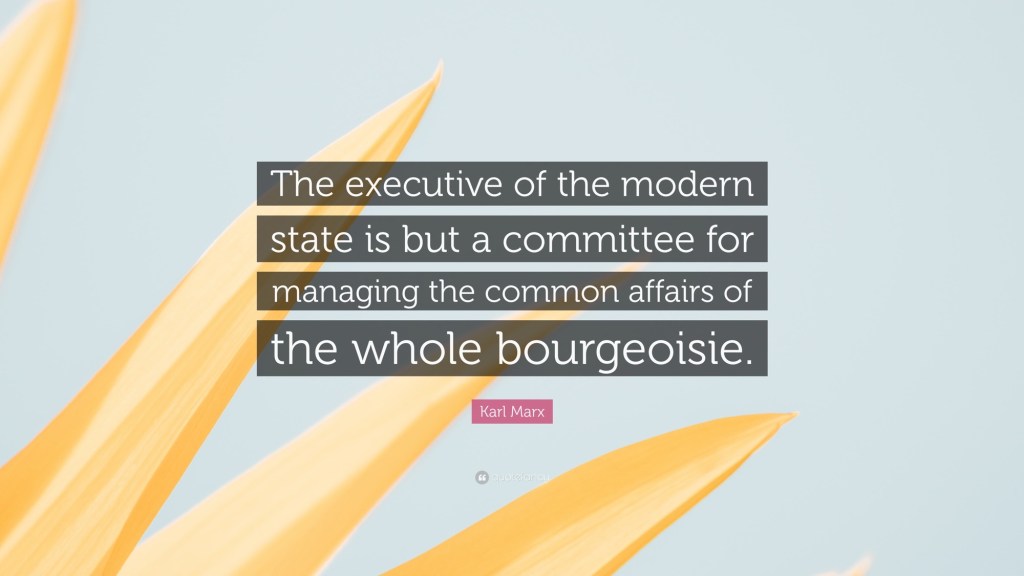
Shaping Society: The Intersection of Art, Ideology, and Power

Explainer: This is just a sampling of my ongoing research for a project on social conditioning. There’s a vast amount of material to explore, and I’m still figuring out how to weave it all together. My hope is to someday write a book or at least compile a comprehensive piece on this topic.
Read More »
The Psychoanalytic Kindergarten Project in Soviet Russia
Palantir Goes to the Frankfurt School
Since the election of Donald Trump, a growing body of research has examined the role of digital technologies in new right wing movements (Lewis 2018; Hawley 2017; Neiwert 2017; Nagle 2017). This article will explore a distinct, but related, subject: new right wing tendencies within the tech industry itself. Our point of entry will be an improbable document: a German language dissertation submitted by an American to the faculty of social sciences at J. W. Goethe University of Frankfurt in 2002. Entitled Aggression in the Life-World, the dissertation aims to describe the role that aggression plays in social integration, or the set of processes that lead individuals in a given society to feel bound to one another. To that end, it offers a “systematic” reinterpretation of Theodor Adorno’s Jargon of Authenticity (1973). It is of interest primarily because of its author: Alexander C. Karp.
Related:
Read More »‘I Want You’—How Uncle Sam helped invent public relations
While it only lasted for a year and half, the Committee on Public Information was the first official propaganda machine in the United States. The CPI sold and financed a war, framed the Spanish flu pandemic, and helped birth the field of modern public relations.
Protected: Personal update 02-11-2025a: semi-pointless stuff
Prescribing the American Dream

This is from something that I’ve been working on regarding Freudian psychology and social conditioning. Unfortunately, one of the author’s sources is Hannah Arendt’s Origins of Totalitarianism, which falsely equates Communism with Nazism. To be honest, I haven’t found any “perfect” sources for my project. Even Michael Parenti’s Against Psychopolitics quotes problematic sources (Harold Lasswell was involved with the RAND Corporation). While Karl Korsch had worked for the University of Frankfurt Institute for Social Research, which was home to the CIA front Frankfurt School, I like the above quote. I’ll probably end up using a different one when it’s all said and done, though.
Read More »Michael Parenti: Against Psychopolitics
Many great public issues as well as many private troubles are described in terms of the “psychiatric” — often, it seems, in a pathetic attempt to avoid the large issues and problems of modern society.
— C. Wright Mills, The Sociological Imagination
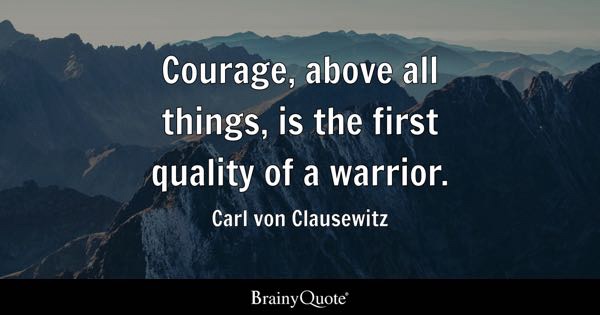
Clausewitz: The Genius for War
I was just listening to Jeff Rich’s video, “Russophobia and the Anxiety of American Primacy” and it made me think of my previous post on “demonizing the enemy.” That led to me rereading my posts on propaganda and “The Blob.” For some reason, this chapter came up when searching for “Clausewitz and demonizing the enemy.” It’s an interesting read, and much better than reading Freud. 🤭 On another note, I have yet to finish reading “Lenin’s Notebook on Clausewitz” that I downloaded earlier from this website.
BOOK 1, CHAPTER 3: The Genius for War
Read More »
Reading 11-17-2024
Curiosity killed the cat, but satisfaction brought it back.

I downloaded a couple of books by Eva Illouz to read. She was quoted in this article that I posted, earlier, and I was curious what she had to say. So far, it’s going slow because I keep getting distracted.

 Ms. Cat’s Chronicles
You must be logged in to post a comment.