
Read More »A petty bourgeois driven to frenzy by the horrors of capitalism is a social phenomenon which, like anarchism, is characteristic of all capitalist countries. The instability of such revolutionism, its barrenness, and its tendency to turn rapidly into submission, apathy, phantasms, and even a frenzied infatuation with one bourgeois fad or another—all this is common knowledge.
Vladimir Lenin, “Left-Wing” Communism: An Infantile Disorder
Tag: Soft Power
Thai-Cambodian Conflict Threatens Asian Stability by Design
Brian Berletic, December 15, 2025
Renewed fighting along the Thai–Cambodian border in December highlights how local disputes in Southeast Asia are increasingly shaped by broader great-power strategies aimed at constraining China’s rise.
Thai-Cambodian Conflict Threatens Asian Stability by Design (archived)
‘Make Europe Great Again’ and more from a longer version of the National Security Strategy
From Brexit to Bannon’s failed Movement, the through‑line has always been fragmentation: dismantling the European Union into smaller, more pliable states that Washington could manage one‑by‑one. Where Bannon faltered, Heritage has stepped in — not only with slogans, but with policy machinery designed to export Trump’s nationalist agenda across the Atlantic.
‘Make Europe Great Again’ and more from a longer version of the National Security Strategy
Read More »Five native Thai cat breeds protected as national identity
Leave it to Singapore’s media to demonize Thai cats under the guise of “concern” for strays. And when it comes to soft power, it seems they’re unaware of cultural icons like Hello Kitty, Japan’s Cat Island, or the beloved felines of Istanbul.
Related:
Five native Thai cat breeds protected as national identity
SPICES, SILK, JEWELS AND CATS: On Wichienmaat, Siamese, Thai, Suphalak and Khao Manee cats
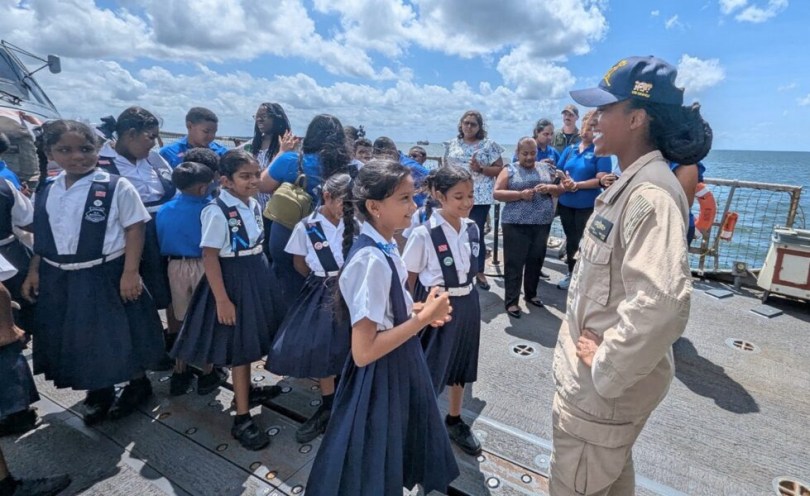
US Embassy in Trinidad and Tobago Doing School Outreach During Joint Military Exercises
Sobers: US troops to return to Trinidad and Tobago for joint military training
Sobers said the US embassy would participate in outreach activities across both islands. Building the TTDF’s capacity, he reiterated, was critical, especially to help combat the flow of illegal drugs and weapons into the country.
Related:
Read More »Washington’s “Second Coming” to Asia: Militants, Ports, and Pressure Points

President Trump’s renewed focus on regaining the Bagram Air Base and developing Pakistan’s Pasni Port signals Washington’s attempt to reassert strategic influence in a region increasingly dominated by China, Russia, and Iran.
Pakistan’s Pasni Port, located in Balochistan province, sits at the crossroads of strategic infrastructure and insurgent resistance. The Western-backed Baloch Liberation Army (BLA), active in the region, has long targeted Chinese-financed projects. The BLA maintains ties with both the Pakistan Taliban and ISIS-K—a faction recently linked to recruiting Uygur militants. Separately, U.S. support for Uygur militants predates this trend, with allegations tracing back to the 1970s/1980s. Rep. Perry has claimed that ISIS-K received backing from USAID, adding another layer to the region’s militant entanglements.
This only deepens my suspicion that recapturing Bagram Air Base could serve as a launchpad—not merely for tactical leverage, but to stir Uygur militant resistance against Beijing or pressure China with a second front in the event of a future Pacific conflict.
Sources:
BLA: U.S. Proxies in Balochistan document
ISIS-K & Uygur militants: ISIS has its sights set on a new potential ally—Uyghur jihadi groups
CIA & Uygur militants: US & TERRORISM IN XINJIANG
Uygur militants: *Xinjiang*
USAID & ISIS-K: Rep. Perry reveals what some of us already knew about USAID
Bagram Air Base: Why Does Trump Want U.S. Troops Back in Afghanistan?
Dua Lipa Twofer + the State Department
Denmark Summons U.S. Envoy Over a Reported ‘Influence Operation’ in Greenland
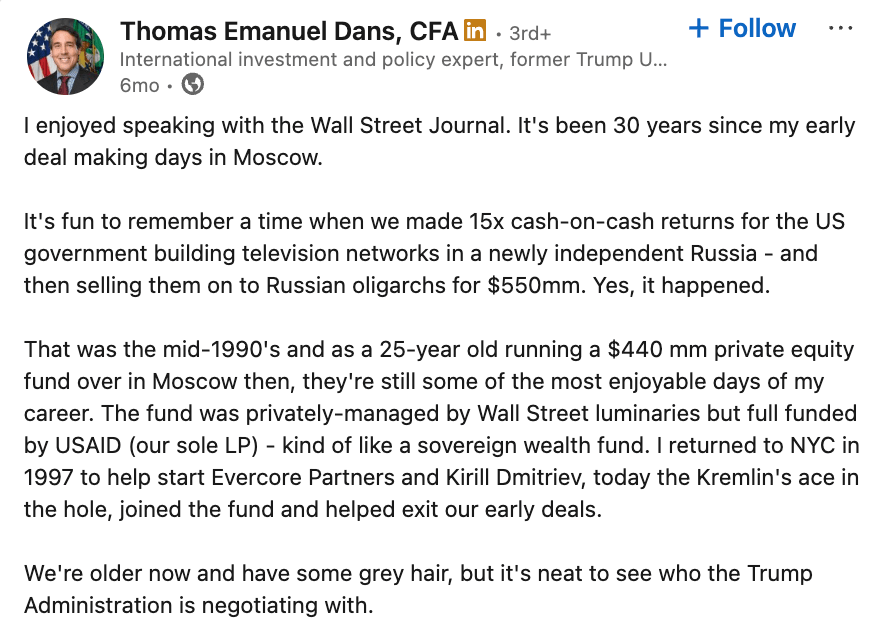
Got this link in an email and couldn’t resist tracing the operatives. But the trail was already mapped—someone beat me to the punch. Read: Twitter thread
Denmark Summons U.S. Envoy Over a Reported ‘Influence Operation’ in Greenland
Read More »Operation Imeri: Stratfor, DefesaNet, and the Rescue Script

Considering Lula still refuses to recognize the outcome of Venezuela’s 2024 presidential election, the idea of a rescue operation of Maduro feels far-fetched. Lula’s previous alignment with the Biden administration and rejection of Venezuela’s BRICS bid signal distance, not solidarity.
The scale of the proposed rescue would demand massive military mobilization. Brazil’s footprint—limited airpower, zero aerial tankers, no carrier-based projection—renders the logistics implausible. With U.S. destroyers already deployed in the southern Caribbean and Maduro falsely classified as a “narcoterrorist” by Washington, any such operation risks direct confrontation with American assets.
Domestically, the timing couldn’t be worse. Trump 2.0 is already pressuring Brazil over the so-called “persecution” of Bolsonaro, and while national elections aren’t until late 2026, the political cost of a high-risk maneuver like this would be immediate. Lula’s administration is unlikely to burn political capital on a clandestine extraction. The optics alone would be catastrophic.
Beneath the surface of DefesaNet’s coverage lies a 2011 cooperation agreement with Stratfor, the U.S.-based private intelligence firm often dubbed the “Shadow CIA.” This wasn’t editorial alignment—it was infrastructural scripting. Stratfor gained privileged access to regional insight; DefesaNet received complimentary geopolitical reports. The choreography was built in.
When narratives like Operation Imeri surface, they don’t emerge from neutrality—they rehearse proximity, test fault lines, and manufacture urgency. Brazil isn’t just being watched. It’s being written into a role.
This isn’t a serious proposal. It’s narrative theater—manufacturing urgency, choreographing proximity, and distracting from the quieter architecture of soft power already shaping the region. The rescue isn’t about Maduro. It’s about rehearsing alignment, testing thresholds, and scripting Brazil into a role it never auditioned for.
This isn’t covert. It’s combustible.
—Tina Antonis
Related:
Tag: 2024 Venezuelan Presidential election
María Corina Machado is the female Javier Milei (aka US Puppet)
Russia’s Aid Agency Aims to Fill USAID’s Void
Russia’s Aid Agency Aims to Fill USAID’s Void
Rossotrudnichestvo is widely viewed as providing cover for intelligence-gathering activities and mischief-making. For example, an analysis of Russia House operations in Czech capital Prague published in late 2024 by the Warsaw Institute characterized Rossotrudnichestvo as a front for spying.
Pari passu potestatis.
Related:
Read More » Ms. Cat’s Chronicles
You must be logged in to post a comment.