
Tag: stereotypes
The World & Me: Beyond the Label of Bipolar Disorder
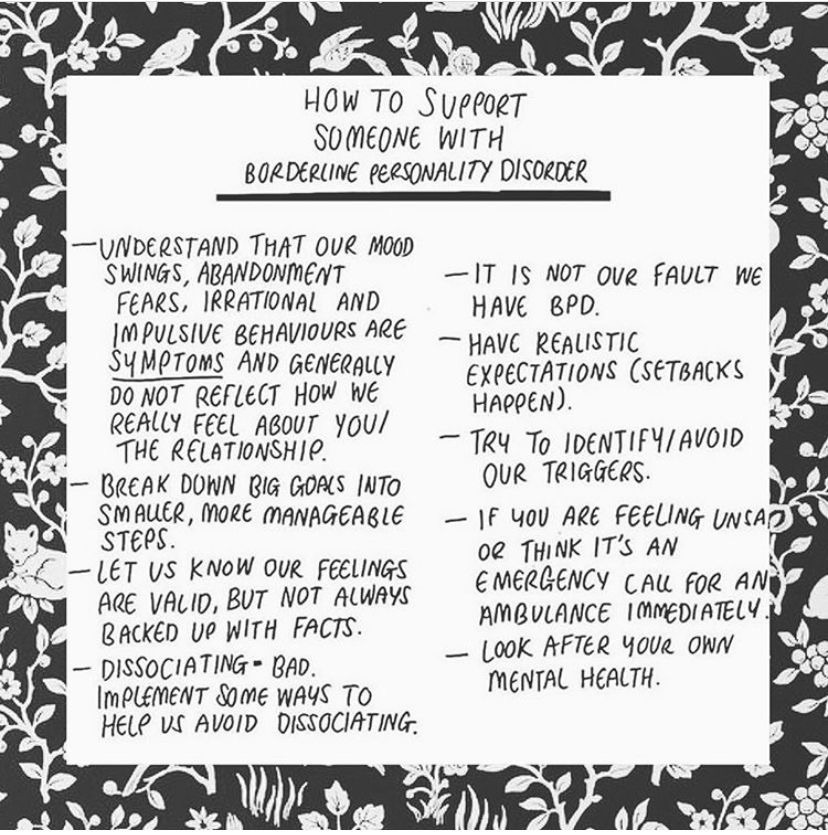
I was first diagnosed with PTSD and bipolar disorder, but later learned that I actually had borderline personality disorder—a condition that, like so many others, carries heavy stigma. What strikes me is not just the difficulty of navigating shifting diagnoses, but the way society layers shame onto mental illness itself. Instead of compassion and understanding, people living with these conditions often face judgment, stereotypes, and silence, which only deepens the struggle.
Read More »Former FDA chief: Ultra-processed foods are ‘addictive’ like drugs
Reba Maybury’s Art Subverts the Patriarchy by Making Men Work for Her

The intersection of sex, capitalism, and militarism
The intersection of sex, capitalism, and militarism
The intersection of sex, capitalism, and militarism highlights how these systems often intertwine, with capitalism’s focus on commodification leading to the exploitation of sex work, while militarism frequently creates environments where women and vulnerable populations are particularly susceptible to sexual violence and trafficking, often due to the presence of military forces in a region, further perpetuating power imbalances and economic disparities. [1, 2, 3, 4, 5, 6, 7, 8, 9, 10]
Read More »
Lavender & Red (Parts 25-29) (2005) by Leslie Feinberg. 🏳️🌈 History Meets ☭ History. Audiobook.
YouTube: Lavender & Red (Parts 25-29) (2005) by Leslie Feinberg. 🏳️🌈 History Meets ☭ History. Audiobook
Leslie Feinberg’s series on LGBTQ history, “Lavender & Red,” appeared in the Workers World Newspaper in 2004-2008.
A brief, weird history of brainwashing
On an early spring day in 1959, Edward Hunter testified before a US Senate subcommittee investigating “the effect of Red China Communes on the United States.” It was the kind of opportunity he relished. A war correspondent who had spent considerable time in Asia, Hunter had achieved brief media stardom in 1951 after his book Brain-Washing in Red China introduced a new concept to the American public: a supposedly scientific system for changing people’s minds, even making them love things they once hated.
But Hunter wasn’t just a reporter, objectively chronicling conditions in China. As he told the assembled senators, he was also an anticommunist activist who served as a propagandist for the OSS, or Office of Strategic Services — something that was considered normal and patriotic at the time. His reporting blurred the line between fact and political mythology.
Related:
Read More »Mao Zedong on Writing
Oppose Stereotyped Party Writing
The first indictment against stereotyped Party writing is that it fills endless pages with empty verbiage. Some of our comrades love to write long articles with no substance, very much like the “foot-bindings of a slattern, long as well as smelly”. Why must they write such long and empty articles? There can be only one explanation; they are determined the masses shall not read them. Because the articles are long and empty, the masses shake their heads at the very sight of them. How can they be expected to read them? Such writings are good for nothing except to bluff the naive, among whom they spread bad influences and foster bad habits. … If articles are too long, who will read them? Some comrades at the front, too, like to write long reports. They take pains over writing them and send them here for us to read. But who has the hardihood to read them? If long and empty articles are no good, are short and empty ones any better? They are no good either. We should forbid all empty talk. But the first and foremost task is to throw the long, smelly foot-bindings of the slattern into the dustbin. Some may ask, “Isn’t Capital very long? What are we to do about that?” The answer is simple, just go on reading it. There is a proverb, “Sing different songs on different mountains”; another runs, “Fit the appetite to the dishes and the dress to the figure”. Whatever we do must be done according to actual circumstances, and it is the same with writing articles and making speeches. What we oppose is long-winded and empty stereotyped writing, but we do not mean that everything must necessarily be short in order to be good. True, we need short articles in war time, but above all we need articles that have substance. Articles devoid of substance are the least justifiable and the most objectionable. The same applies to speechmaking; we must put an end to all empty, long-winded speeches.
Read More »
The man who was Mao’s hero
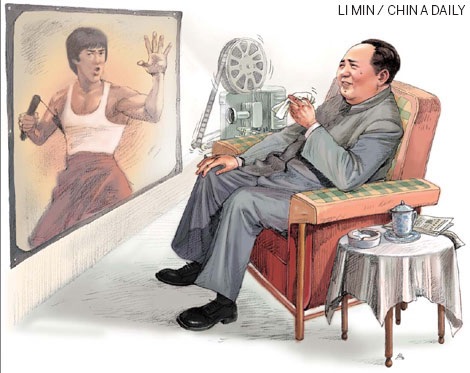
The Bruce Lee legend never fades but it might surprise some to learn that among his legion of fans was Chairman Mao, who called him a hero.
Chairman Mao Zedong (1893-1976) and Bruce Lee the martial arts legend (1940-1973) both declared – in their unique ways – that the Chinese people had “stood up”.
The man who was Mao’s hero
I grew up watching dubbed martial arts movies, as my dad was a fan of Bruce Lee.
FYI, I don’t know why this was unpublished. I didn’t do it.
US Subversion Attempts Against Cuba During 2023
At the beginning of 2023, the Chargé d’Affaires of the US Embassy in Havana, Benjamin Ziff, said in an interview with The Associated Press that “it was difficult to go back” in normalizing relation with Cuba.
US Subversion Attempts Against Cuba During 2023
 Ms. Cat’s Chronicles
You must be logged in to post a comment.