Couple euthanasia is a modern sati.

Couple euthanasia is a modern sati.

The article titled: Duo-euthanasia: To avoid facing life alone, focuses on how the spouse of a person who dies by euthanasia will often experience complicated grief and will have a higher potential rate of premature death. The article states:

For some individuals, euthanasia or physician-assisted dying (aka PAD or EAS) presents an option to end one’s life with some control and dignity while minimizing pain and suffering. Whether they are experiencing severe chronic pain, mobility challenges, or serious illness such as cancer, these people may be intrigued by the possibility of euthanasia or physician-assisted dying.

But for the surviving spouses, facing the future without their lifelong partner can feel overwhelming, and their quality of life may plummet.

Related:

Couple choose to die together in ‘duo-euthanasia’ after being married for nearly five decades

The couple left behind their only child when they chose to pass away

If you or someone you know is struggling or in a mental health crisis, help is available through Mental Health America. Call or text 988 or chat 988lifeline.org. You can also reach Crisis Text Line by texting MHA to 741741

HuffPost: I’m Ending My Life Today. Here’s What I Want You To Know Before I Go.

By Mary Elizabeth Holliday

I am ending my life at a clinic in Switzerland today. This piece was written three weeks ago. I’ve been trapped for decades in a body that doesn’t function the way other bodies do and I am ready to finally be free.

I’m Ending My Life Today. Here’s What I Want You To Know Before I Go. (archived)

I have multiple chemical sensitivities and fibromyalgia, too, but I’ve never considered “assisted-suicide”. My MCS isn’t as bad as hers was, though. It just seems selfish to me, but that may be because I was brought up in a strict religious household. The biggest problem, here, is that there’s no profit in finding cures.

A Contribution to the Critique of Hegel’s Philosophy of Right: Introduction

A Contribution to the Critique of Hegel’s Philosophy of Right: Introduction

The foundation of irreligious criticism is: Man makes religion, religion does not make man. Religion is, indeed, the self-consciousness and self-esteem of man who has either not yet won through to himself, or has already lost himself again. But man is no abstract being squatting outside the world. Man is the world of man – state, society. This state and this society produce religion, which is an inverted consciousness of the world, because they are an inverted world. Religion is the general theory of this world, its encyclopaedic compendium, its logic in popular form, its spiritual point d’honneur, its enthusiasm, its moral sanction, its solemn complement, and its universal basis of consolation and justification. It is the fantastic realization of the human essence since the human essence has not acquired any true reality. The struggle against religion is, therefore, indirectly the struggle against that world whose spiritual aroma is religion. 

Religious suffering is, at one and the same time, the expression of real suffering and a protest against real suffering. Religion is the sigh of the oppressed creature, the heart of a heartless world, and the soul of soulless conditions. It is the opium of the people. 

The abolition of religion as the illusory happiness of the people is the demand for their real happiness. To call on them to give up their illusions about their condition is to call on them to give up a condition that requires illusions. The criticism of religion is, therefore, in embryo, the criticism of that vale of tears of which religion is the halo.

Marx, Spinoza, and the Political Implications of Contemporary Psychiatry

Simple logic tells us that those atop a societal hierarchy will provide rewards for professionals—be they clergy or psychiatrists—who promote an ideology that maintains the status quo, and that the ruling class will do everything possible to manipulate the public to believe that the social-economic-political status quo is natural.

Marx, Spinoza, and the Political Implications of Contemporary Psychiatry

[10-11-23] UN and WHO call for ‘significant shift away from biomedical model of mental health’

UN and WHO call for ‘significant shift away from biomedical model of mental health’

WHO and UN are calling for significant shift away from the biomedical modelof mental health which encourages psychiatric diagnoses, medications, forced restraints, institutionalisation, imprisonment and other oppressive medical practices – towards a trauma-informed, social, human rights, person-centred approach to mental health

WHO and UN highlight the current ways the biomedical model of mental health harms, oppresses, controls, isolates, stigmatises and discriminates against those who have been told they have psychiatric disorders, and who have not been validated in their traumas, distress, poverty, environments, oppression, or experiences

WHO and UN recognise that women and girls, people who are gay, lesbian, bisexual and transgender are more likely to be labelled as mentally ill, and more likely to face forced sterilisations, coerced abortions, coerced contraception, and conversion therapies.

WHO and UN recognise that there are widespread human rights violations and harm being caused by current biomedical model approaches to mental health, which includes our psychiatric hospitals, services, treatments, and approaches

WHO and UN recognise that people who have been diagnosed with psychiatric disorders have been positioned as dangerous, unreliable and unstable, meaning that they are stigmatised and discriminated against in multiple systems of power (including health, criminal justice, family justice, education, employment, finances and their rights)

Dehumanization, Lack of Empathy for Palestinians Is Alarming—and Dangerous’

The scale and brutality of Hamas’s grisly attack on Israel last Saturday, in which at least 1,300 Israeli men, women, and children were brutally murdered, has understandably triggered a massive outpouring of sympathy and solidarity with Israel from around the world, particularly in the United States, Europe and other western nations.

Dehumanization, Lack of Empathy for Palestinians Is Alarming—and Dangerous’ (archive)

Chile, September 11, 1973: The Horrors of ‘the First 9/11’ Are Routinely Overlooked

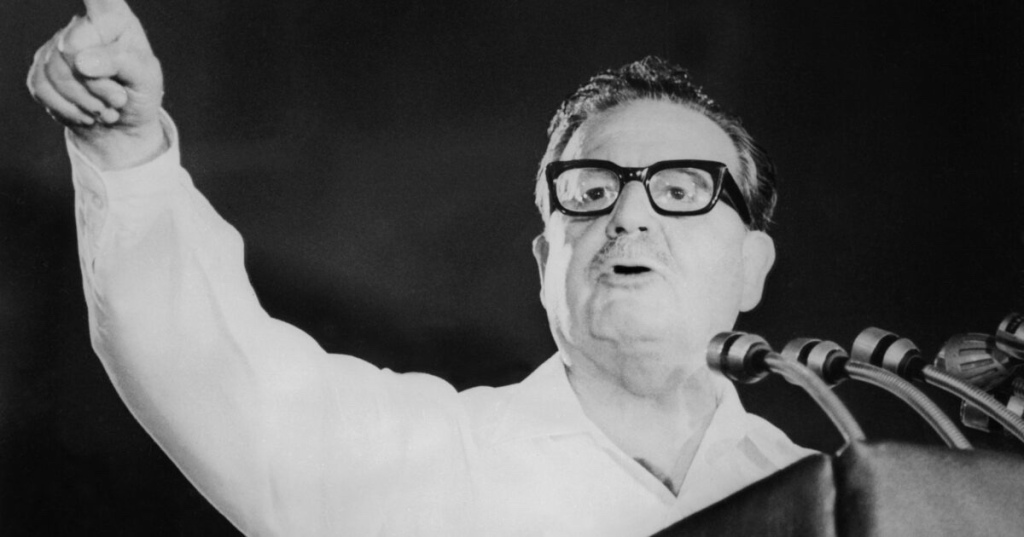
Salvador Allende’s Final Speech on Sept. 11, 1973

Each September large memorials are held for the 9/11 attacks on the US. Yet few recall the far more destructive 9/11 that occurred 28 years before.

Chile, September 11, 1973: The Horrors of ‘the First 9/11’ Are Routinely Overlooked

Related:

Chile and the United States: Declassified Documents Relating to the Military Coup, September 11, 1973