
The timing of this approval is significant as the Philippines has been engaged in a series of escalating maritime confrontations with China over disputed territories in the South China Sea. U.S. officials, including Secretary of State Marco Rubio and Defense Secretary Pete Hegseth, have increasingly voiced support for Manila in countering Chinese maritime expansion. During his recent visit, Hegseth committed to “reestablish deterrence in the Indo-Pacific region,” calling attention to China’s growing assertiveness. Additionally, Philippine military leadership, including General Romeo Brawner, has publicly stated that a conflict in Taiwan would inevitably involve the Philippines, urging preparations for possible hostilities. Preparations for such scenarios have reportedly influenced the planning of joint U.S.-Philippine exercises, such as the annual “Balikatan” drills. These developments add urgency to the Philippine modernization program, of which the F-16 acquisition is a cornerstone.
Read More »
Tag: Taiwan Strait
Philippines set to host second Typhon missile system, signalling Trump’s defence pledge + More
Philippines set to host second Typhon missile system, signalling Trump’s defence pledge
He added that the Typhon’s presence signalled renewed US commitment to the region, which would be further reinforced by separate visits to the Philippines by US Defence Secretary Pete Hegseth this week and Secretary of State Marco Rubio next month.
Read More »
Trump admin continues US tip-toe to war with China…
🇺🇸🇨🇳 Trump admin continues US tip-toe to war with China…
US State Dept. has JUST removed explicit rejection of Taiwan independence from its “US Relations with Taiwan” page.
Read More »
Part 3a: RAND and SeaLight – Taiwan Relations Act
The United States has also recently transitioned from an ambiguous approach [strategic ambiguity] to deterring a Chinese invasion on Taiwan to one that more clearly states that the United States will defend Taiwan in the event of a Chinese invasion (referred to as strategic clarity).
P93: Understanding and Countering China’s Maritime Gray Zone Operations | RAND
This is not true! The Biden administration “walked back” his statements each time!
Read More »2021 Colby: Could we win a war in China? Forcing Beijing to escalate could be in our interests

Full text of President Xi Jinping’s 2025 New Year address
On New Year’s eve, Chinese President Xi Jinping delivered his 2025 New Year address through China Media Group and the Internet. The following is the full text of the address:
53% of Taiwanese, 36% of Americans think US would send troops if China invades
53% of Taiwanese, 36% of Americans think US would send troops if China invades
TAIPEI (Taiwan News) — A Taiwan-US poll found that Taiwanese and Americans differ on whether Washington would send troops if Beijing launches an invasion, but both support maintaining the status quo.
On Monday (Dec. 2), the Ministry of National Defense’s Institute for National Defense and Security Research and the Chicago Council on Global Affairs released the results of a joint survey that examined how Taiwanese and Americans view the Taiwan Strait situation and bilateral security cooperation.
Related:
Institute for National Defense and Security Research
While it receives almost all of its funding from government sources INDSR is institutionally independent, nonpartisan, and nonprofit.
Chicago Council on Global Affairs 2021 Financial Donors
Chicago Council on Global Affairs (Fidelity Investments, Charles Schwab Corporation, Rockefeller Foundation)
Chicago Council on Global Affairs grants from MacArthur Foundation
Corporate Partners | Chicago Council on Global Affairs
Front Organizations (Rockefeller)
China says US ‘playing with fire’ by giving Taiwan more military aid
China says US ‘playing with fire’ by giving Taiwan more military aid
Related:
Why Should We Care About America’s Indo-Pacific Allies?, May 10, 2024:
Read More »We’re not obligated to defend Taiwan. What we are obligated to do is governed by the law and the law is the 1979 Taiwan Relations Act.
…
But defending Taiwan is not one of those things, but it means that we sell them equipment that they need to defend themselves and the like. And it makes it clear intent that we want a peaceful resolution of the Taiwan PRC issue, a peaceful resolution across the Taiwan Strait. And that we are opposed to a forceful reunification against the Taiwanese people’s will.
…
Is the United States going to defend Taiwan? If the answer to that question is yes, they’re going to lose hundreds of thousands of troops in that fight and they ought to know that. And then they can then make the calculus whether it’s worth it or not.
— Admiral Harry B. Harris, Jr., former commander of U.S. Indo-Pacific Command
India is losing Bangladesh to China and Pakistan, and it could get worse
India is losing Bangladesh to China and Pakistan, and it could get worse
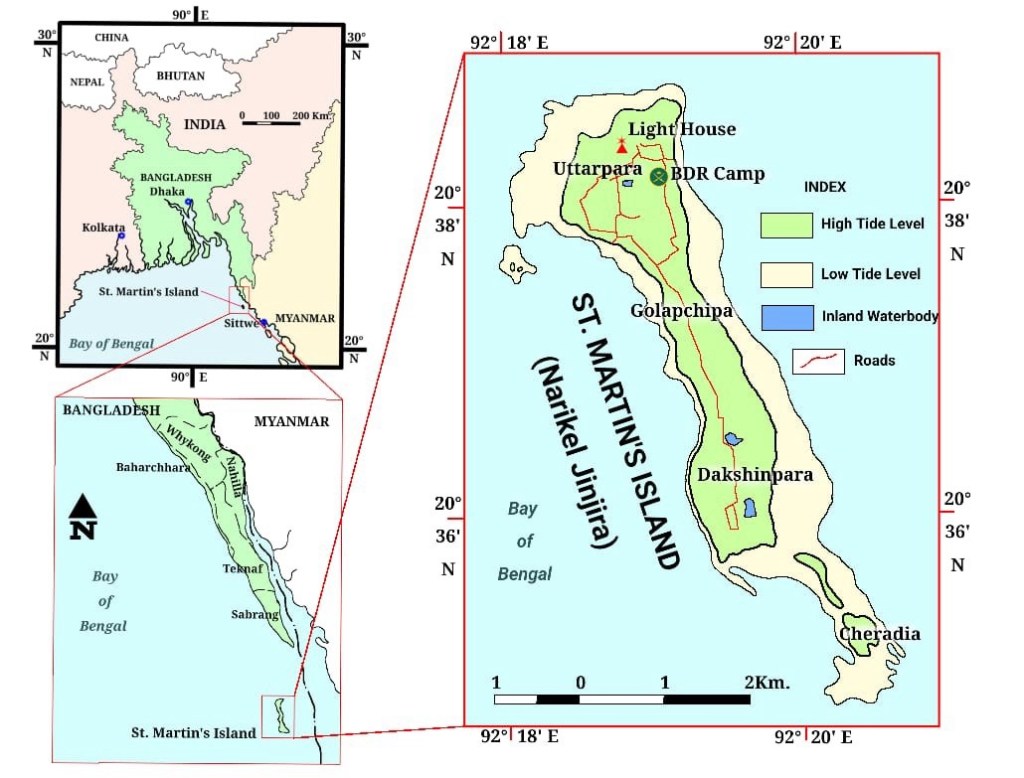
by Derek J Grossman, RAND
Beijing has further sought to develop numerous Bangladeshi ports, including Chittagong, Mongla, and Sonadia ports, to achieve a maritime presence in the Bay of Bengal. Enhanced access to any or all of these ports could substantially add to Beijing’s “string of pearls” strategy to hem in India in the Indian Ocean.
Read More »
Marcos Says Philippines Won’t Send Warships After China Clashes
Philippine President Ferdinand Marcos Jr. said his nation won’t deploy Navy warships to the South China Sea in response to recent clashes with Beijing in disputed waters.
Marcos Says Philippines Won’t Send Warships After China Clashes
Previously:
Philippines to match China’s gray zone tactics in South China Sea
What’s Really Going On In the South China Sea Between the Philippines and China
 Ms. Cat’s Chronicles
You must be logged in to post a comment.