

Since Oshkosh Corporation told The Cap Times that it was moving away from military vehicles, it has only doubled down on selling them to Israel.
Since Oshkosh Corporation told The Cap Times that it was moving away from military vehicles, it has only doubled down on selling them to Israel.
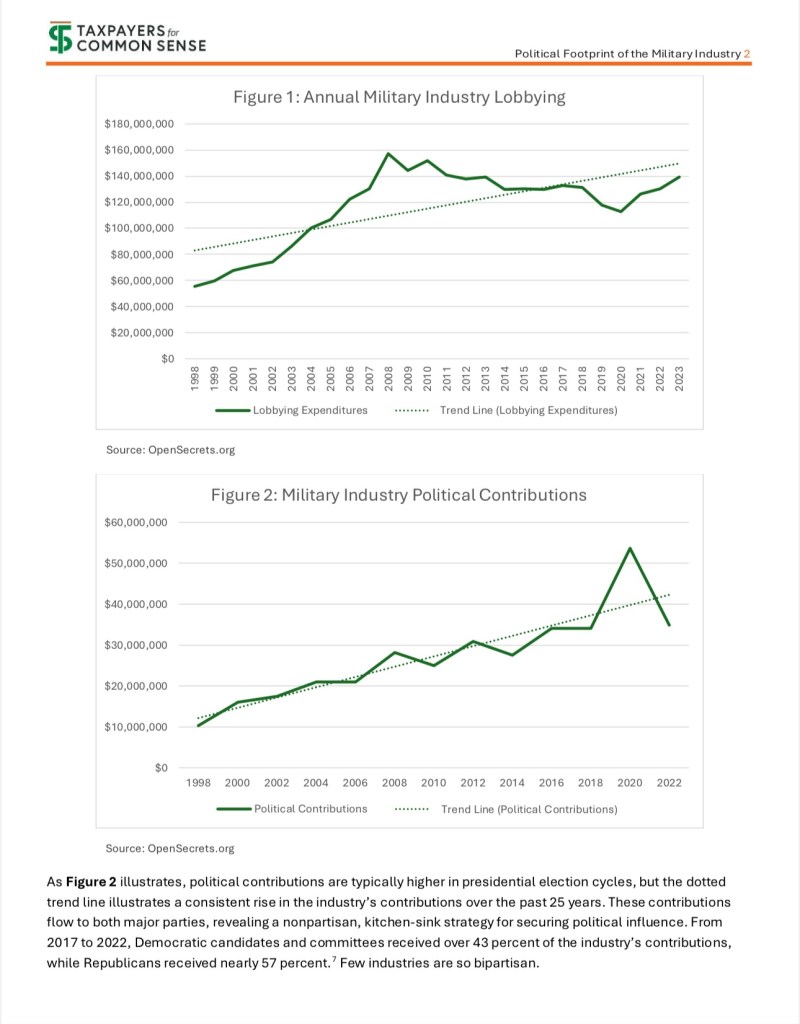


For over two decades, the military industry has consistently spent more than $100 million per year lobbying policymakers to influence policies and spending decisions that support its financial interests. In addition to these lobbying expenditures, the industry contributes tens of millions of dollars to political candidates and committees each election cycle. The sheer scale of this spending buys significant political influence, and the data suggests that this approach is paying off.
The Littoral Combat Ship was meant to start the Navy’s operational renaissance. But a chorus of naysayers and critics have put service leaders on the defensive, insisting that the troubled program has turned a corner.
Littoral Combat Ship Still Fighting to Prove Its Worth
They’ve increased the crew size and have been training them to maintain the ships themselves rather than relying on the original contractors.
Related:
The Littoral Combat Ship: How We Got Here, and Why (PDF)
USNI Proceedings Podcast – Littoral Combat Ships: How the Navy is Employing Them (Ted LeClair, Marc Crawford, Mark Haney)
Previously:
The Inside Story of How the Navy Spent Billions on the “Little Crappy Ship”
The Navy just launched a brand new ship it doesn’t even want
By giving Ukraine cluster bombs, the US is admitting that it’s OK to kill civilians
The estimated dud rate is disputable. According to the Congressional Research Service, “There appear to be significant discrepancies among failure rate estimates. Some manufacturers claim a submunition failure rate of 2% to 5%, whereas mine clearance specialists have frequently reported failure rates of 10% to 30%. A number of factors influence submunition reliability. These include delivery technique, age of the submunition, air temperature, landing in soft or muddy ground, getting caught in trees and vegetation, and submunitions being damaged after dispersal, or landing in such a manner that their impact fuzes fail to initiate.”
The United States has a huge stockpile of cluster munitions — 4.7 million containing hundreds of millions of bomblets — that it is dusting off to deliver to Ukraine after a “difficult decision” by President Joe Biden.
The U.S. last used these munitions in its military excursion in Afghanistan. Trouble was that the little bombs resembled in color and shape the humanitarian aid packets that the U.S. dropped from planes. This confusion, which obviously left many civilians maimed or dead, led to the curtailment of cluster bombs for our next military adventure.
This did not stop Israel from using cluster bombs in its 2006 campaign against Hezbollah forces in Lebanon. According to a March 2022 Congressional Research Service report, Israel used them in the “last 3 days of the 34-day war after a U.N. cease-fire deal had been agreed to — resulting in almost 1 million unexploded cluster bomblets to which the U.N. attributed 14 deaths during the conflict.” Israel’s use of the bombs “supposedly affected 26% of southern Lebanon’s arable land and contaminated about 13 square miles with unexploded submunitions. One report states that there was a failure rate of upward of 70% of Israel’s cluster weapons,” the agency said.
Related:
 Ms. Cat’s Chronicles
You must be logged in to post a comment.