
The ‘Trump Doctrine’ is shaped by Elbridge Colby’s ‘Strategy of Denial’
Read More »Tag: The Strategy of Denial: American Defense in an Age of Great Power Conflict
2021 Colby: Could we win a war in China? Forcing Beijing to escalate could be in our interests

Trumpism, NATO and the Ukraine war
Trumpism, NATO and the Ukraine war (original)
“Two years ago, General Mark A. Milley, then President Biden’s chief military adviser, suggested that neither Russia nor Ukraine could win the war. A negotiated solution, he argued, was the only path to peace. His comments caused a furor among senior officials. But President-elect Donald J. Trump’s victory is making General Milley’s prediction come true,” wrote The New York Times in an article published last week, part of a growing line of arguments by those who fear that the arrival of the new Republican administration will mean leaving Ukraine to its own devices. These articles, present in all major American and European media, take literally Trump’s desire to end the war and his lack of interest in the situation in Ukraine. This has also been helped by the words of JD Vance, who, from his ignorance of the conflict, has proposed a plan that can only satisfy Russia, or the exalted response of Donald Trump Jr. after the confirmation of the American permission to use Western missiles against targets on the territory of mainland Russia. Sometimes, think-tankers and experts also add Trump’s disdain for NATO or his desire not to rescue member countries that do not meet the minimum investment required by the Alliance in the event of a Russian attack.
Read More »
Reading update 08-14-2024: Finished with Colby’s book

Thank goodness! I don’t know if I’ll read Pottinger’s book, The Boiling Moat, or not. It’s not available on Audible.
On another note, I hate having dyscalculia! It’s August, not September. I had to go back and change the dates on some of my posts. It’s a good thing that I don’t write checks!
08-11 Reading Update: Elbridge Colby

Reading Update: Elbridge Colby
So-called realists are just cleverly disguised China Hawks. They seem to believe that China will mimic the U.S. government’s foreign policy. They’re afraid of China’s rise. I call it the fear of retribution.
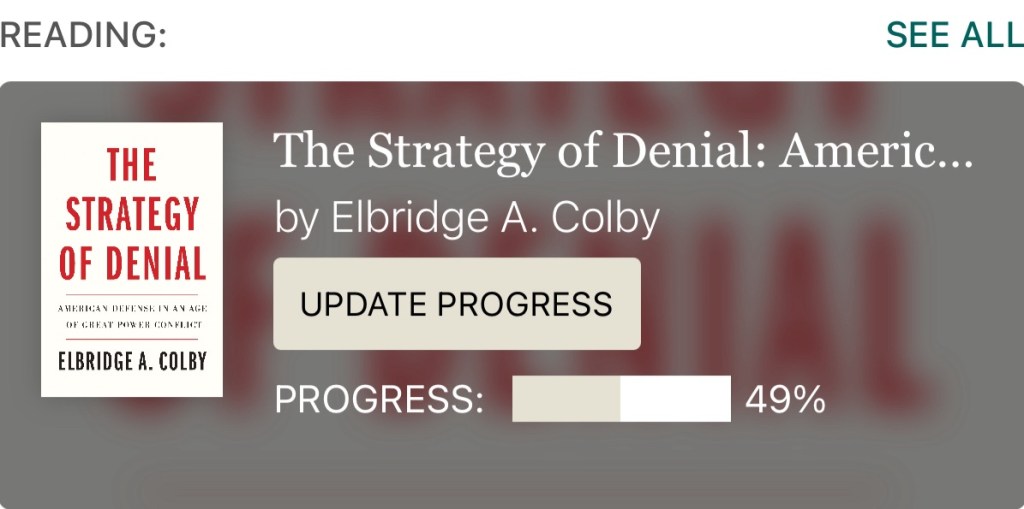
The next four hours and 23 minutes will be painful. I’ll probably finish it up tomorrow or Monday.

Reading Update 08-10-2024: Mao Zedong vs Elbridge Colby

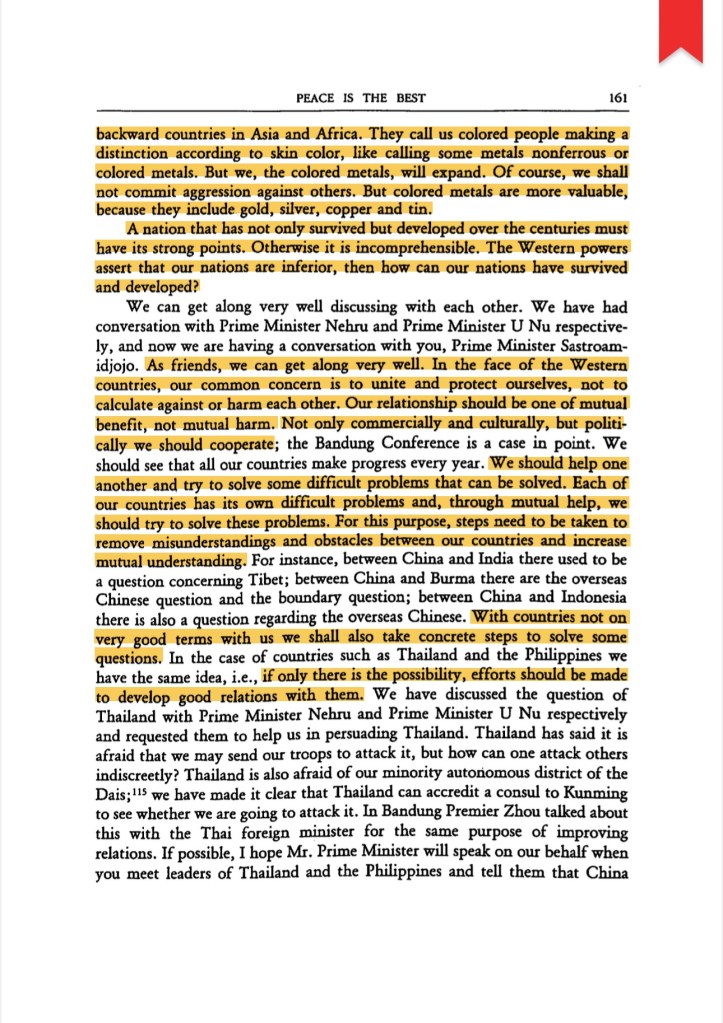
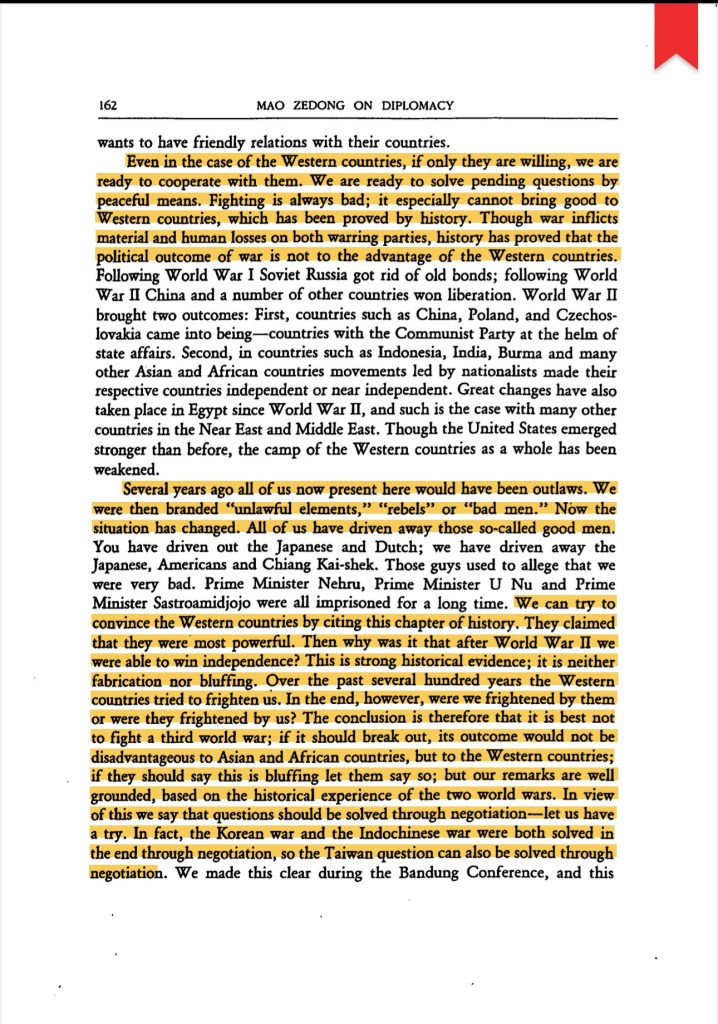

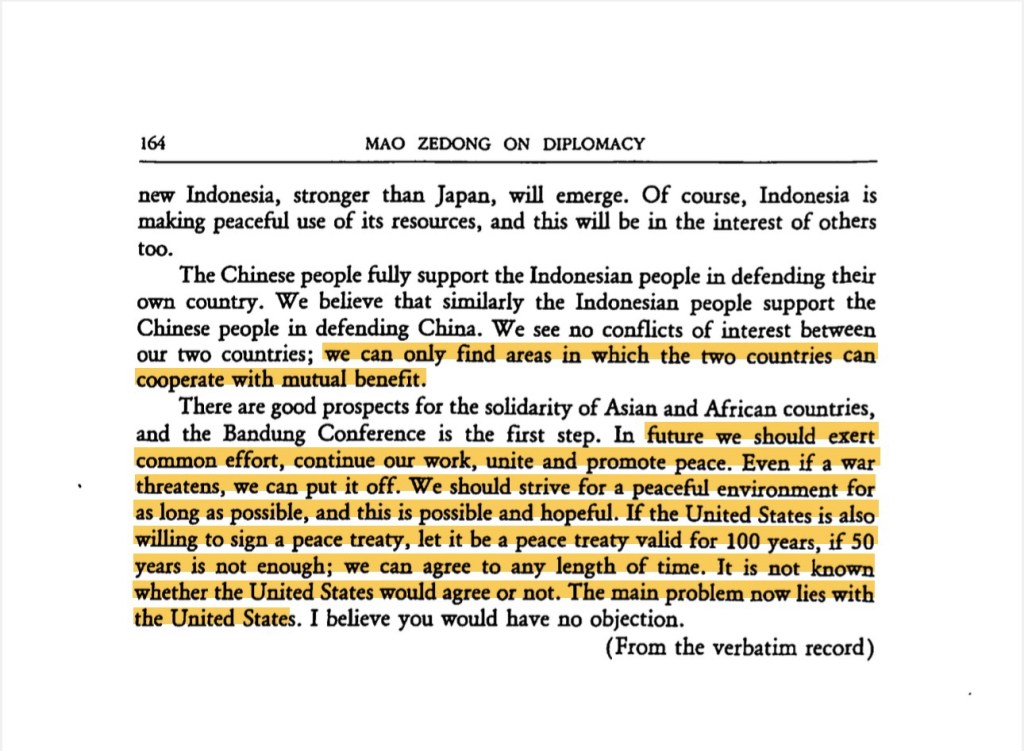
I’m alternating between reading ‘On Diplomacy’ and listening to ‘The Strategy of Denial’ on Audible.

MacArthur’s Last Stand Against a Winless War
If war breaks out in Asia, the U.S. won’t send ground troops. Take note, Philippines!
MacArthur’s Last Stand Against a Winless War
Never get involved in a land war in Asia, MacArthur had told Kennedy, because if you do, you will be repeating the same mistake the Japanese made in World War II—deploying millions of soldiers in a futile attempt to win a conflict that cannot be won.
…
Kennedy appreciated MacArthur’s soothing judgment on Cuba (and would soon change the military’s top leadership—perhaps in keeping with MacArthur’s views), but then shifted the subject to Laos and Vietnam, where communist insurgencies were gaining strength. The Congress, he added, was pressuring him to deploy U.S. troops in response. MacArthur disagreed vehemently: “Anyone wanting to commit ground troops to Asia should have his head examined,” he said. That same day, Kennedy memorialized what MacArthur told him: “MacArthur believes it would be a mistake to fight in Laos,” he wrote in a memorandum of the meeting, adding, “He thinks our line should be Japan, Formosa, and the Philippines.” MacArthur’s warning about fighting in Asia impressed Kennedy, who repeated it in the months ahead and especially whenever military leaders urged him to take action. “Well now,” the young president would say in his lilting New England twang, “you gentlemen, you go back and convince General MacArthur, then I’ll be convinced.” So it is that MacArthur’s warning (which has come down to us as “never get involved in a land war in Asia”), entered American lore as a kind of Nicene Creed of military wisdom—unquestioned, repeated, fundamental.
 Ms. Cat’s Chronicles
You must be logged in to post a comment.