Washington’s “Second Coming” to Asia: Militants, Ports, and Pressure Points

Source

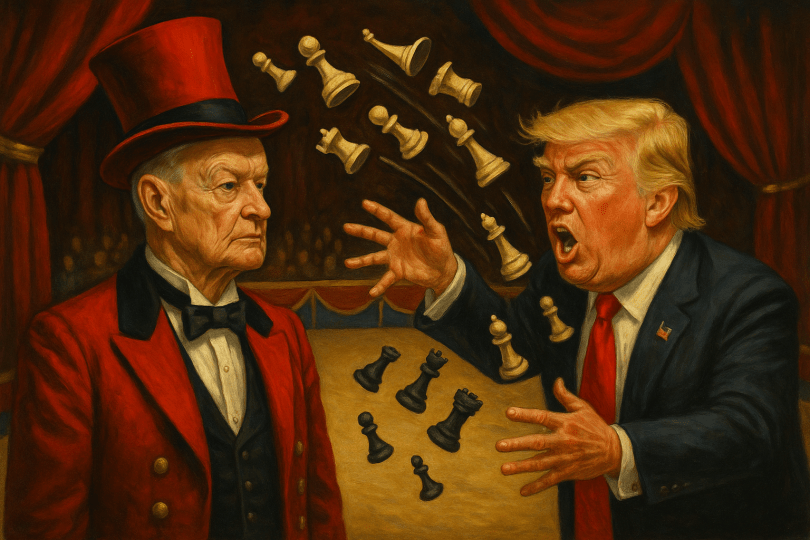
President Trump’s renewed focus on regaining the Bagram Air Base and developing Pakistan’s Pasni Port signals Washington’s attempt to reassert strategic influence in a region increasingly dominated by China, Russia, and Iran.

Washington’s “second coming” to Asia

Pakistan’s Pasni Port, located in Balochistan province, sits at the crossroads of strategic infrastructure and insurgent resistance. The Western-backed Baloch Liberation Army (BLA), active in the region, has long targeted Chinese-financed projects. The BLA maintains ties with both the Pakistan Taliban and ISIS-K—a faction recently linked to recruiting Uygur militants. Separately, U.S. support for Uygur militants predates this trend, with allegations tracing back to the 1970s/1980s. Rep. Perry has claimed that ISIS-K received backing from USAID, adding another layer to the region’s militant entanglements. 

This only deepens my suspicion that recapturing Bagram Air Base could serve as a launchpad—not merely for tactical leverage, but to stir Uygur militant resistance against Beijing or pressure China with a second front in the event of a future Pacific conflict.

Sources:

BLA: U.S. Proxies in Balochistan document

ISIS-K & Uygur militants: ISIS has its sights set on a new potential ally—Uyghur jihadi groups

CIA & Uygur militants: US & TERRORISM IN XINJIANG

Uygur militants: *Xinjiang*

USAID & ISIS-K: Rep. Perry reveals what some of us already knew about USAID

Bagram Air Base: Why Does Trump Want U.S. Troops Back in Afghanistan?

Bonus: Chokepoints Are The Focus Of A New Cold War

Biden Officially Accuses China, Russia Of Genocide, But Says What Israel is Doing is OK

Kim Iversen

Sometimes we hear accusations of genocide in China, Ukraine, and now Palestine, but what is the actual definition of genocide?

Biden Officially Accuses China, Russia Of Genocide, But Says What Israel is Doing is OK

Previously:

The Hidden Proxy War Washington Wages against China

How a US delisted terror organization still threatens China…

As US-Chinese tensions rise ahead of a feared conflict, it should be noted that the US has been waging a violent proxy war against China both within its borders and along them for years.

This includes direct and indirect support for terrorist organizations including the East Turkistan Islamic Movement (ETIM). Despite admittedly being a terrorist organization, the US delisted it from its FTO list, allowing support to flow to the group.

The Hidden Proxy War Washington Wages against China (Odysee)

Why China’s belt and road plan is facing threat of jihadist terrorism

Why China’s belt and road plan is facing threat of jihadist terrorism

Afghanistan and China share a 74km-long border along the mountainous Wakhan Corridor. At Beijing’s insistence, the Taliban relocated TIP militants from Badakhshan province, near the border, to other areas last year. However, some TIP elements are believed to have rebuilt their bases in Badakhshan.

Isis-K’s anti-China rhetoric may also be intended to attract Uygur militants to its fold. The more the Taliban regime curtail TIP activities, the greater the chances of Uygur militants gravitating towards Isis-K. According to a United Nations Security Council report, Isis-K has reached out to disgruntled fighters from other terrorist groups, and as many as 50 Uygur militants have joined it.

Notes for self:

  • ISIS-K, likely supported by the US, is actively recruiting members from groups like TIP, ETIM, and Uygur extremists to target China’s Belt and Road Initiative.
  • According to the Jamestown Foundation, a hawkish think tank, the Voice of Khorasan Magazine is produced by the al-Azaim Foundation for Media Production.
  • It’s noteworthy that ISIS-K adopted a name reminiscent of Voice of America, a US-funded media outlet, which raises questions about potential symbolic connections.