RAND and SeaLight Part 3b: Four Ways China Is Growing Its Media Influence in Southeast Asia

05-10-2022: Four Ways China Is Growing Its Media Influence in Southeast Asia

China’s most straightforward method of media outreach is directly broadcasting or publishing its state media content in target ASEAN countries. Xinhua, China’s official state media agency, has print bureaus in every Southeast Asian country. TV news channels CCTV-4 and the English-language CGTN likewise operate in nearly every country in the region, while China Radio International airs multilingual content in Vietnam, Laos, Cambodia, Thailand, and Myanmar. Xinhua is a ministry-level agency directly under the State Council, while the other media organizations all operate under the Chinese Communist Party Publicity Department. 

Read More »

Congress Considers Neocon Lesson Plans to Keep Kids Off Communism

Lady Izdihar

Congress Considers Neocon Lesson Plans to Keep Kids Off Communism

In the latest front in the culture war over school curricula, the House of Representatives is set to vote Friday on a bill that would give a congressional stamp of approval to the lesson plans of the Victims of Communism Memorial Foundation, a group closely linked to fervently hawkish corners of the foreign policy blob. 

Read More »

Quote Origin: The Capitalists Will Sell Us the Rope with Which We Will Hang Them

Saw this on Twitter earlier, and it reminded me of the following quote that’s attributed to Vladimir Lenin.

Quote Origin: The Capitalists Will Sell Us the Rope with Which We Will Hang Them

Soviet dissident and propagandist Aleksandr Solzhenitsyn also attributed it to Lenin.

US-funded VoA: The CIA’s Cultural War Against Soviet Russia

During the heyday of the Cold War in the late 1940s, the CIA began to realize that the Russian revolution’s promises of social equality had won over many Western European artists, writers, scientists.

In 1950, the CIA set up the Congress for Cultural Freedom with a goal of undermining the Soviet government and winning over the hearts and minds of Europe’s left-leaning intellectuals.

Read More »

Less politics more marine diplomacy – a fix for South China Sea?

Territorial wrangling over who owns the South China Sea has strangled local marine life, say scientists, urging China and the Philippines to set aside political differences and work to save the fish, coral and plants that live border-free.

Since 2013, China has built artificial islands that cover more than 3,000 acres of the Spratlys, according to U.S.-based policy organisation Asia Maritime Transparency Initiative.

A study last December by the Asia Maritime Transparency Initiative also blamed China’s dredging and clam harvesting for destroying almost 20,000 acres of reefs in the South China Sea.

Less politics more marine diplomacy – a fix for South China Sea?

The Asia Maritime Transparency Initiative (AMTI) is part of the Center for Strategic and International Studies (CSIS). Gregory Poling is director of the AMTI. The same Poling that told the U.S. government-funded Voice of America that “Vietnam’s use of cutter suction dredgers is much more environmentally destructive than its previous dredging methods.

According to the CIA’s World Factbook, Vietnam occupies around 50 outposts, The Philippines occupies nine, Malaysia occupies five, and China occupies seven in the disputed Spratly Islands.

Previously:

China unveils evidences showing Philippine grounded warship at Ren’ai Jiao destroys coral reefs, endangers marine organism

Experts warn of Philippines scheming for ‘new arbitration’ on South China Sea + More

Vietnamese Poachers using Cyanide and Dynamite Fishing in the Philippines’ EEZ

Philippine Coast Guard clarifies ‘assertive transparency’ tact

An open and free Indo-Pacific, or stability at home?

Source

The Voice of America, in an article about why the Quad met in Washington this week, claims that the aims of the Quad are to create an open and free Indo-Pacific. Biden, in a prepared remark, suggested his Administration believes “Xi Jinping is looking to focus on domestic economic challenges and minimise the turbulence in China’s diplomatic relationships, and he’s also looking to buy himself some diplomatic space”.

An open and free Indo-Pacific, or stability at home?

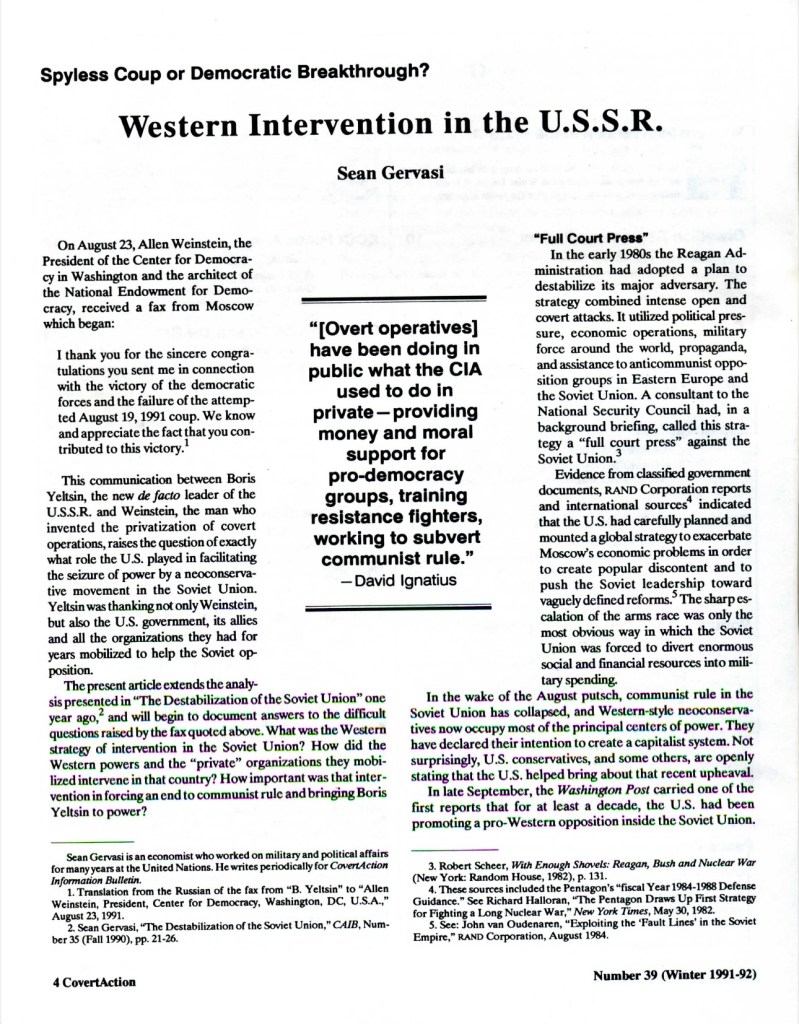
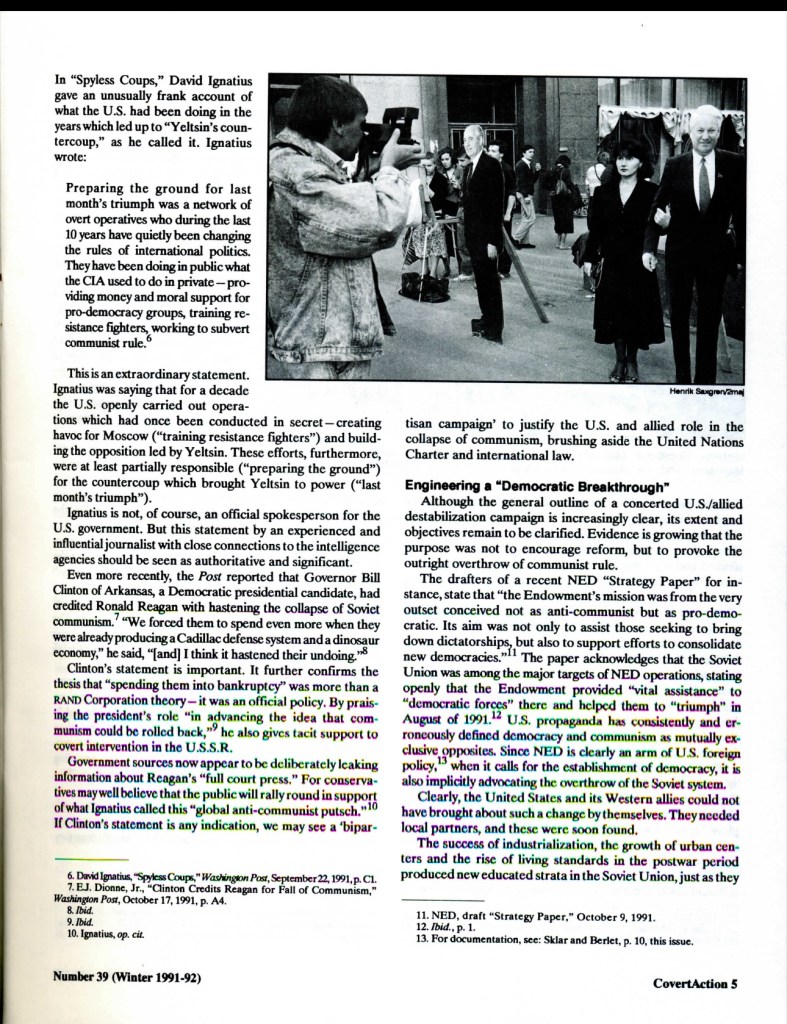
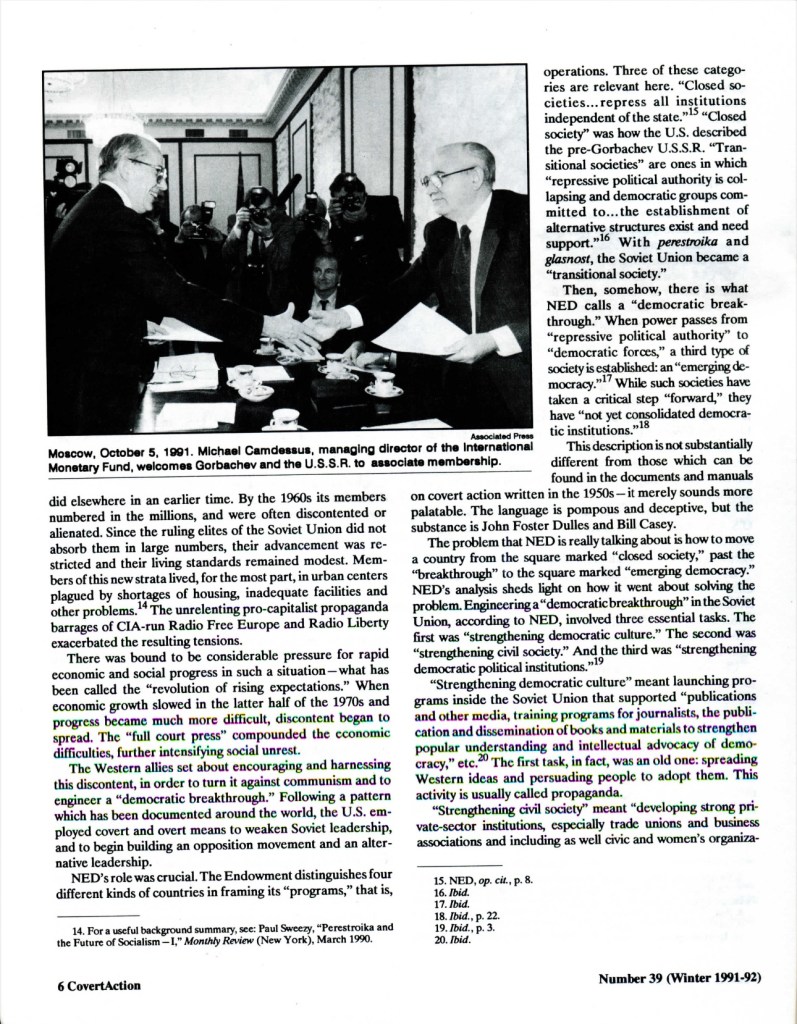
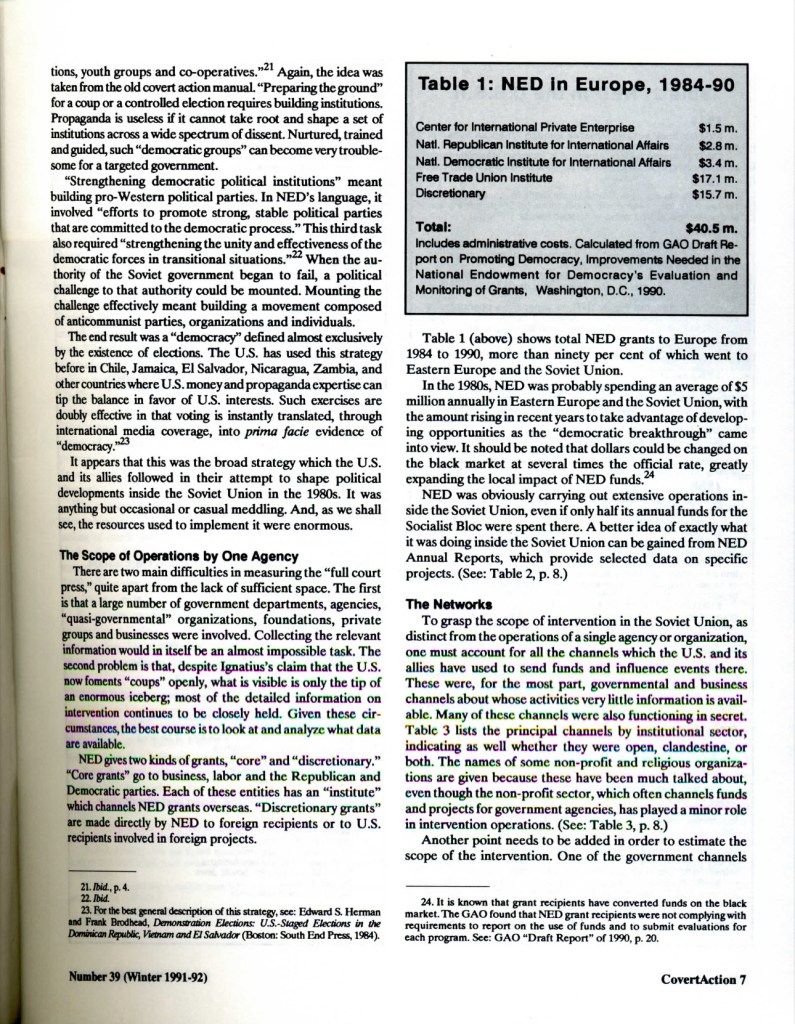
Western Intervention in the U.S.S.R.

Since the early 1980s the USA has waged and intense political and economic war against the Soviet Union. A former UN military and political analyst puts the pieces together.

Western Intervention in the U.S.S.R. by Sean Gervasi

Related:

Exploiting ‘fault lines’ in the Soviet empire: an overview

INNOCENCE ABROAD: THE NEW WORLD OF SPYLESS COUPS

Free Trade Union Institute