
Walter Q. Gresham was a real restrainer’s Secretary of State
Tag: Yemen
Biden Is the Perfect Figurehead for the Post-Trump National Security Establishment
Biden Is the Perfect Figurehead for the Post-Trump National Security Establishment
The prospect of four more years of Trump was what decided this election. It was the overriding imperative of those who cast their votes for Biden. Corporate and establishment Democrats expect their left-wing critics to vote for them every four years without question or negotiation. This expectation is almost always delivered as more of a threat than an ask. And when Democrats lose, they blame the left. Yet election after election shows that when they do win, elite Democrats do not believe that they have to offer any meaningful national security appointments or policy changes to these voters. History shows us that they are much more interested in finding common ground with the violent imperial visions of right-wingers and neoconservatives. And Joe Biden is indeed the perfect figure to drive that reality home.
We Are The Terrorists
British Military Sent On Secret Mission To Protect Saudi Oilfields
What If They Called an Election and Nothing Changed in the War State?
What If They Called an Election and Nothing Changed in the War State?
This election season, neither Democrats nor Republicans challenged the cultural components justifying the great game, which is evidence of one thing: empires come home, folks, even if the troops never seem to.
Related:
Despite Vow to End ‘Endless Wars,’ Here’s Where About 200,000 Troops Remain
How Biden’s Foreign-Policy Team Got Rich
How Biden’s Foreign-Policy Team Got Rich
Tasked by Obama to end the Iraq War, Biden supported Nouri El-Maliki, the leader he knew, and rescued the Iraqi prime minister’s career even though it ended up fracturing the country. When Maliki narrowly lost in 2010, Biden didn’t give Iraqi political parties time to broker a new coalition. With Biden’s endorsement, Maliki gained a second term; he grew more authoritarian, which is now widely believed to have led to the rise of ISIS. Biden ignored experts who were skeptical of Maliki and preferred to glad-hand. “He came to deal with Iraqi politicians like local political kingpins in Delaware or Pennsylvania,” said Robert Ford, who was deputy ambassador in Baghdad from 2008 to 2010.
Biden Must End the War He Helped Start
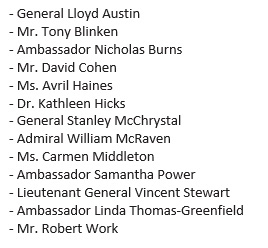
The Biden-Harris Transition released a list of individuals who are briefing President-elect Joe Biden on national security matters.
The Women Activists Rejecting Biden’s Pro-War “Feminism”
The Women Activists Rejecting Biden’s Pro-War “Feminism”
“To think about feminism as a movement that secures the rights of women, but then disregard the rights of women who shouldn’t be bombed, shouldn’t be living under the consequences of U.S. interventionism, to negate their experiences — it isn’t really feminism,” she says.
 Ms. Cat’s Chronicles
You must be logged in to post a comment.